Healthcare email marketing plays a vital role in building patient trust, improving communication, and strengthening long-term engagement. Understanding healthcare email marketing dos and don’ts is essential for creating messages that are both effective and compliant with industry regulations. As part of a broader digital marketing for healthcare strategy, email campaigns must balance personalization, privacy, and clarity to deliver value without compromising patient data or credibility.
Email marketing is an effective digital marketing strategy for practices planning to extend their reach. It enables healthcare providers to directly connect, interact, and maintain communication with potential patients. Email compliance in healthcare ensures that all email communications containing patient or clinical information meet regulatory, privacy, and security requirements—especially under HIPAA and similar global data protection laws.
Healthcare Email Marketing Dos and Don’ts
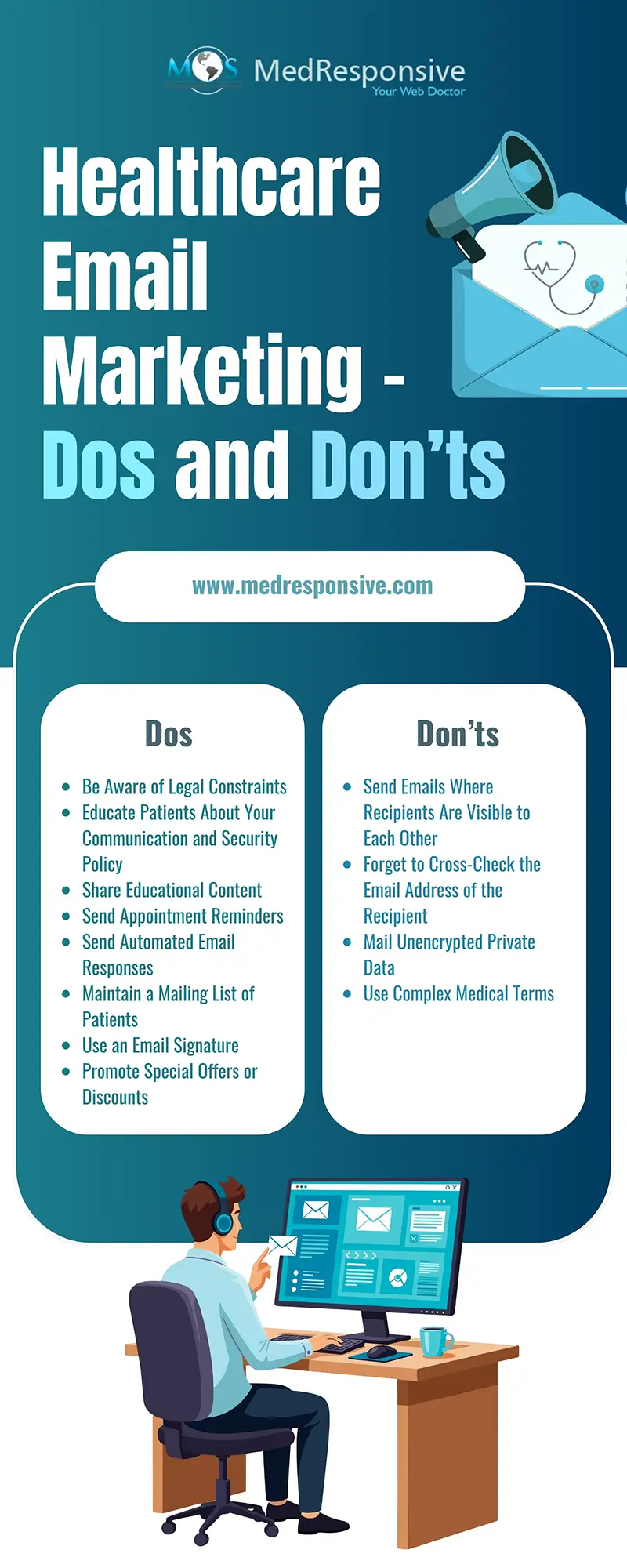
Healthcare email marketing can be highly effective when done correctly. Below are the key dos and don’ts for building a healthcare email marketing compliance checklist to protect patient data and healthcare email marketing compliance checklist to protect patient data aligned with regulatory requirements.
Dos
- Be Aware of Legal Constraints
Healthcare email communication must comply with legal regulations such as HIPAA, which mandate the protection of sensitive patient information. Sending protected data through unsecured or non-encrypted channels can result in compliance violations. Using secure delivery methods and encryption is essential to safeguard patient data.
- Educate Patients About Your Communication and Security Policy
Patients should be clearly informed about how their information is handled and protected before any private data is exchanged. Explaining security measures and including a HIPAA email disclaimer helps patients understand the risks and reinforces trust in your communication practices.
- Share Educational Content
Patients often look to healthcare providers for reliable health information. Sharing educational content such as preventive care tips, seasonal health advice, medical articles, case studies, and updates on treatments helps establish credibility and strengthens patient trust.
- Send Appointment Reminders
Automated appointment reminders help reduce no-shows and improve patient engagement. When patients regularly receive emails from a healthcare provider, reminders are more likely to land in their inbox rather than spam, ensuring timely communication.
- Ensure Mobile-Friendly Emails
Most patients check emails on mobile devices. Emails should be easy to read, concise, and well-formatted for smaller screens. Avoid tiny buttons, cluttered layouts, or side-scrolling, and use a simple column-based design for better usability.
- Send Automated Email Responses
Automated responses acknowledge receipt of patient messages and reassure them that their inquiry has been received. This improves communication efficiency and sets clear expectations for follow-up.
- Maintain a Mailing List of Patients
A well-maintained mailing list helps track patients who have opted in for communication. It also allows healthcare providers to remove inactive contacts and avoid sending emails to individuals who no longer wish to receive updates.
- Use an Email Signature
An official email signature adds legitimacy to your communication. Including practice details such as office hours, contact numbers, and addresses makes it easier for patients to recognize the sender and reach out when needed.
- Promote Special Offers or Discounts
Sharing special offers, discounts, or coupons through email helps improve patient retention. Relevant promotions, such as discounts on preventive care or healthcare products, show patients that the practice values their well-being.
Don’ts
- Send Emails Where Recipients Are Visible to Each Other
When sending group emails, avoid displaying recipient email addresses. Exposing personal information can lead to privacy breaches and compliance violations. Always use secure mailing practices such as BCC when necessary.
- Forget to Cross-Check the Email Address of the Recipient
Sending emails to the wrong recipient can result in unauthorized disclosure of protected health information. Always verify email addresses and attachments before sending, as even accidental disclosures are considered violations.
- Mail Unencrypted Private Data
Never send sensitive patient information without encryption. Encryption ensures that even if an email is intercepted or misdirected, the data remains inaccessible to unauthorized users.
- Use Complex Medical Terms
Avoid using complicated medical terminology or acronyms in patient emails. If technical terms are necessary, explain them in simple language to prevent confusion and ensure patients clearly understand the information shared.
These common mistakes in healthcare email marketing can impact compliance, patient trust, and campaign effectiveness.
Benefits of Email Marketing for Medical Practices
Patient engagement through email offers several benefits for healthcare practices. HIPAA compliant email marketing allows providers to easily and quickly communicate with patients, while ensuring sensitive information remains protected.
Email allows you to target messages to a particular audience group or personalize communication for specific individuals. In addition, it offers a platform to schedule messages well in advance.
Healthcare email marketing doesn’t have to be limited to appointment reminders and routine information. It can also be used to promote a healthcare practice by sharing newsletters, wellness tips, or guidance on managing specific health conditions. Successful healthcare email marketing campaigns require careful consideration of several important factors.
Implement Effective Email Marketing Campaigns with Expert Support
If implemented in the right way, email marketing is an effective tactic to attract potential patients, build strong relationships, and retain them. However, even a small mistake can make patients unsubscribe from a specific healthcare service. Understanding the dos and don’ts of email marketing is critical to make the most of the strategy.
Digital marketing services often include email campaigns. Email as part of a broader healthcare digital marketing strategy can be a powerful channel for engaging patients, educating audiences, and building long-term relationships — while maintaining strict compliance with privacy regulations.