
In today’s digitally driven healthcare landscape, patients are increasingly turning to search engines to research symptoms, understand treatment options, and evaluate doctors before booking an appointment. This shift has made online visibility and credibility critical for medical professionals. SEO blogging for doctors has emerged as a powerful way to bridge the gap between medical expertise and patient trust by delivering accurate, search-optimized, and educational content. Professional SEO blog writing services can help doctors communicate complex medical information clearly through blogs, improve search rankings, and establish authority in a competitive healthcare market. Rather than relying solely on traditional referrals, SEO-driven blogging enables doctors and clinics to connect with patients at the exact moment they are seeking reliable medical guidance. This approach helps build trust even before the first consultation. What is SEO blogging for doctors? This post explores the benefits of SEO blogging and SEO blogging strategies for doctors and clinics.
What Is SEO Blogging for Doctors?
SEO blogging for doctors is the practice of creating informative, patient-focused medical posts that are optimized for search engines. These blogs are designed to answer common patient questions, explain medical procedures, and provide reliable healthcare information—while also improving a website’s rankings on search engines like Google.
Unlike general blogging, medical SEO blogs must balance accuracy, clarity, and compliance with healthcare standards. The goal is not to make diagnoses online, but to educate patients, establish authority, and guide them toward booking consultations or appointments. Effective SEO blogs for doctors focus on:
- Relevant medical topics patients actively search for
- Keyword optimization without keyword stuffing
- Clear, trustworthy, and easy-to-understand language
- Search intent aligned with patient needs
When combined with broader medical content marketing, SEO blogging becomes a powerful tool for long-term digital visibility.
Turn your medical expertise into search-worthy content
Start SEO blogging today
Contact Us
Long-term Benefits of SEO Blogging for Medical Practices
- Sustainable Traffic Growth: Unlike paid ads, SEO blogs continue to drive traffic over time. A well-written blog can attract patients months or even years after publication.
- Improved Patient Engagement: Educational content keeps visitors on the website longer, increasing trust and the likelihood of contact or appointment bookings.
- Stronger Brand Authority: Consistent blogging positions doctors as thought leaders in their field, strengthening brand reputation within competitive healthcare markets.
- Builds Credibility: When patients find clear, accurate answers on a doctor’s website, it immediately builds credibility. Articles that explain symptoms, treatment options, recovery timelines, or preventive care show that the practice prioritizes patient education.
- Establish Topical Authority: Regular blogging on specialized topics helps establish topical authority. Over time, search engines and users begin associating a doctor’s website with expertise in certain medical areas. This authority is further reinforced when SEO blogs are: well-structured, medically accurate and updated regularly. Trust is earned when patients see consistency, clarity, and professionalism across content.
- Builds Patient Confidence: Blogs that openly discuss procedures, risks, benefits, and aftercare reduce uncertainty. This transparency builds confidence, making patients more comfortable taking the next step—whether that is booking a consultation or reaching out for more information.
SEO Blogging Strategies for Doctors and Clinics
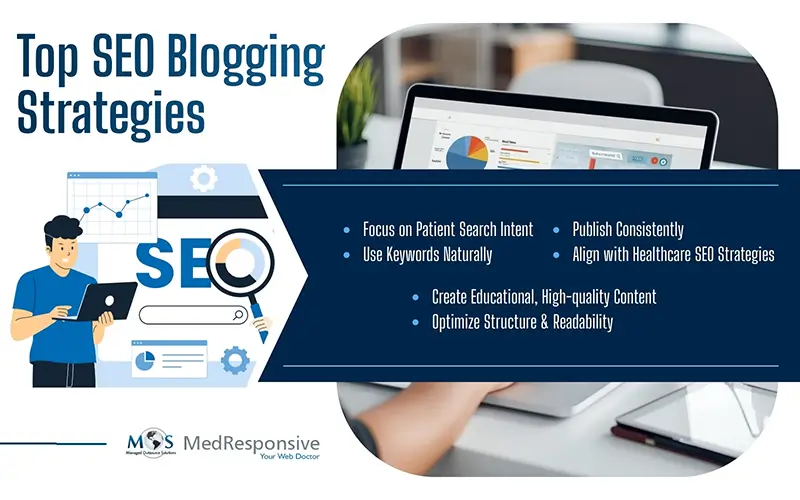
Below discussed are some top SEO blogging strategies for doctors and clinics:
- Focus on Patient Search Intent: Successful SEO blogging begins with understanding what patients are actually searching for online. Doctors and clinics should identify common questions, concerns, and informational needs related to their services or specialties. Blogs should be written to address these queries clearly and accurately, rather than focusing only on promotional messaging. Content aligned with patient intent performs better in search results and keeps readers engaged longer. This approach also helps patients feel understood and supported. Over time, search engines recognize this relevance, improving rankings. Patient-first content is the foundation of trust-driven SEO blogging.
- Use Keywords Naturally and Strategically: Keywords play a significant role in helping search engines understand blog content, but they must be used thoughtfully. Primary and secondary keywords should be placed naturally in headings, introductions, and throughout the content without disrupting readability. Overusing keywords can harm both user experience and search rankings. Strategic keyword placement ensures the blog remains informative and engaging. Well-optimized content signals relevance to search engines while maintaining clarity for readers. This balance is especially important in healthcare blogging, where trust and accuracy matter most.
- Create High-quality, Educational Content: Search engines favor content that demonstrates expertise, authority, and trustworthiness. For doctors and clinics, this means publishing blogs that are medically accurate, well-researched, and easy for patients to understand. Educational content helps patients make informed decisions and reduces anxiety about medical procedures or conditions. Clear explanations and structured formatting improve readability and engagement. High-quality blogs are also more likely to be shared or referenced. Consistently publishing valuable content strengthens both SEO performance and patient confidence.
- Optimize Content Structure and Readability: Well-structured blogs improve both user experience and search rankings. Clear headings, short paragraphs, and bullet points make medical information easier to digest. Proper formatting helps search engines scan and index content more efficiently. Internal links to related pages or blogs improve navigation and keep visitors on the site longer. For medical clinics, this translates into better engagement and stronger SEO signals. Structure is just as important as content quality.
- Publish Consistently to Build Authority: Regular blogging signals to search engines that a website is active, relevant, and trustworthy. For doctors and clinics, consistent publishing also reinforces expertise in specific medical areas. A steady flow of blogs helps target a wider range of patient queries over time. This gradual content buildup improves visibility across multiple keywords. Even one or two quality posts per month can make a meaningful impact. Consistency builds authority and strengthens digital presence.
- Align Blogs with Broader Healthcare SEO Strategies: SEO blogging should not exist in isolation but as part of a larger healthcare SEO strategy. Blogs should support service pages, local SEO efforts, and overall website goals. Optimizing blogs for local relevance helps clinics attract nearby patients. Content should also guide readers toward the next step, such as booking a consultation or contacting the clinic. When blogs are integrated into a cohesive SEO plan, they deliver stronger results.
Why Doctors Should Invest in SEO Blogging
In an era where patients rely heavily on online research, blogging is no longer optional—it is essential. SEO blogging for doctors helps build trust, educate patients, and improve online visibility in a way that aligns with ethical healthcare communication. When combined with smart healthcare SEO strategies and supported by expert SEO blog writing services, blogging becomes a long-term asset rather than a short-term marketing tactic. For doctors and clinics looking to grow their digital presence, investing in SEO-driven blogs is one of the most effective ways to connect with patients, establish authority, and remain visible in an increasingly competitive healthcare landscape.