Customer acquisition strategies increasingly determine how businesses sustain revenue growth, improve market visibility, and compete in digitally crowded environments.
Yet one question continues to shape marketing investment decisions across industries:
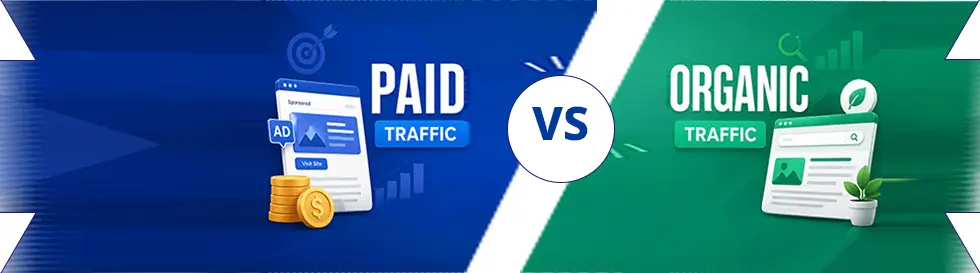
Paid vs. Organic Traffic.
Business leaders must decide whether to prioritize immediate visibility through advertising or build long-term discoverability through search optimization, authority-building, and educational content.
This decision influences:
- Customer acquisition cost
- Lead quality
- Conversion efficiency
- Scalability
- Long-term profitability
In sectors such as healthcare, finance, legal services, and technology, organizations increasingly combine paid acquisition strategies with long-term visibility initiatives involving healthcare SEO services and specialized support from a healthcare SEO agency.
The decision is rarely binary.
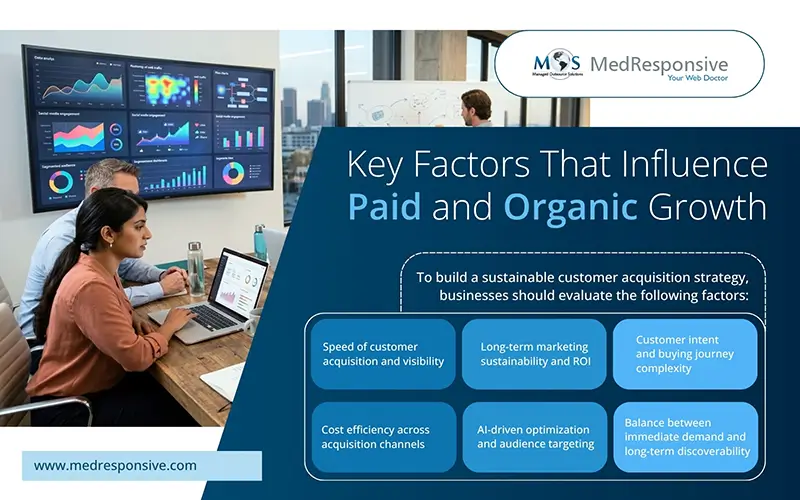
High-performing businesses do not evaluate acquisition channels in isolation. Instead, they assess how each channel contributes to revenue objectives, customer intent, conversion quality, and long-term sustainability.
A company launching a new product line may prioritize rapid visibility to generate awareness. A mature enterprise with established authority may invest more heavily in long-term organic discoverability to reduce acquisition costs over time.
The right strategy depends on:
- Business objectives
- Market maturity
- Competitive landscape
- Customer behavior
- Purchase complexity
Why the Paid vs. Organic Traffic Debate Is More Complex Than It Appears
Many organizations oversimplify Paid vs. Organic Traffic into a direct comparison between advertising and search visibility.
In reality, these channels operate differently across:
- Customer journeys
- Buying stages
- Intent signals
- Conversion timelines
Paid acquisition primarily captures immediate demand.
Businesses use advertising platforms to place products and services in front of prospective customers demonstrating intent through searches, browsing behavior, demographics, or remarketing signals.
Organic visibility functions differently.
It builds long-term organic discoverability through:
- Search authority
- Educational content
- Technical optimization
- Relevance signals
- Audience trust
These differences affect:
- Acquisition speed
- Cost predictability
- Conversion quality
- Brand authority development
- Long-term scalability
For example, a specialty healthcare clinic launching telehealth services may use paid campaigns to generate immediate appointment bookings while simultaneously investing in educational resources and healthcare SEO services to strengthen long-term visibility.
This layered strategy reflects how sophisticated organizations approach digital growth.
Paid vs. Organic Traffic: Which Model Aligns With Business Goals?
The question of Paid vs. Organic Traffic becomes more meaningful when evaluated against organizational objectives rather than channel preference.
Businesses focused on rapid market entry or short-term demand generation often prioritize paid acquisition because visibility can be generated immediately.
Organizations focused on long-term authority and sustainable inbound growth frequently prioritize organic discoverability.
Paid acquisition may be appropriate when organizations need:
- Immediate lead generation
- Short-term campaign performance
- Geographic targeting precision
- Seasonal promotion visibility
- Fast testing of messaging and offers
Organic discoverability becomes strategically valuable when businesses seek:
- Sustainable inbound demand
- Long-term visibility growth
- Reduced advertising dependency
- Higher authority within competitive markets
- Compounding search visibility over time
For healthcare organizations, this distinction becomes especially important.
A clinic offering urgent care may prioritize search visibility for high-intent local searches.
In contrast, providers offering elective or specialty treatments often benefit more from educational resources supporting longer patient decision cycles and visibility for high-intent treatment searches.
The key consideration is not which model appears cheaper or faster.
It is which model aligns best with customer intent and business maturity.
Speed Versus Sustainability in Customer Acquisition
Speed and sustainability rarely coexist equally within acquisition strategies.
Paid campaigns create immediate exposure.
Once campaigns launch, organizations may begin generating impressions, clicks, and conversions within hours.
However, immediate visibility comes with an important limitation:
Once advertising spend stops, visibility declines sharply.
Organic visibility operates through a different dynamic.
Search authority builds gradually through:
- Content quality
- Technical optimization
- User engagement
- Search relevance
- Authority signals
Results take longer to materialize but may continue generating demand long after initial investment.
This creates fundamentally different business implications.
A software startup seeking rapid user acquisition may prioritize advertising during launch phases. A healthcare provider building authority for specialty care may invest in educational resources and healthcare SEO services that continuously attract prospective patients.
As AI-powered search experiences evolve, organizations increasingly compete not only for clicks but also for visibility within AI-generated summaries, recommendations, and answer systems.
This makes long-term organic discoverability and authority-building even more valuable.
Research from BrightEdge indicates that organic search contributes a significant share of trackable website engagement across industries, reinforcing its long-term value for sustained visibility.
Cost Structures and Long-term Return on Investment
Financial evaluation extends beyond campaign cost.
Paid acquisition produces direct and measurable expenses.
Organizations pay for:
- Impressions
- Clicks
- Leads
- Conversions
depending on platform models and bidding structures.
This creates predictable visibility but also ongoing dependency.
Organic discoverability follows a different economic structure.
Initial investment may include:
- Content development
- Technical SEO
- Analytics infrastructure
- Search strategy implementation
- Authority-building initiatives
Once visibility strengthens, acquisition efficiency frequently improves over time.
This creates a critical strategic question:
Should organizations prioritize short-term acquisition efficiency or long-term acquisition sustainability?
The answer depends heavily on business stage and growth priorities.
For example, healthcare providers entering new geographic markets may initially depend on advertising. Over time, many partner with a healthcare SEO agency to strengthen visibility for high-intent treatment searches and reduce long-term dependence on advertising spend.
Search Intent and Buyer Journey Differences
Customer intent significantly influences channel effectiveness.
Paid acquisition performs especially well when intent is immediate and transactional.
Examples include:
- Emergency services
- Limited-time promotions
- Urgent appointment scheduling
- Time-sensitive purchases
Organic visibility performs more effectively when audiences require education before making decisions.
Examples include:
- Elective medical procedures
- Enterprise software selection
- Financial planning services
- High-value B2B purchases
For example, a patient researching orthopedic surgery may spend weeks comparing providers, evaluating treatment outcomes, and consuming educational information before scheduling care.
In contrast, an urgent care patient typically seeks immediate access to contact details and appointment information.
Understanding intent quality improves channel allocation decisions and strengthens customer acquisition efficiency.
When Paid Acquisition Delivers Stronger Results
Certain business scenarios justify prioritizing paid visibility.
Paid acquisition generally performs well when organizations need:
- Immediate lead generation
- Fast geographic expansion
- Event-driven campaign support
- Product launch visibility
- Retargeting for abandoned conversions
Advertising also improves experimentation.
Businesses can rapidly test:
- Messaging variations
- Audience segmentation
- Offer positioning
- Conversion pathways
This accelerates learning while reducing uncertainty during growth phases.
However, organizations relying exclusively on advertising may eventually encounter rising acquisition costs and increased platform dependency.
When Organic Visibility Creates Competitive Advantage
Organic visibility becomes especially valuable when businesses prioritize long-term market positioning.
Unlike advertising, search authority compounds.
Educational resources, optimized service pages, and authoritative content may continue generating traffic and leads long after publication.
Organic discoverability provides several strategic advantages:
- Stronger brand credibility
- Lower long-term acquisition costs
- Higher trust among research-driven audiences
- Reduced dependency on fluctuating advertising costs
- More stable inbound demand generation
For healthcare organizations, this becomes particularly important because patients frequently research symptoms, providers, and treatment pathways before making decisions.
Organizations investing in authority-building content and healthcare SEO services strengthen trust while improving search visibility for high-intent local searches.
Why High-Performing Businesses Combine Both Approaches
The strongest-performing businesses rarely rely exclusively on a single acquisition model.
Instead, they strategically integrate both channels.
For example:
- Paid campaigns capture immediate demand
- Organic visibility builds long-term authority
- Retargeting reinforces brand familiarity
- Educational content supports trust and conversion
This balanced strategy improves acquisition resilience.
Businesses relying exclusively on advertising remain vulnerable to rising bid costs and platform volatility.
Organizations depending solely on organic visibility may struggle with immediate demand generation.
A blended model reduces channel dependency while improving scalability.
How AI Is Transforming Customer Acquisition Strategy
Artificial intelligence increasingly influences how organizations manage acquisition strategy.
AI-assisted Campaign Optimization
AI-assisted systems analyze performance data to improve:
- Bidding strategies
- Audience targeting
- Conversion efficiency
- Campaign allocation
AI-enabled Search Intelligence
AI-enabled tools identify:
- Search intent patterns
- Content opportunities
- Ranking gaps
- Competitive weaknesses
more efficiently than traditional manual analysis.
AI-driven Predictive Marketing
AI-driven systems forecast customer behavior, estimate conversion likelihood, and improve marketing resource allocation.
Google reports continued growth in AI-supported advertising optimization across campaign environments.
These capabilities increasingly shape how businesses balance paid acquisition with long-term organic discoverability.
Common Mistakes Businesses Make When Choosing Between Channels
Organizations frequently make avoidable mistakes when evaluating acquisition channels.
Common issues include:
- Treating the decision as either-or instead of complementary
- Prioritizing short-term cost over lifetime value
- Ignoring customer intent differences
- Measuring visibility instead of conversion quality
- Underestimating long-term authority benefits
These mistakes often lead to inefficient budget allocation and inconsistent growth.
Strategic Takeaway for Sustainable Business Growth
Businesses should not evaluate acquisition channels through simplistic comparisons or short-term assumptions.
The decision between Paid vs. Organic Traffic depends on:
- Growth objectives
- Customer intent
- Competitive positioning
- Budget tolerance
- Long-term sustainability goals
Organizations that balance immediate visibility with long-term organic discoverability build stronger acquisition resilience and improve marketing efficiency over time.
AI-driven optimization, stronger intent analysis, and structured channel integration increasingly shape how businesses sustain digital growth.
For healthcare organizations especially, partnering with a specialized healthcare SEO agency and investing in strategic healthcare SEO services can strengthen long-term visibility, improve customer acquisition, and support sustainable growth.
Build a stronger online presence and improve long-term performance with expert digital marketing and healthcare SEO services tailored to your business needs.