
Today, people rely heavily on smartphones to manage daily activities, including their health. From booking appointments to attending virtual consultations, mobile apps have transformed the way healthcare services are delivered. Healthcare organizations increasingly invest in medical app development to improve patient care, enhance operational efficiency, and expand their service reach.
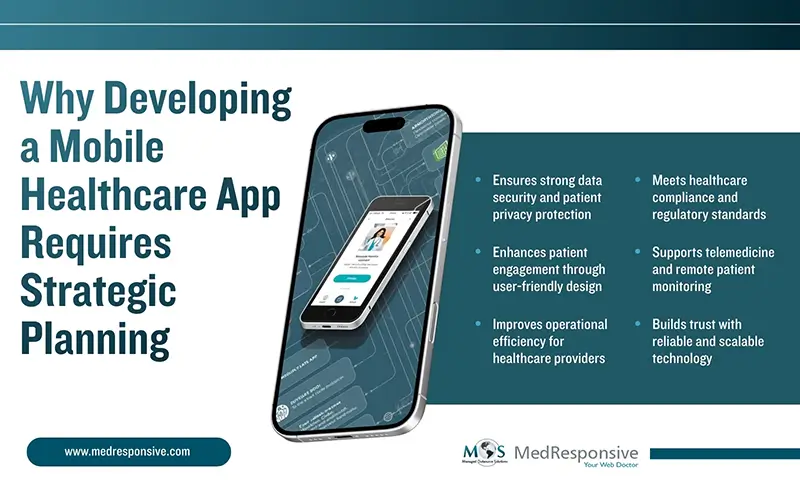
Developing a mobile healthcare app requires more than technical knowledge. It demands a clear understanding of patient expectations, healthcare workflows, and digital convenience. To succeed, healthcare providers must combine strong security practices, regulatory awareness, and user-focused design with a well-planned mobile application development strategy.
Don’t let outdated systems slow your business.
Build a future-ready mobile healthcare app today.
Developing a Mobile Healthcare App: What Businesses Must Understand First
When developing a mobile healthcare app, organizations must first define its core objective. A clear purpose shapes every design and feature decision. Some apps focus on appointment scheduling, while others support teleconsultation, chronic disease management, or digital prescriptions.
Before beginning development, businesses should carefully evaluate:
- Who will primarily use the app (patients, doctors, or caregivers)?
- What specific healthcare gap does the app address?
- Will the app integrate with wearable devices or hospital systems?
- How will the app sustain itself financially?
Clarity at this stage prevents budget overruns and keeps the app focused on real healthcare needs. It reduces the risk of adding features that do not support the app’s main purpose.
Organizations should also study competitors and analyze market demand. Understanding what users appreciate in existing healthcare apps offers valuable insights. Early research creates a strong foundation for successful medical app development and reduces costly revisions later.
Understand the Different Types of Healthcare Apps
Healthcare apps serve different purposes depending on their target audience. Identifying the category early allows organizations to design features that truly meet user expectations.
- Patient-Focused Apps
Patient-focused apps empower individuals to take control of their health. These applications often aim to simplify everyday healthcare interactions and encourage proactive health management. They may include:
- Appointment booking systems
- Medication reminders
- Health tracking dashboards
- Teleconsultation features
Beyond these features, patient-focused apps should provide educational resources, symptom tracking tools, and personalized notifications. Many users download healthcare apps to stay informed about their conditions, so clear explanations and health tips can significantly improve engagement.
These apps must prioritize simplicity and clarity. Patient apps should be simple and intuitive so users of all backgrounds can navigate them easily. A confusing interface may discourage continued use. Therefore, intuitive menus, easy registration, and straightforward instructions are essential for long-term adoption.
When designed thoughtfully, patient apps improve convenience, reduce missed appointments, and encourage better health habits.
- Doctor-Focused Apps
Doctor-focused apps streamline clinical workflows and improve communication between healthcare professionals and patients. These tools often support daily medical operations and administrative tasks.
Common features include:
- Access to electronic health records
- Appointment management tools
- E-prescription modules
- Secure messaging systems
In addition to these capabilities, such apps may provide clinical reference materials, real-time alerts, and patient history summaries. Quick access to electronic health records helps doctors make informed decisions during consultations.
Security remains critical in these applications. Since healthcare professionals handle sensitive patient information, strong authentication and encrypted communication are necessary. Seamless integration with hospital systems ensures that patient data remains accurate and up to date.
When properly implemented, doctor-focused apps reduce paperwork, improve time management, and enhance patient care quality.
Integrate Telemedicine Capabilities
Telemedicine now forms a permanent part of modern healthcare delivery. Many patients prefer virtual consultations for minor illnesses, follow-ups, or routine advice. Today, integrating telemedicine capabilities in healthcare mobile apps has become a strategic priority for healthcare providers who want to improve accessibility and patient convenience.
A healthcare app that integrates telemedicine may include:
- Secure video consultations
- In-app messaging
- Digital prescriptions
- Appointment scheduling
- Integrated payment gateways
Telehealth not only offers convenience but also reduces travel time and waiting room congestion. It proves especially helpful for patients in rural or underserved areas where healthcare access remains limited.
Healthcare providers also benefit from telemedicine. They can manage schedules efficiently and offer follow-up care without requiring in-person visits. By integrating telemedicine features, organizations make healthcare more accessible and convenient for both patients and providers.
Maintain Regulatory Compliance
Compliance plays a fundamental role in healthcare technology. Regulations protect patient rights, ensure data privacy, and maintain medical safety standards. Ignoring compliance can lead to legal complications and reputational damage.
Organizations must address:
- Data protection policies
- Secure storage guidelines
- Consent management
- Medical device certifications (if applicable)
Compliance planning should begin at the earliest stages of medical app development. Developers must understand regional and international regulations before designing data storage systems or collecting patient information.
Consulting legal and healthcare experts early prevents costly redesigns later. Regulatory planning not only ensures safety but also builds trust among users who expect responsible handling of their personal data.
Plan for Scalability and Performance
An app must function smoothly even as user numbers increase. Slow loading times, crashes, or system downtime can frustrate users and negatively impact reputation. Maintaining strong performance requires:
- Using reliable cloud infrastructure
- Optimizing backend architecture
- Conducting load testing
- Monitoring system performance
Scalability ensures that the app can handle increased traffic during peak usage periods. For example, during public health emergencies, app usage may surge unexpectedly. A scalable infrastructure prevents system failures during surges and supports future feature additions, integrations, or geographic expansions through flexible architecture.
Ongoing improvement ensures that the app stays aligned with technological advancements and evolving trends in mobile application development.
Test Thoroughly Before Launch
Testing ensures that the app performs safely and efficiently. Since healthcare apps directly influence patient care, accuracy and reliability are essential.
Testing should cover:
- Functional accuracy
- Security vulnerabilities
- Device compatibility
- Performance under heavy traffic
- User experience feedback
Developers should simulate real-world scenarios to identify potential issues. For example, testing appointment booking systems during high-traffic periods can reveal performance weaknesses.
Beta testing with real users provides valuable insights. Feedback from patients and healthcare professionals helps refine navigation, instructions, and features. Early corrections reduce the risk of negative reviews after launch.
Thorough testing strengthens user confidence and ensures a smooth public release.
Develop a Clear Monetization Strategy
Every healthcare app needs a sustainable revenue model. A clear strategy ensures long-term viability without compromising user experience. Healthcare organizations can choose from:
- Subscription-based plans
- Freemium services
- Pay-per-consultation models
- Partnerships with healthcare institutions
- Corporate wellness programs
The choice depends on the target audience and service type. For example, teleconsultation platforms may benefit from pay-per-session models, while wellness apps may succeed with subscription plans.
Understanding the cost considerations for building a medical mobile application also helps align pricing with expenses. Transparent pricing builds trust and encourages user loyalty.
A balanced monetization strategy supports growth while maintaining accessibility.
Post-Launch Maintenance and Continuous Improvement
Launching the app marks only the beginning of its lifecycle. Continuous updates keep the platform secure, relevant, and competitive.
Post-launch strategies include:
- Regular security patches
- Feature enhancements
- User feedback analysis
- Performance monitoring
- Content updates
Healthcare trends and user expectations evolve rapidly. For instance, growing adoption of remote patient monitoring solutions may encourage organizations to expand wearable integrations in future updates.
Ongoing improvement ensures that the app adapts to technological advancements and changing healthcare needs. Consistent maintenance keeps the app secure, reliable, and relevant over time.
Promote the App Strategically
Even a well-designed app requires effective promotion. Without visibility, potential users may never discover its benefits.
Effective marketing approaches include:
- Search engine optimization
- Social media engagement
- Educational blog content
- Partnerships with clinics
- App store optimization
Organizations should focus on trust-building communication. Sharing patient success stories, educational resources, and clear explanations of features encourages downloads.
Strategic promotion ensures that mobile application development efforts translate into real-world impact.
Emphasize Patient Engagement and Inclusivity
Patient engagement directly influences health outcomes. When users actively interact with the app, they are more likely to follow treatment plans and maintain healthy habits.
Interactive features such as reminders, progress tracking dashboards, and health alerts motivate consistent usage. Integration with remote patient monitoring solutions can further enhance engagement by providing real-time feedback.
Inclusive design expands accessibility across diverse populations. Developers should provide:
- Multilingual options
- Clear, simple instructions
- Adjustable font sizes
- Voice-enabled assistance
By prioritizing inclusivity, healthcare organizations can ensure that technology serves wider communities rather than a limited audience. Inclusive design also builds trust among users who may otherwise feel excluded from digital healthcare services. When apps accommodate different languages, abilities, and comfort levels with technology, users feel more confident using them regularly.
In addition, inclusive features support elderly users and individuals with disabilities who face challenges when accessing traditional healthcare platforms. Simple navigation, clear instructions, and supportive design elements reduce frustration and improve overall satisfaction.
Ultimately, strong patient engagement combined with inclusive design transforms a healthcare app from a basic digital tool into a meaningful support system that empowers individuals to take control of their health.
Connecting Technology and Care
Organizations that invest in structured medical app development create solutions that simplify healthcare delivery and improve patient experiences. By integrating telemedicine, supporting electronic health records, enabling remote patient monitoring solutions, and ensuring compliance, businesses can build reliable and scalable platforms. Strategic mobile application development focuses not only on innovation but also on usability, accessibility, and long-term sustainability.
When healthcare providers approach app development responsibly and proactively, they contribute to a more connected, efficient, and patient-friendly healthcare ecosystem.