
Marketing your healthcare mobile app requires a patient-centric and data-driven strategy. Today, healthcare consumers rely on mobile platforms to book appointments, access medical records, consult physicians, and manage chronic conditions. As digital health adoption grows, organizations must combine innovative app development with targeted outreach to reach the right patients.
Patients expect convenience, accessibility, and personalized experiences. A well-designed application alone cannot ensure strong adoption. Even an advanced app built using robust development practices needs consistent visibility and engagement to sustain growth.
This post outlines practical strategies healthcare organizations can implement to increase mobile app downloads, strengthen user engagement, and build long-term patient trust.
Marketing Your Healthcare Mobile App: Core Strategies for Sustainable Growth
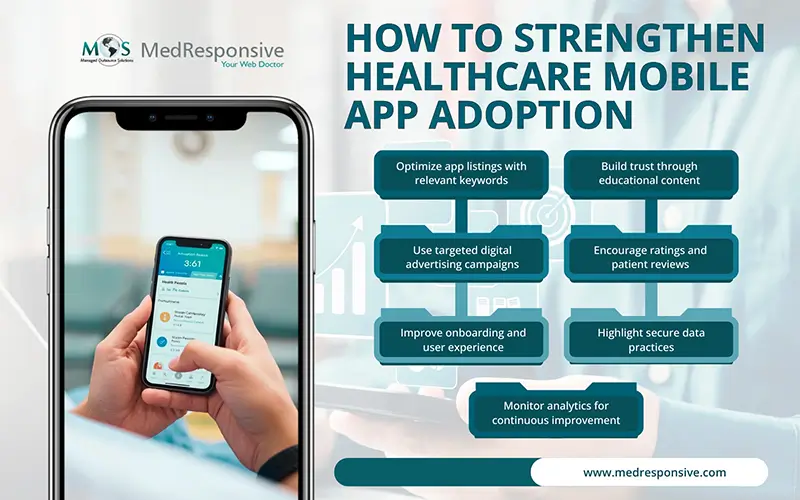
Healthcare mobile app promotion demands more than generic advertising. It requires a comprehensive approach that integrates compliance, technology, communication, and trust-building initiatives. Leveraging the following strategies can help achieve measurable and sustainable results:
- Build a Strong Foundation with App Store Optimization
App store visibility plays a central role in app discovery. Many patients search directly within app marketplaces when looking for health management tools. Therefore, app store optimization significantly influences organic downloads.
The first step is thorough research to identify keywords that patients commonly use. Including relevant search phrases in the app title, description, and metadata improves ranking potential. Similarly, clear categorization and precise keyword placement increase discoverability without overstuffing. Effective app store optimization also includes:
- Writing concise and benefit-driven app descriptions
- Adding high-quality screenshots that demonstrate real use cases
- Including short explainer videos to build immediate understanding
- Highlighting security compliance and privacy features
- Encouraging satisfied users to leave authentic reviews
These strategies build credibility beyond visibility. When patients see strong ratings and detailed positive feedback, they feel more confident downloading the application. Organizations that consistently monitor reviews and respond professionally demonstrate transparency and accountability
.
Continuous performance tracking ensures sustained results. Teams should analyze keyword performance, conversion rates, and user feedback to refine listing elements periodically. Optimization is not a one-time effort but an ongoing marketing strategy.
- Develop Educational Content that Builds Authority
Healthcare decisions involve careful research. Patients frequently search for reliable information before adopting new digital health tools. Educational content meets this need by positioning the app as a trustworthy solution. Publishing informative blog posts, condition-specific guides, wellness tips, and patient success stories helps answer common questions while introducing the app as a supportive tool in the healthcare journey. Content marketing initiatives may include:
- Articles explaining how digital health improves patient outcomes
- Guides on using mobile apps for chronic disease management
- Infographics that simplify medical processes
- Video tutorials demonstrating key features
When content aligns with user concerns, it increases organic traffic and supports patient education. Healthcare marketers can also integrate search queries within educational material to keep patients engaged. Strategic content strengthens search engine visibility and reinforces expertise. Over time, it supports brand recall and drives qualified traffic toward the application.
- Strengthen Partnerships with Healthcare Providers
Trust remains one of the most influential factors in healthcare adoption. Patients value recommendations from physicians, hospitals, and clinics. Strategic partnerships leverage this to amplify marketing efforts.
Healthcare marketing teams can collaborate with:
- Primary care clinics
- Specialty hospitals
- Diagnostic centers
- Telehealth providers
- Insurance networks
When providers recommend the app during consultations or discharge processes, patients perceive it as an extension of clinical care rather than a promotional tool. Co-branded educational campaigns further enhance credibility. Printed materials, email newsletters, and in-clinic demonstrations can introduce patients to the app’s benefits. These initiatives connect in-person care with digital support systems.
Strong partnerships also support medical app development improvements. Continuous feedback from clinicians ensures the app remains aligned with practical healthcare workflows.
- Implement Advanced Patient Engagement Strategies
Acquisition alone does not guarantee long-term success. Effective patient engagement strategies drive the retention and usage that create genuine app value. Personalized communication includes:
- Appointment reminders via push notifications
- Medication alerts with educational tips
- Follow-up messages after teleconsultations
- Preventive care reminders
Personalization increases relevance and reduces notification fatigue. Data analytics helps segment users based on age, health conditions, or usage patterns. Likewise, targeted communication fosters meaningful relationships rather than generic messaging.
In-app surveys and feedback forms further enhance engagement. Insights collected directly from users can be used to refine app features and address usability issues. Continuous improvement strengthens loyalty and encourages long-term adoption. Strong patient engagement strategies also generate more positive reviews, referrals, and organic growth.
- Utilize Data-Driven Paid Advertising Campaigns
Paid advertising accelerates visibility in competitive markets. Healthcare organizations can leverage targeted campaigns across search engines and social platforms.
Effective paid strategies include:
- Search engine advertising targeting health-related queries
- Social media campaigns focused on demographic segmentation
- Retargeting ads for website visitors who did not complete downloads
- Sponsored health awareness posts
Advertising messages should be aligned with patient needs. Highlighting convenience, security, and professional backing increases click-through rates.
Teams can use conversion tracking tools to measure performance accurately. Campaign metrics such as cost per install, engagement rate, and retention rate help optimize budgets. Analyzing these metrics and adjusting campaigns improves return on investment over time.
- Prioritize Seamless User Experience and Accessibility
User experience directly influences retention. A complex onboarding process can discourage even interested users. Therefore, intuitive design and accessibility must remain central priorities.
Organizations should ensure:
- Simple registration processes
- Clear navigation menus
- Fast loading times
- Multilingual support if required
- Accessibility features for elderly or visually impaired users
Delivering these features requires strong user experience, starting during app development and continuing through updates. Regular usability testing identifies friction points early. When mobile application development teams collaborate with marketing departments, messaging aligns with actual app functionality. This coordination prevents miscommunication and strengthens user satisfaction.
- Leverage Social Media for Community Building
Social platforms help healthcare brands to build digital communities. Instead of purely promotional posts, organizations should focus on engagement-oriented communication.
Effective social strategies include:
- Hosting live sessions with healthcare professionals
- Sharing wellness challenges
- Highlighting real patient experiences
- Posting educational short videos
Community-driven engagement increases visibility through shares and discussions. It also builds a personal connection. Patients feel more comfortable adopting tools that reflect empathy and authenticity. Furthermore, social engagement supports broader mobile application development initiatives by building awareness and keeping patients interested.
- Encourage Reviews and Build Social Proof
Online reviews influence healthcare decisions significantly. Patients frequently evaluate ratings before downloading a medical application. Organizations can encourage reviews by:
- Prompting users after successful interactions
- Sending polite follow-up emails
- Offering guided feedback forms within the app
Responding to reviews demonstrates attentiveness, while addressing concerns transparently builds credibility. Positive testimonials can also be featured in marketing campaigns to reinforce trust. Social proof reduces hesitation and accelerates app adoption.
- Highlight Compliance and Data Security Measures
Healthcare data sensitivity demands clear communication about security standards. Patients must feel confident that their information remains protected. Marketing materials should clearly state:
- HIPAA or other relevant compliance
- Data encryption practices
- Secure login protocols
- Privacy policy transparency
Security messaging should remain informative rather than overly technical. When patients understand how their data is safeguarded, their trust increases. To build this trust, compliance awareness should remain integrated throughout medical app development and promotional messaging.
- Integrate Telehealth and Remote Care Features
Telehealth capabilities enhance the app’s value for patients. Patients appreciate direct access to consultations and follow-ups through digital channels. Marketing messages should emphasize:
- Video consultation features
- Remote monitoring integration
- Digital prescription management
- Secure messaging with physicians
These features position the application as a comprehensive healthcare companion. Best practices for healthcare mobile app marketing highlight telehealth as a key advantage. Integrating these services makes the app more competitive in the market.
- Use Analytics to Continuously Improve Marketing Outcomes
Analytics tools provide actionable insights into user behavior. Healthcare marketers should track:
- Download sources
- Session duration
- Feature usage frequency
- Drop-off points during onboarding
This data guides campaign optimization and feature enhancements. Collaboration between marketing and development teams ensures improvements align with user expectations. Evidence-based decision-making increases marketing efficiency and enhances user satisfaction.
- Promote Innovation in Medical App Development
Innovation attracts attention. Healthcare organizations should communicate advancements achieved through medical app development initiatives.
Promotional messaging may highlight:
- AI-powered symptom checkers
- Personalized care dashboards
- Integration with wearable devices
- Predictive health analytics
Emphasizing innovation demonstrates commitment to patient-centric care. It also differentiates the app in saturated markets. Consistent communication about upgrades reinforces engagement and showcases ongoing investment in mobile application development.
Build a Sustainable Patient-Centric Marketing Framework
Marketing success in digital healthcare requires consistency, adaptability, and patient trust. Healthcare organizations must combine robust mobile app development with strategic outreach. From app store optimization and partnerships to patient engagement, analytics, and telehealth, each component drives performance.
Effective promotion integrates multiple channels rather than relying on one. When marketing teams work closely with development experts, they create seamless digital experiences. This focus on transparency, personalization, and results delivers sustainable growth in a competitive landscape.
Ready for patient-centric app growth?
Partner with us to implement ASO, engagement strategies, and compliance marketing.
Contact us today