Modern businesses no longer compete only through pricing or product features. Today, long-term market differentiation increasingly depends on credibility, expertise, and the ability to shape industry conversations. Within this evolving environment, thought leadership content has become a powerful strategic asset for organizations seeking to strengthen authority, build trust, and influence decision-making.
Businesses investing in content marketing services are increasingly prioritizing expertise-driven communication to establish stronger brand positioning. Rather than relying on promotional messaging alone, effective thought leadership demonstrates authority through original insights, practical analysis, research-backed perspectives, and meaningful solutions to industry challenges.
Organizations that consistently publish high-value educational content position themselves as trusted advisors instead of vendors, strengthening audience confidence and long-term engagement.
Why Authority Matters in Competitive Markets
Modern buyers conduct extensive independent research before engaging with a business. Decision-makers now evaluate expertise, credibility, industry understanding, and strategic insight long before entering conversations with sales teams.
According to the 2025 Edelman-LinkedIn B2B Thought Leadership Impact Report, decision-makers are significantly more likely to engage with organizations that consistently provide informed perspectives and high-quality expertise during purchasing decisions.
Strong authority-building strategies help businesses:
- Strengthen brand credibility
- Improve audience trust and confidence
- Support lead generation initiatives
- Differentiate from competitors in crowded industries
- Reinforce long-term customer relationships
- Increase visibility among decision-makers
Organizations that fail to demonstrate expertise often become interchangeable with competitors offering similar solutions.
What Makes Thought Leadership Content Effective?
Creating impactful thought leadership content requires far more than publishing opinions or trend-based commentary. Effective authority-driven communication combines evidence, subject-matter expertise, strategic positioning, and audience relevance.
The primary objective is not simply visibility. Instead, organizations aim to shape industry understanding by contributing meaningful analysis, identifying emerging developments, and offering practical guidance rooted in real-world experience.
High-performing authority-building materials typically include:
- Original viewpoints supported by evidence
- Clear explanations of industry challenges
- Actionable recommendations
- Research-backed analysis
- Expert interpretation of emerging trends
- Practical business applications
Professional audiences increasingly recognize generic messaging and superficial commentary.
Businesses that consistently contribute meaningful perspectives position themselves as reliable sources of industry knowledge and strengthen long-term professional credibility.
Defining a Clear Audience and Market Position
Defining Your Audience and Market Position
Before developing expertise-focused materials, organizations must clearly define the audience they want to influence.
Without audience clarity, messaging often becomes fragmented, inconsistent, and ineffective.
Key strategic questions include:
- Who represents the target audience?
- Which business challenges matter most to them?
- What information gaps currently exist?
- Which trends influence their decision-making?
- How does the organization provide differentiated expertise?
For example, a cybersecurity company may focus on regulatory compliance risks affecting enterprise buyers, while a healthcare technology provider may concentrate on interoperability challenges and operational efficiency.
Strong positioning depends on relevance. Businesses gain credibility when they address issues directly affecting audience priorities and operational concerns.
Strategic alignment between expertise and audience expectations improves engagement quality, search relevance, and long-term trust.
Choosing Topics That Demonstrate Expertise
Topic selection often determines whether authority-building initiatives succeed or fail.
Many organizations make the mistake of pursuing high-volume trends that do not reflect their actual expertise. Instead, businesses should focus on subjects where they possess measurable experience, proprietary insight, or practical operational understanding.
Strong topic categories include:
Industry Analysis
Interpret evolving regulations, technologies, operational shifts, and market developments.
Problem-solving Frameworks
Address persistent business challenges using evidence-based recommendations and actionable solutions.
Executive Perspectives
Share leadership insights informed by operational experience and strategic decision-making.
Emerging Market Trends
Analyze developments affecting customers, investments, workflows, or organizational growth.
The most effective editorial assets answer meaningful business questions instead of repeating widely available information.
According to ResearchGate, buyers increasingly prefer expertise-based educational resources that help solve business problems rather than purely promotional messaging.
Organizations that consistently address real industry concerns establish stronger professional authority and become dependable educational resources within their sector.
Research and Credibility: The Foundation of Influence
Authority depends heavily on accuracy, transparency, and substance. Unsupported claims weaken trust and reduce perceived expertise.
Effective editorial development involves:
- Reviewing industry reports and publications
- Referencing reputable research institutions
- Including measurable data where appropriate
- Validating insights with subject-matter experts
- Using practical examples from real-world business scenarios
Businesses should prioritize clarity over unnecessary complexity. Technical sophistication matters, but explanations should remain accessible to intended audiences.
Credibility also improves when organizations acknowledge limitations, trade-offs, or uncertainty surrounding industry developments. Readers generally trust balanced analysis more than overly promotional messaging.
Structuring High-impact Leadership Material
Content structure directly affects readability, engagement, and audience retention.
Even highly valuable insights lose effectiveness when information appears disorganized or difficult to navigate.
High-performing editorial assets generally follow a clear progression:
- Define the challenge or opportunity
- Provide evidence-backed context
- Explain business implications
- Present actionable recommendations
- Offer a forward-looking perspective
Scannability is equally important because decision-makers frequently skim content before committing to deeper reading.
Useful formatting strategies include:
- Clear headings and subheadings
- Concise paragraphs
- Strategic bullet points
- Short explanatory sections
- Strong transitions between ideas
- Readable formatting for mobile users
A well-organized structure improves comprehension, user engagement, and perceived professionalism.
The Role of AI in Transforming Thought Leadership Creation
Artificial intelligence is reshaping how businesses research, plan, optimize, and distribute authority-building materials. While expertise remains fundamentally human-driven, AI-assisted systems help improve efficiency throughout editorial workflows.
AI-driven tools support several important functions.
AI-assisted Topic Discovery
Organizations increasingly use AI-enabled systems to identify emerging trends, audience concerns, and frequently discussed industry topics.
This improves relevance while reducing dependence on intuition alone.
AI-driven Audience Analysis
Advanced analytics platforms identify behavioral patterns, engagement signals, and information preferences among target audiences.
These insights support more effective editorial planning and audience targeting.
AI-assisted Draft Optimization
Editorial teams use AI-supported tools to improve readability, identify structural gaps, optimize keyword placement, and strengthen messaging consistency.
However, businesses should avoid excessive dependence on automation.
AI-generated material without human expertise often lacks:
- Original insight
- Industry nuance
- Strategic perspective
- Contextual understanding
- Credibility supported by experience
The strongest outcomes occur when subject-matter expertise guides editorial direction while AI improves research efficiency and workflow execution.
Organizations that successfully combine human expertise with intelligent automation improve efficiency throughout editorial workflows while maintaining authenticity and trust.
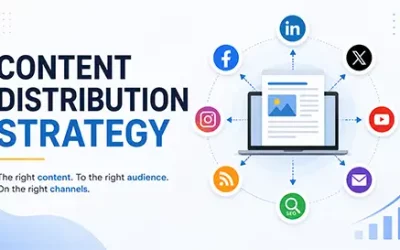
Distribution Strategies That Extend Reach
Publishing strong expertise-driven content represents only one part of the process. Distribution determines long-term visibility and influence.
Organizations should diversify amplification strategies across channels relevant to target audiences.
Effective distribution methods include:
Professional Networks
Executive teams frequently share expertise through professional platforms, industry communities, and leadership forums.
Email Campaigns
Targeted newsletters improve visibility among existing prospects, partners, and customers.
Webinars and Speaking Engagements
Long-form educational discussions strengthen authority and improve audience trust.
Industry Publications
Contributing expertise to established publications improves credibility and industry visibility.
Businesses working with content marketing services often improve publishing consistency while aligning messaging with broader strategic goals.
Similarly, organizations using digital marketing services strengthen visibility through integrated campaigns connecting thought leadership with audience engagement strategies.
Search Visibility and Discoverability
Even high-value expertise-driven content struggles to generate results when discoverability remains weak.
Search optimization improves visibility by aligning published material with user intent and search behavior.
However, businesses should avoid creating content solely for algorithms.
Effective optimization balances:
- User relevance
- Natural keyword integration
- Search intent alignment
- Readability and engagement
- Clear structural hierarchy
- Mobile accessibility
Organizations often invest in SEO content writing services to improve clarity, structure, discoverability, and organic performance while preserving subject-matter authority.
Search visibility should strengthen expertise rather than overshadow it.
Measuring Success Beyond Traffic
Many organizations incorrectly evaluate authority-building efforts using traffic alone.
High visibility without meaningful engagement rarely supports business growth.
More valuable performance indicators include:
- Lead quality improvements
- Time spent engaging with content
- Executive visibility growth
- Speaking and partnership opportunities
- Brand credibility among decision-makers
- Audience trust and retention
Long-term influence develops through consistency rather than short-term visibility spikes.
Organizations should measure whether their thought leadership initiatives strengthen trust, improve engagement, and influence business outcomes.
Common Mistakes That Reduce Credibility
Several recurring mistakes weaken authority-building efforts.
These include:
- Publishing overly promotional messaging
- Repeating generic industry commentary
- Overusing technical jargon without explanation
- Ignoring audience priorities
- Failing to support claims with evidence
- Prioritizing volume over expertise
Professional audiences generally respond more positively to informed analysis than overt sales positioning.
Authority emerges through demonstrated understanding rather than self-promotion.
Future Trends in Expertise-driven Communication
The future of authority-building will increasingly depend on personalization, credibility, and audience-specific insight.
Emerging developments include:
- Greater integration of AI-enabled editorial intelligence
- Increased reliance on executive-led perspectives
- Stronger emphasis on research-backed communication
- Interactive educational experiences
- Personalized content delivery strategies
- Advanced audience segmentation and analytics
Organizations that adapt to these developments will strengthen influence in increasingly competitive information environments.
Expertise will continue functioning as a critical differentiator, especially in industries where trust directly influences purchasing decisions.
Strategic Outlook on Building Business Authority
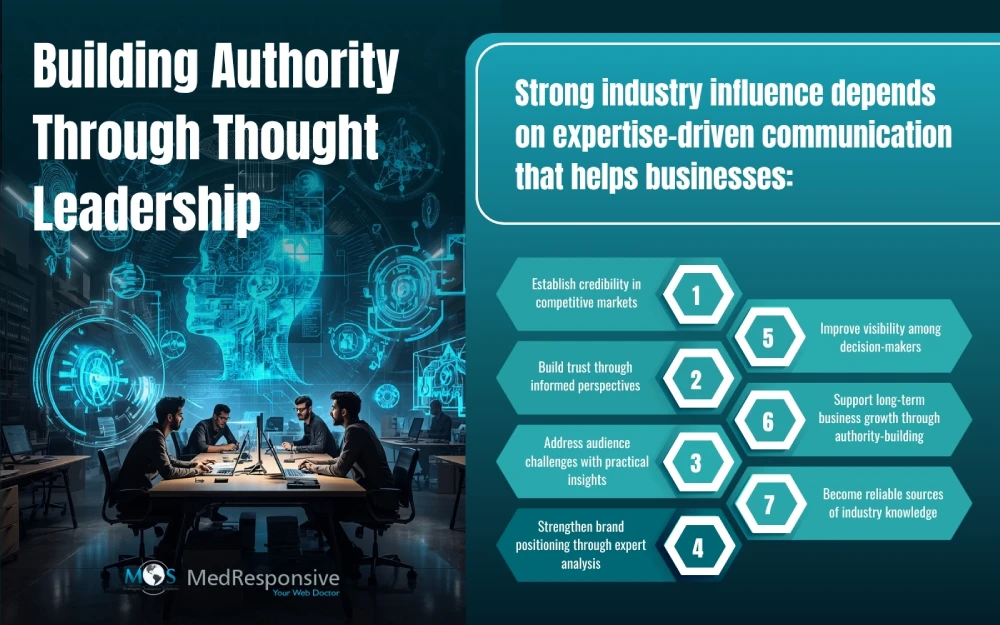
Creating influential market presence requires consistency, credibility, meaningful expertise, and audience relevance. Thought leadership content functions as a long-term strategic asset that helps organizations strengthen trust, shape industry conversations, and improve audience confidence.
Businesses that prioritize informed perspectives over promotional messaging position themselves more effectively in competitive markets. Their success depends on relevance, evidence-based insights, and sustained value creation across audience touchpoints.
As AI-assisted systems continue reshaping editorial workflows, organizations that combine technological efficiency with genuine expertise, supported by strategic SEO content writing services, will generate stronger long-term outcomes.
Ultimately, impactful thought leadership succeeds when it informs, educates, solves problems, and demonstrates measurable understanding of audience challenges.
Need help building an expertise-driven content strategy?
Our specialists develop high-value editorial assets that strengthen credibility and audience trust.