To effectively target patients, healthcare brands need to appear where they spend most of their time, such as social media, telehealth platforms, and websites. Hospitals, clinics, and doctors now use live videos in healthcare digital marketing as a key way to build trust, answer questions, and help patients in real time. Billions of people watch online videos, and with most marketers seeing good results from video content, healthcare providers can benefit from adopting this approach.
Why Live Videos in Healthcare Digital Marketing Matter Today
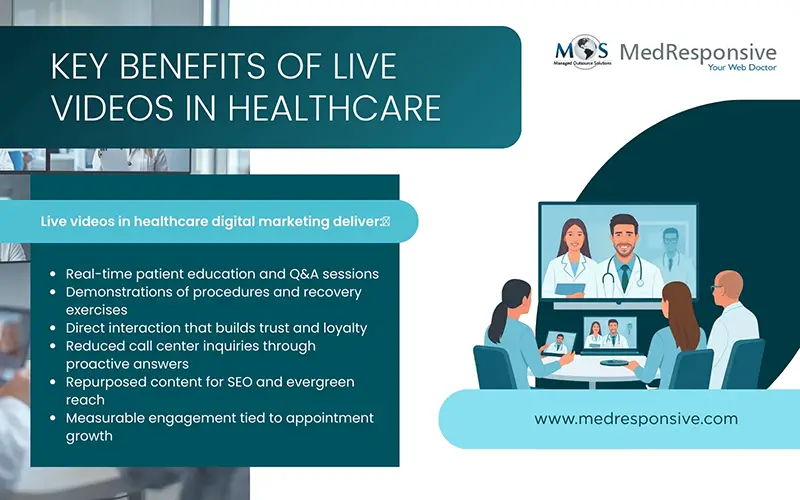
Video is now one of the main ways people get information online. Most already know how to make healthcare-related decisions through video, using the medium to choose a doctor, research a condition, or compare treatment options. When healthcare brands use video with clear explanations and a human tone, they help anxious patients who may hesitate to call a clinic. Video also drives patient loyalty – those who regularly see the same doctors on screen feel more comfortable engaging with them.
Video improves patient engagement. Live video provides interaction that recorded videos cannot offer. Viewers can ask questions in real time, provide health updates, and take part in a shared experience instead of just watching passively. Live sessions make medical information easy to access. Patients hear doctors explain problems in simple language, watch demonstrations, and ask questions right away. Visual and conversational content engages patients, especially when it focuses on practical skills. After watching, patients feel prepared and confident about managing their care.
Platforms and Formats for Live Videos
There are various video platforms that healthcare organizations can use, based on their goals. YouTube and Facebook Live suit longer sessions, such as webinars or detailed Q&A sessions. Instagram and TikTok attract younger viewers who prefer content on mobile devices.
For ongoing strategy, healthcare video marketing works best when it combines live and pre-recorded content. Live sessions address interaction and current issues, while recorded videos explain evergreen topics, such as procedures, rehabilitation exercises, or medication instructions. Over time, this combination creates a library of resources that supports patients and caregivers while allowing space for new live topics.
Planning Videos Strategically
Using live video for healthcare marketing requires strategic planning. Clear goals shape the format, length, and topics of each session. Common goals include increasing new patient inquiries, better education for current patients, stronger reputation in a specialty, or answers to frequent questions that reduce pressure on call centers.
A simple planning checklist helps:
- Define the target audience for each live session
- Choose one main topic with a few sub-questions
- Assign clear roles, such as host, clinical expert, and moderator
- Prepare a brief outline and a few safe example questions
- Decide how the recording will be edited and reused after the live event
Teams should also consider search visibility when they plan topics and titles. A strong title with the main topic and patient language helps the recording rank higher in search results over time. Some organizations work with a healthcare SEO agency to identify phrases patients use to search for symptoms and procedures. The teams then build live events around those key questions.
As part of that planning, teams align medical live streaming schedules with clinic calendars and major health observance days. When teams link live events to these dates, patients show more interest and local groups share the links. Over a year, a consistent calendar helps viewers know what to expect and encourages repeat attendance.
Content Ideas for Videos
Many teams hesitate because they do not know which topics to cover in live video. In practice, staff already answer the best topics daily during visits or phone calls.
Some practical content ideas include:
- Condition explainer sessions, such as “Understanding early signs of heart disease” or “Managing type 2 diabetes at home”
- Pre-surgery preparation talks, where clinicians explain what to expect before, during, and after common procedures
- Rehabilitation and recovery demonstrations, guided by physiotherapists or occupational therapists
- Support sessions for caregivers of patients with chronic conditions like dementia or cancer
- Myth-busting sessions around vaccines, screening tests, or new therapies
Hospital marketers use lists of live video marketing ideas for practices as a starting point to build content calendars. Over time, data from past streams, such as peak attendance and common questions, shows which topics need follow-up sessions.
Some hospitals use Facebook Live for patient education during health camps, blood donation drives, or outreach events to reach more people. They broadcast expert talks, short interviews with participants, and practical demonstrations, then save the video on their page for later viewing.
Healthcare video marketing works best in these formats when it offers clear explanations without jargon and practical steps. Patients respond better to education and support than to service promotions. This approach builds trust and long-term brand preference.
Compliance, Consent, and Ethics for Videos
Live video works in a clinical setting, so compliance and ethics are non-negotiable. Staff must obtain full written consent before any real patient appears. The consent should clearly explain video use, recording status, and placement.
Organizations should set clear guidelines before going live:
- Never discuss identifiable patient details or show clinical records
- Avoid offering individual diagnoses or treatment recommendations during public streams
- Use disclaimers that clarify the session is for education only and does not replace a consultation
- Train presenters to redirect personal questions into private channels where appropriate
Ethical standards also apply to how live video is promoted. Titles and descriptions should not exaggerate results or make unrealistic promises.
For staff training or closed patient groups, teams ensure medical live streaming sessions follow privacy and security rules. Access controls, secure platforms, and proper storage policies protect sensitive data. Early rules give clinicians confidence to participate in live video without violation risks.
Promotion and Distribution of Videos
Promotion must start at least one week before the event across multiple channels. The best live session will not reach patients if they do not know about it. Websites, email newsletters, waiting room screens, messaging groups, and social media can share short announcements with time, topic, and a clear reason to join.
After the live event, teams reuse the recordings:
- Edit it into short clips that answer one question each
- Add captions for accessibility and for viewers who watch with sound off
- Embed it on website pages about services or blog posts
- Share highlights in emails to new and current patients
Reusing recordings saves time and boosts reach. Each additional view, click, or minute watched boosts brand exposure and patient education over time.
Organizations without social media or video expertise work with external partners for planning and promotion. Specialist providers of healthcare digital marketing services handle channel selection, ads, and content repurposing while internal clinical teams focus on content quality and accuracy.
Measuring Video Results
Most major platforms provide analytics on views, watch time, engagement, and audience demographics. Over time, these metrics help show which topics, lengths, and formats perform best.
Useful metrics include:
- Number of live viewers and replay views per session
- Average watch time and retention at key points in the video
- Number and quality of comments and questions
- Click-throughs from the video to appointment pages or contact forms
- New followers or subscribers gained after each event
Healthcare leaders tag links and track appointment requests from specific live events. This connects live video activity directly to business and clinical results. In-house teams or external partners providing healthcare marketing services manage structured follow-up, depending on resources and scale.
Building a Sustainable Video Program
The most successful programs start small and grow over time. Consider starting with one monthly Q&A hosted by a senior doctor, supported by a marketing team member who moderates questions.
Smaller clinics that lack large in-house teams sometimes combine live video with broader digital services from agencies that specialize in healthcare. Partners handle strategy, ads, editing, and search visibility while the clinic focuses on medical content and on-camera talent. Over time, this approach helps modest practices maintain a consistent presence as part of broader healthcare marketing services.
Not every hospital or clinic has internal staff who are comfortable on camera, experienced with live platforms, and familiar with digital measurement. In these cases, outside specialists can fill the gaps. Some providers choose a partner that can manage their wider digital presence as well as video. A dedicated healthcare SEO agency ensures teams title, tag, transcribe, and embed recordings properly so that they attract search traffic long after the live event ends.
The Growing Role of Live Videos
Live video has evolved from an experimental tactic into a practical, patient-friendly tool that supports education, engagement, and growth across healthcare organizations.
When planned carefully, supported by clear policies, and integrated with broader digital efforts, live video helps healthcare brands explain complex topics, answer real questions, and stay connected with their communities. Whether managed in-house or with external healthcare marketing services, a thoughtful live video program now forms a natural part of any modern approach to live videos in healthcare digital marketing.
Grow your practice through live video — engage patients, demonstrate procedures, and drive inquiries.
Let us handle strategy and SEO optimization.
Contact Us