Healthcare today isn’t just about doctors and diagnostics—it’s about smarter systems working behind the scenes. Custom healthcare software solutions become useful here. It helps providers streamline workflows, enhance patient care, and make data-driven decisions faster than ever before. Instead of relying on rigid, one-size-fits-all platforms, healthcare organizations are increasingly turning to tailored technology that adapts to their unique needs and challenges.
The momentum behind this shift is hard to ignore. Recent industry insights by Grand View Research suggest that the global healthcare IT market, valued at around USD 866 billion in 2025, is projected to surge past USD 2.8 trillion by 2033, growing at an impressive double-digit rate. This rapid expansion is fueled by rising smartphone adoption, the growing demand for remote patient monitoring, stronger digital infrastructure, and increased investments in eHealth initiatives. Notably, North America continues to lead the market with a significant share, reflecting its early adoption of advanced technologies.
As healthcare becomes more connected and patient-centric, the role of medical software development services is becoming increasingly vital—bridging the gap between innovation and practical, real-world care delivery.
What Custom Healthcare Software Solutions Aim At
The major goals of healthcare software development in physician clinics, hospitals, and nursing homes are:
- Improving health outcomes for patients
- Enhancing the overall patient experience
- Increasing the security and accuracy of data management
- Reducing operational costs
Today, the focus of the U.S. healthcare industry is gradually shifting from simply increasing patient volumes to delivering greater value to patients. A value-based care model not only improves patient satisfaction but also boosts ratings and, in turn, attracts more patients to your practice. In this evolving landscape, specialized solutions play a crucial role in achieving these outcomes efficiently.
Why Healthcare Providers Need Custom Software
Off-the-shelf solutions may be easy to implement, but they may fall short when it comes to meeting the complex and evolving needs of modern healthcare. From large multi-specialty hospitals to specialized clinics, every provider operates differently—with distinct workflows, patient expectations, and regulatory requirements. This is why many organizations are turning to custom medical software to bridge the gap.
Tailored solutions are designed around a provider’s specific processes, existing systems, compliance needs, and patient population. Whether it’s managing appointments, streamlining diagnostics, handling billing, or tracking clinical data, custom-built software aligns seamlessly with organizational goals—leading to more efficient operations and improved patient outcomes.
Multifaceted Aspects of Healthcare Software
The following are the various aspects of healthcare software development:
- EHR Software– As you’d have realized, Electronic Health Record software helps in maintaining and managing patient data in the electronic records. Information updated includes the patient’s medical history, demographic information, lab results, allergies and other medical information.
- Healthcare CRM– Healthcare CRM (customer relationship management) deals with maintaining and improving the relationship with clients which, in this case, involves patients. Performance reports and contact management are part of it.
- Hospital Management Software– This includes technologies for managing various aspects of a hospital including billing, patient information management, administrative tasks, insurance, etc.
- Medical Practice Management– This software includes technology for optimizing day-to-day operations such as accounting, setting appointments, maintaining medical records, financial management, and ensuing smooth clinical workflow.
- E-Prescription Software– This contains the technology for sending prescriptions to pharmacies and drug stores directly. It is particularly helpful for patients.
- Emergency Care– This primarily involves apps that enable patients to secure emergency aid even without visiting the doctor’s office.
The software requirements vary according to client needs. If you are running a physician clinic, your requirements may be focused more on day-to-day medical practice management. However, if you’re in charge of a hospital, there are wider requirements for you to deal with including healthcare CRM and EHR software. But the point is, software solutions of some kind are absolutely essential.
Addressing the Unique Challenges of Healthcare Providers
Healthcare providers operate in a highly complex and regulated environment where speed, accuracy, and efficiency are critical. A one-size-fits-all software solution may fail to meet the diverse needs of different healthcare settings—what works for a large urban hospital may not suit a small rural clinic. Custom medical applications address these challenges by offering tailored tools for patient record management, treatment tracking, and appointment scheduling.
These solutions are designed to integrate seamlessly with existing or new systems, ensuring flexibility and adaptability. Instead of forcing providers to change their workflows, the software aligns with how they already operate, improving overall clinical efficiency. By automating routine tasks and streamlining processes, custom software reduces administrative burden and enables healthcare professionals to focus more on patient care.
Features like real-time monitoring and digital prescriptions enhance decision-making, minimize errors, and improve communication—ultimately leading to better patient experiences and outcomes.
Benefits of Custom Healthcare Software Solutions
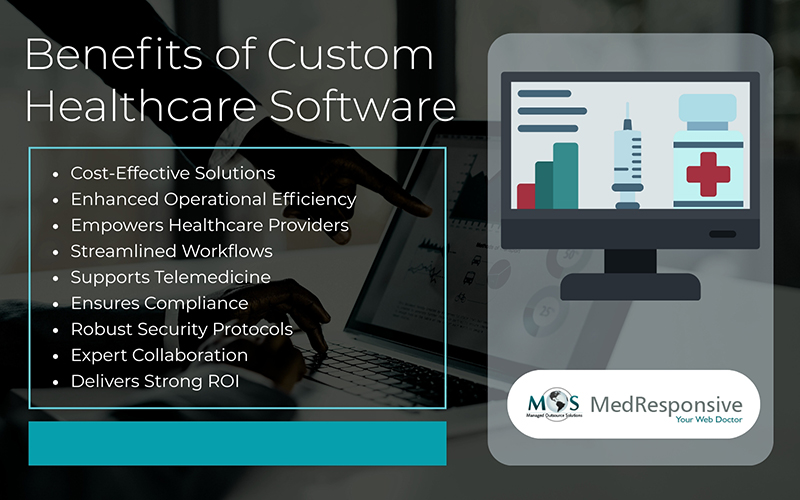
- Cost-effective Solutions Tailored to Specific Needs: Custom healthcare software focuses only on essential features needed by an organization, eliminating unnecessary functionalities. While the initial investment may be higher than standard software, it leads to long-term savings by reducing the need for third-party tools. These tailored solutions also cut costs related to upgrades, licensing, and integrations. Over time, healthcare institutions benefit from smoother operations and more efficient resource management.
- Improved Operational Efficiency and Reduced Administrative Burden: Custom software automates repetitive tasks like billing, patient records, and appointment scheduling, reducing manual workload. This type of clinical workflow automation ensures accuracy and speed, enabline staff to focus more on patient care. It also minimizes administrative errors and saves time for both staff and patients. Overall, it significantly improves the efficiency of day-to-day healthcare operations.
- Empowering Healthcare Providers to Deliver High-quality Care: Tailored software equips healthcare professionals with the tools they need to manage treatments, access patient histories, and collaborate effectively. By integrating systems like EHRs and clinical decision support tools, providers can make more accurate diagnoses. These systems also help with predictive analytics, enhancing care quality and outcomes. Ultimately, custom solutions enable a more responsive and informed care environment.
- Streamlined Operations and Improved Patient Outcomes: Custom solutions bring together various healthcare functions—EHRs, billing, lab results, and telemedicine—into one cohesive platform. This integration enhances communication and reduces delays in care delivery. Providers can access real-time data, monitor patient progress more closely, and make faster decisions. The result is more coordinated care and better patient experiences.
- Supporting Telemedicine for Remote Consultations and Continuous Care: Custom healthcare software can incorporate telemedicine features like video calls, messaging, and remote monitoring tools. This expands access to care, particularly in remote or underserved areas. It enables continuous management of chronic conditions and post-operative recovery without requiring in-person visits. Providers can stay connected with patients and intervene promptly when needed, improving health outcomes.
- Compliance with Healthcare Standards: The importance of secure custom software in healthcare cannot be overstated. Custom healthcare software is built to meet strict industry regulations and data privacy laws. It ensures compliance with standards like HIPAA, GDPR, and 21 CFR Part 11, protecting sensitive patient data. This reduces the risk of legal penalties and reputational harm. Organizations benefit from secure systems that maintain trust and operate within legal boundaries.
- Robust Security Measures and Regular Audits: Data security is a top priority, and custom solutions offer features like encryption, access control, and audit trails. These systems are specifically tailored to protect healthcare data from unauthorized access and cyber threats. Routine security audits help detect vulnerabilities and keep the system updated. This proactive approach ensures ongoing compliance and data protection.
- Collaboration with Legal and Compliance Experts for Adherence: During software development, legal and compliance experts may be involved to ensure the software meets evolving regulations. This collaboration ensures that updates and features remain within legal frameworks. Custom software can adapt quickly to new laws without disrupting operations. Healthcare providers stay protected from legal risks while maintaining up-to-date compliance.
- Return on Investment (ROI) and Competitive Advantages: Though custom solutions may require a higher upfront investment, they deliver strong long-term returns by enhancing operational performance and reducing inefficiencies. Features tailored to an organization’s specific needs give providers a unique edge over competitors. Higher patient satisfaction, better retention, and increased trust follow. Ultimately, it leads to improved profitability and a stronger reputation in the healthcare market.
Top Healthcare Software Development Trends
- AI enhances diagnosis, treatment personalization, and predictive care.
- Telemedicine enables convenient virtual consultations and remote monitoring.
- Blockchain improves data security and seamless health record sharing.
- IoMT connects devices for real-time patient monitoring and proactive care.
- Wearables track vital health metrics outside clinical settings.
- Big data and analytics help predict risks and optimize operations.
- RPA automates administrative tasks, reducing workload and errors.
- FemTech focuses on women’s health with specialized digital solutions.
- AR/VR supports surgical training, therapy, and advanced treatment planning.
- Cloud systems ensure secure, scalable, and interoperable data management.
These trends are transforming healthcare delivery, improving efficiency, enhancing patient outcomes, and driving innovation across the industry.
From healthcare software development to personalized medical applications, the benefits of personalized digital tools are far-reaching. Whether you’re aiming to enhance patient experiences or streamline internal processes, the right custom solution can transform your approach and your outcomes. Associating with a custom software development company that specializes in healthcare can open new doors for innovation, personalization, and operational excellence. Whether it’s improving patient engagement, reducing errors, or increasing ROI, the value of customization is clear and measurable.