
In the bustling world of digital media, short attention spans and competitive campaigns dictate how content is consumed and evaluated. Users scroll faster, compare more options, and make decisions with limited cognitive bandwidth. In this environment, visual experiences shape how audiences process information, decide on content worthy of their time, and connect with brands that resonate.
Multimedia elements such as images, videos, animations and audio play a critical role in this process. These creative assets capture user attention, drive higher engagement and enhance storytelling across digital channels. By creating a memorable and visually immersive interaction, multimedia content brings ideas to life and makes your message stick long after viewing.
For companies trying to stand out in an oversaturated digital environment, visual-first content has become a strategic necessity. Integrating multimedia elements into a visual content marketing strategy helps strengthen engagement, improve brand recall, and build impactful digital campaigns. This is especially relevant in digital marketing for small business, where visuals communicate ideas quickly and effectively without relying on large budgets.
Understanding the Role of Multimedia Elements in Digital Marketing
Multimedia elements refer to digital media assets such as images, videos, audio, infographics and interactive formats that enhance communication. Unlike static content, which relies on written text alone to convey messages, multimedia formats blend text, visuals, audio, and motion to deliver a dynamic experience.
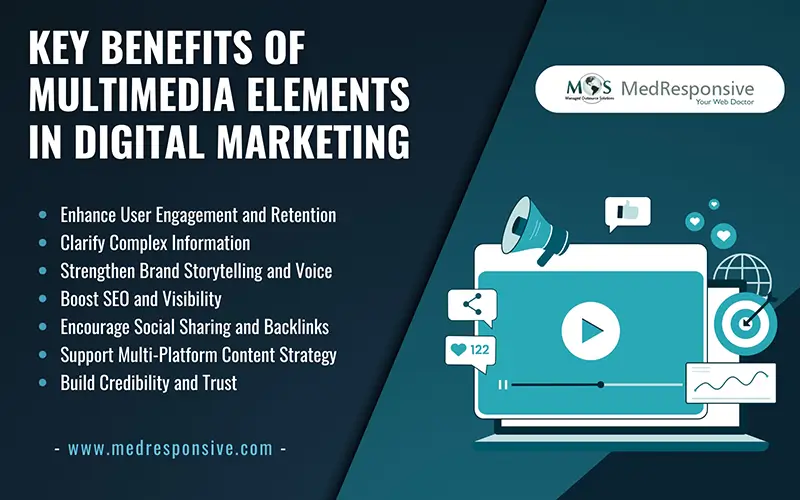
When marketers use these elements strategically, they connect with users on a deeper level, reinforce brand voice, and drive better campaign results. Let’s explore the key aspects of multimedia components that make them essential in today’s visual-first marketing era:
- Enhance User Engagement and Retention: Interactive content such as images, videos, and animations capture attention instantly, encourage longer interaction, and help audiences retain key messages—visuals are processed by the brain 60,000 times faster than text.
- Clarify Complex Information: Visual formats such as infographics, explainer videos, and animations simplify dense or technical topics. This format turns complicated concepts into clear, digestible insights.
- Strengthen Brand Storytelling and Voice: Multimedia allows brands to express tone, values, and personality in ways text cannot achieve on its own. Visual storytelling creates emotional connection, builds familiarity, and helps audiences relate to the brand message.
- Boost SEO and Visibility: Well-optimized media assets support SEO by improving engagement metrics and content discoverability. Image alt text, video transcripts, captions, and accessible design help search engines index content more effectively across text, image, and video results.
- Encourage Social Sharing and Backlinks: Visually engaging content performs better on social platforms, where users respond quickly to graphics, short videos, and interactive posts. These assets also attract backlinks, extending reach and reinforcing content credibility.
- Support Multi-Platform Content Strategy: Digital content pieces adapt easily across channels. A single asset can support blog posts, landing pages, social media, email campaigns, and ads, ensuring consistent messaging while maximizing production value.
- Build Credibility and Trust: Original visuals, tutorials, and demonstrations showcase expertise and authenticity. Combined with structured data and optimized accessibility, multimedia reinforces trust, authority, and E-E-A-T signals for both audiences and search engines.
When used strategically, digital media assets do far more than enhance visual appeal—they strengthen engagement signals, improve search visibility, and elevate content quality. Implementing multimedia SEO best practices allows brands to create content that resonates with users and better perform in search engine rankings.
Top Multimedia Elements for Digital Marketing
Although the landscape of digital media keeps evolving, core multimedia elements remain essential to effective online advertising strategy. Each element serves a specific purpose by helping brands maintain a diverse, engaging user experience.
- Images: Static media elements such as photographs, illustrations, and posters can be designed to be visually appealing and attention-grabbing. Brands can create high-quality, high-resolution images optimized for websites to showcase product design, lifestyle shots, and instructional visuals.
- Text-based Visuals: Creative use of typography, animated text, or stylized quotes can make text content more engaging. These formats highlight key messages and emphasize brand tone without relying solely on imagery or video.
- Videos: Video content combines motion, visuals, and audio to deliver a more immersive user experience. Explainer videos, tutorials, product demos, and short social clips allow audiences to see processes, products, or concepts in action.
- Audio: Podcasts, voiceovers, and audiobooks allow brands to connect with audiences on an auditory level. Audio content marketing can enhance storytelling, build emotional connections, and support accessibility for users who prefer listening over reading.
- Infographics: Infographics visually represent complex data, statistics, or processes in an easy-to-digest format. They help audiences understand information quickly and increase shareability across social media platforms.
- Interactive Content: Quizzes, polls, sliders, calculators, and interactive elements encourage active user participation. This type of content boosts engagement, provides personalized experiences, and helps brands collect valuable audience insights.
- Other Digital Formats: GIFS, animations, and motion graphics add controlled motion to digital content without the complexity of full video. Their short format works well to highlight processes, workflows, transitions, and product features that benefit from motion.
Together, these multimedia content types give brands the flexibility to communicate ideas in diverse and engaging ways. By selecting the right formats for each campaign goal, marketers can create richer user experiences that support engagement, authenticity and long-term brand impact.
Best Practices for Multimedia Content in Marketing
Using visual and interactive assets effectively requires more than simply adding them to a page. Their impact depends on how well they are planned, structured, optimized, and evaluated within the broader content strategy.
- Define Purpose before Selecting Formats
Each asset should serve a clear function within the content, such as explaining a concept, supporting a product decision, or guiding users through a process. Choosing formats based on intent prevents visual overload and ensures every element contributes meaningfully to the page rather than serving as decoration.
- Design for Clarity and Consistency
Consistent use of layout, spacing, typography, and visual hierarchy helps users to process information without confusion. Maintaining the same design standards across assets also reinforces brand identity and creates a unified experience across different platforms and touchpoints.
- Optimize for Search Visibility
Visual and interactive assets should be treated as searchable content, not supporting add-ons. Descriptive file names, alt text, captions, transcripts, and structured data help search engines understand context while improving visibility in image and video search results.
- Build Accessibility into Execution
Accessibility should be addressed during creation, not added later. Readable contrast, scalable text, captions for audio-based content and descriptive alternatives for visuals ensure usability for a wider audience while supporting compliance and inclusive design standards.
- Balance Quality with Performance
High-resolution assets must be optimized to avoid slow load times and layout shifts. Proper compression, responsive sizing, and efficient formats improve page performance while preserving visual clarity across devices.
- Measure Interaction, Not Just Exposure
Performance should be evaluated using indicators that reflect actual use. Interaction depth, completion rates, scroll behavior, and assisted conversions provide clearer insight into how users engage with content and where friction may exist.
- Refine Strategy Based on Real Usage
Performance data should inform future decisions rather than act as a final report. Reviewing which assets support user goals and which underperform allows teams to refine format selection, placement, and execution over time.
When planned and executed thoughtfully, visual and interactive content becomes a functional part of the content strategy rather than a visual layer added at the end. Clear objectives, consistent design, technical optimization, and performance analysis work together to ensure these assets support both user needs and long-term business goals.
Optimize Multimedia Assets with the Right Team
Digital media assets deliver results only when they are continuously refined to match audience behavior and platform performance. Effective multimedia execution requires coordination across strategy, design, optimization, and performance tracking. Affordable digital marketing services support this work by managing visual and interactive assets within a structured framework rather than treating them as isolated creative elements. These external experts leverage AI to analyze engagement behavior, surface patterns across content formats, and reduce manual effort in optimization and reporting. This approach maintains consistency across channels while adapting content based on real user interaction. Over time, it aligns multimedia efforts with measurable business outcomes without adding extra workload for internal teams.