By 2026, more than 70% of patients begin their healthcare journey with AI-assisted search tools (not traditional search engines) meaning your content needs to be structured for both humans and AI discovery to stay competitive.
Healthcare content marketing has evolved faster than most practices expected. Today’s patients are more informed, more discerning, and more willing to engage long before they ever pick up the phone to book an appointment – reshaping modern healthcare digital marketing strategies.
To build trust and convert those prospects, you need formats that meet them where they are; whether that’s a mobile screen, a social feed, or a generative AI response.
Below, we break down the top content formats that actually work in 2026, why they matter, and how to leverage them in your healthcare marketing strategy.
Best Content Formats for Effective Healthcare Marketing
- Educational Articles and Blog Posts
Written content remains foundational in healthcare marketing, but not just any articles. In 2026, they must be AI-friendly and patient-first.
Effective articles:
- Answer real questions patients ask (not just medical jargon)
- Use headings, clear language, and FAQ sections that AI can pull for direct answers
- Are regularly updated with the latest clinical insights
Why it matters: These articles build trust, improve search visibility, and help your practice be found by patients researching symptoms, treatments, and practitioners.
Pro tip: Use schema markup and structured content blocks so AI assistants can pull direct answers into search and chat results.
- Patient Testimonials & Case Studies
Stories sell, especially in healthcare. Personal experiences humanize your brand and give prospects the social proof they need to take the next step.
In 2026:
- Video testimonials outperform text alone (higher engagement and trust)
- Case studies should include outcome data and clear patient goals
- Always secure consent and follow HIPAA-compliance protocols
These stories don’t just build trust, as they influence decision-making at critical moments in the patient journey and strengthen patient engagement content.
- Video Content (Short & Long Form)
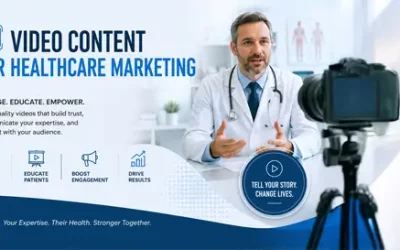
Video is no longer optional. Whether it’s educational explainers, short social reels, or longer explainer videos, patients engage with video content more than any other medium online.
Formats to prioritize:
- Short, TikTok/Reels-style clips of doctors answering common questions
- Facility tours and behind-the-scenes content
- Explainers of procedures or health conditions
- Live Q&As with clinicians
Best practices:
- Add captions for accessibility
- Include clear calls to action
- Repurpose long videos into shorter clips for social sharing
Video helps your brand show authority and personality; the two ingredients that drive engagement and conversion.
- Infographics and Visual Data
Healthcare topics can be complex. Infographics simplify concepts by translating numbers and processes into visuals that are quick to digest and easy to share.
Use them for:
- Step-by-step care pathways
- Symptom timelines
- Prevention tips
- Procedure comparisons
Pair visual elements with concise explanations so both humans and AI systems understand the content context. Infographics often get more engagement on social platforms and serve as powerful backlinks when shared across the web.
- Webinars and Virtual Events
Webinars build thought leadership and help you educate and convert at scale. These are especially valuable for complex or niche services where patients need deeper information before booking.
In 2026, aim to:
- Host physician-led webinars on trending topics
- Include live Q&A segments
- Promote across email and social channels
- Offer recordings on demand
Webinars extend your reach and position your team as trusted experts.
- Email Newsletters with Personalization
Email continues to deliver one of the highest returns among digital channels, if it’s done right. Generic newsletters are passé; hyper-personalized email journeys are where growth happens.
Segment audiences by:
- Health interests
- Behavior (what content they opened or clicked)
- Stage of the patient journey
Deliver tailored health tips, curated article collections, and timely reminders that feel relevant, and not intrusive.
- Social Media Content (Posts & Stories)
Social platforms are where patients discover content; not just consume it. Effective social content includes:
- Short educational clips
- Infographics
- Polls and interactive stories
- Patient success highlights
- Timely health reminders
Be consistent, engage with comments, and leverage native features (Stories, Live, Polls) to build a community around your care brand.
- Interactive Tools & Quizzes
Patients love tools that personalize information. Interactive content like symptom checkers, risk quizzes, cost estimators, or self-assessment tools help reduce anxiety and increase engagement.
These formats:
- Increase time on site
- Provide insights into patient intent
- Can be used to capture leads ethically and compliantly
Interactive tools also signal to search engines and AI systems that your content is highly valuable and engaging, thereby boosting digital healthcare marketing performance.
- AI-optimized Content Snippets & Structured Answers
Here’s the big shift in 2026: Your content must be ready for AI answer engines. AI assistants, ranging from search chatbots to voice assistants are fast becoming the first stop knowledge gates for many patients.
To optimize for AI:
- Include FAQ blocks with concise, answer-style text
- Use structured schema markup
- Write clear definitions and short response snippets
This makes it more likely that generative AI platforms will pull your content directly into answers for users, even if they don’t click through.
How to Build a Content Strategy That Works
Here’s how to stack these content formats into a performance-driven ecosystem:
- Top of Funnel: Awareness
- Short social videos
- Infographics
- AI-optimized FAQ snippets
- Middle of Funnel: Engagement
- Educational blog posts
- Webinars and long-form videos
- Interactive quizzes/tools
- Bottom of Funnel: Conversion
- Patient testimonials
- Detailed case studies
- Personalized email sequences
These layers work together to build trust, increase visibility, and guide patients from curiosity to conversion.
Staying Visible in the New Era of Digital Healthcare Discovery
Healthcare content marketing in 2026 is about meeting patients where they are: on search engines, social platforms, and within AI-powered discovery tools. The right content formats don’t just educate; they build trust, drive engagement, and convert curious searchers into loyal patients.
By combining these formats with strategic planning, analytics, and patient-centric messaging, your healthcare brand will stay visible—not just today, but in the future of digital discovery.
Looking to strengthen your healthcare content marketing strategy?
Let experts help you build AI-ready, patient-focused content that actually converts.
Contact Us