Patients are no longer satisfied with generic messages. They want healthcare tailored to their specific needs. Studies show 90% of patients expect personalization in healthcare campaigns. 50% would change doctors for better online services. Healthcare organizations need to send messages that speak to each patient’s individual needs. Focused content, relevant messages, and smart data help connect better with patients. This builds loyalty and improves results.
Why Personalization in Healthcare Campaigns Matters
Personalization is more than using a patient’s name. It covers their health history, conditions, and lifestyle. Personalized healthcare marketing works well when done correctly. Customized campaigns bring in 5 to 8 times more returns than generic ones. Patient follow-through and satisfaction jump by 25% with strong personalization strategies.
- Better Health Results: Personalized messages give patients advice they actually need. For example, a person with high blood pressure gets tips on managing it or a diabetic patient gets dietary guidance. When messages match their condition, patients follow their treatment plans better and get better results.
- More Patient Engagement: Patients respond better to messages about their specific condition or needs. When a provider sends relevant content, patients’ engagement rates increase. They schedule more appointments, stay with their provider, and trust them more.
- Better Marketing Returns: Targeted campaigns get more responses and retain more patients. When healthcare marketing services focus on the right message for the right person at the right time, money spent on marketing delivers better returns.
Tips to Personalize Healthcare Marketing
Building effective personalized campaigns takes planning. Healthcare providers should gather data, understand their patients, and send messages across different channels.
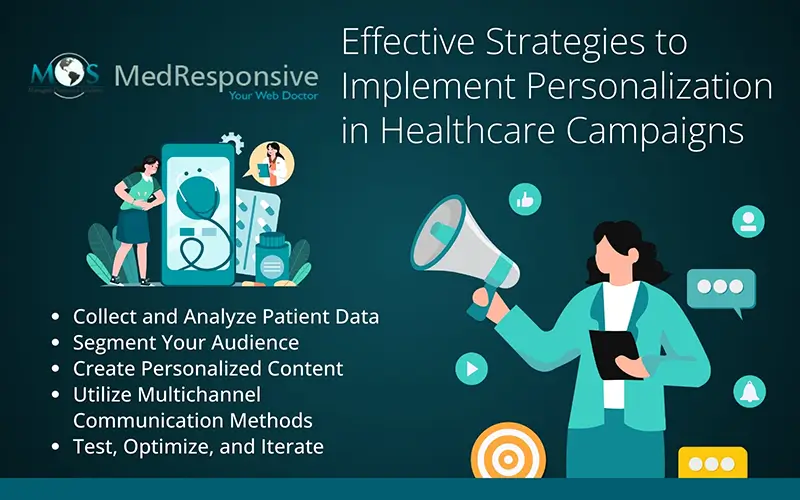
Collect and Study Patient Data
Data makes personalization possible. Without accurate patient information, healthcare providers can’t send targeted messages. They should collect data from multiple touchpoints in the patient journey.
- Age and location data help identify which services appeal to different groups. Older patients might want help managing chronic diseases. Meanwhile, young families might want pediatric care and health checks.
- Health data includes medical history, current conditions, medicines, and allergies. Knowing a patient’s health issues helps providers send educational content, medication reminders, or suggest preventive services that address their concerns.
- Behavior data shows how patients use websites, open emails, use apps, and book appointments. This reveals what content works best for different groups and which communication channels they prefer.
Electronic health records show past appointments, treatments and previous interactions. Analyzing this data helps find patterns and opportunities where healthcare marketers can reach out with helpful messages.
Start Patient Segmentation
Once you have patient data, organize it into meaningful groups. Patient segmentation splits patients into smaller groups with similar traits, needs, or behaviors. This lets you send better targeted messages than sending the same information to everyone.
- Age-based grouping puts patients in categories such as kids, teens, or seniors. A pediatric practice might group kids by age to send health tips and preventative care reminders suited for each age.
- Health condition grouping organizes by specific diseases or chronic conditions. For example, diabetic patients get tips on blood sugar, meal plans, and exercise. Meanwhile, asthma patients get allergy management content and breathing tips.
- Behavior grouping looks at how patients use your healthcare system. Some keep appointments and take medicines on time while others miss visits or skip medications. Behavioral targeting strategies spot these patterns. Patients who frequently miss appointments get friendly reminders while engaged patients get invites to wellness programs.
Create Targeted Content
After grouping patients, write content for each group’s needs and interests. This is where all your data collection pays off.
- Health articles for specific conditions work well. A patient with high blood pressure wants articles on managing it. Someone learning about stress or anxiety wants mental health tips. Well-organized content libraries help patients find what they need easily.
- Email campaigns are still effective channels for healthcare marketing. Send emails with health tips, appointment reminders, medicine refill notifications, or preventative care suggestions based on each patient’s health. Personalized healthcare email campaigns with patient names and real health information get much better results than plain emails.
- Appointment reminders through email, text, or app notifications reduce no-shows. Including the patient’s name, time, provider, and location makes people notice and attend.
- Social media campaigns on Facebook and Instagram reach specific groups by location, age, interests, and behavior. Healthcare providers can share health tips, seasonal alerts, or announce new services on these platforms.
Use Multiple Communication Channels
Don’t rely on just one method to contact patients. People use email, text, apps, social media, and phones. Link all these channels together for better communication. Messaging across all channels makes the patient experience smooth. When a patient gets a text reminder, followed by an email, then an app notification about the same appointment, it feels planned instead of repetitive.
- Text and app alerts grab more attention than email. They work especially well for urgent tasks like appointments or medication reminders. Busy patients check texts faster than emails.
- Patient portals let patients view their health information. They can also message their doctor, book visits, and learn about health topics.
- Mobile apps let providers stay in touch. They send health tips, appointment reminders, and help patients track their health conditions.
Test and Optimize Approach
Personalization isn’t the final step. Providers must test results and improve their approach over time.
- A/B testing creates two versions of an email or message. Test them to see which one gets better results. Check different subject lines, send times, buttons, or content to learn what each patient group prefers.
- Patient feedback from surveys and direct questions show what people value. Use this to improve messages and adjust tactics.
- Tracking results shows which messages lead to actions such as booking visits or asking about services. When providers track these numbers, they see which campaigns work best and where to improve.
Combine Personalization with Content Marketing
Healthcare content marketing works best with strong personalization. Instead of writing general content hoping everyone reads it, successful providers write content for specific patient groups.
For example, a cardiologist’s content might include:
- Articles or blogs on heart disease risk for patients over 50
- Videos on heart disease tips for recently diagnosed patients
- Recipes and lifestyle tips for patients recovering from surgery
- Preventive care information for younger patients with family heart disease history
By creating healthcare content marketing aimed at real patient groups, providers share information that feels useful and real. This builds trust, proves their expertise, and keeps patients connected.
How Technology and AI Power Personalization
Modern healthcare personalization uses smart technology. AI and machine learning help providers study large volumes of patient data and spot patterns humans would miss. These systems can predict which patients might miss appointments or need special reminders.
Automation handles personalization at large scale. Providers use systems that send tailored messages based on patient traits and actions. AI behavioral targeting learns from patient responses. The system gets better at choosing the right send times, messages, and channels. Healthcare patient reminders improve as the system learns.
Wearable devices capture live health data. When a device spots high blood pressure or unusual heartbeat, the healthcare system can send relevant tips or remind the patient to schedule a visit.
Secure Patient Data
Healthcare providers must follow patient privacy rules for personalization. Keep patient data safe, ask permission before messaging, and make opting out simple.
Proper personalization balances being helpful with being safe. Patients want personalized messages but need to trust that their health information stays private. Being clear about data use builds trust and helps patients feel comfortable sharing what providers need to know.
Start Your Personalization Plan
Healthcare organizations ready to implement personalization need a clear plan. Set personalization goals, review current data collection, and find easy wins that deliver immediate results. Start simple with basic grouping, then add more advanced tactics as your team learns and data improves.
Work with experienced healthcare marketing services that know personalization. These experts handle data, rules, and campaign work so healthcare organizations can launch their services faster.
Personalization is now standard in healthcare. Organizations that invest in personalization based on quality data, use multiple channels, and keep testing and improving will build stronger patient bonds and get better results.
Healthcare’s future belongs to providers who see each patient as unique. Using the strategies in this blog helps you deliver the personalized experiences patients expect and deserve.
Ready for personalized healthcare campaigns that work?