Have you ever wondered why certain pieces of your healthcare content perform exceptionally well, while others fall flat? The hidden insights, patterns, and signals buried in your records can reveal what truly resonates with your audience. However, in an era overflowing with analytics and KPIs, data alone isn’t enough. Healthcare marketing success depends on how digital marketers analyze, interpret, and translate those insights into impactful, data-driven content.
When used wisely, data-backed healthcare storytelling helps brands build stronger, more meaningful relationships with their audience. That’s where healthcare digital marketing services play a critical role in bridging the gap between raw data and actionable insight. By combining analytical precision with creative execution, these specialized agencies help healthcare organizations craft content that not only reaches the right audience but also drives measurable engagement and trust.
Key Benefits of Data-Driven Healthcare Content Marketing
In the world of digital marketing, “data-driven” is a catchy phrase that promises smarter decisions and faster engagement. In healthcare marketing, however, it’s more than a trend – it’s a necessity for optimizing campaigns and driving measurable results. With patient needs, compliance standards, and digital trends constantly changing, analytics is what keeps your content relevant, reliant, and impactful.
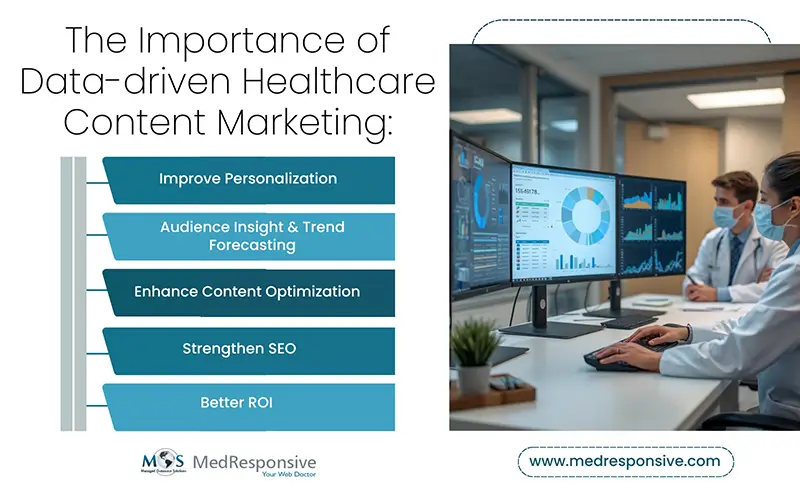
Let’s go through the key reasons why brands can no longer afford to overlook insight-led healthcare content strategy:
- Improve Personalization: Healthcare audience overwhelmingly prefer personalized recommendation, with nearly 75% of patients expecting tailored medical information from providers. Healthcare content personalization enables marketers to move beyond generic messaging by using real-time insights to tailor information that aligns with each patient’s unique needs, behaviors, and health interests. With analytics-driven materials, marketers can segment the audience effectively and deliver the right message at the right time.
- Audience Insight & Trend Forecasting: With audiences becoming more discerning and digital touchpoints multiplying, guessing what might resonate simply doesn’t work. By analyzing behavioral and search patterns in real-time, healthcare marketers can anticipate emerging topics, patient concerns, and seasonal trends. Evidence-based decisions allow brands to shift from a reactive approach to a proactive marketing strategy, and stay one step ahead of patient needs.
- Enhance Content Optimization: User analytics reveal what formats and topics drive the most engagement, whether it’s educational videos, expert Q&As, or patient testimonials. By leveraging data visualization tools, healthcare marketers can also track which distribution channels are most popular among different audience demographics and effectively allocate resources for maximum results.
- Strengthen SEO: As search algorithms become more intelligent, traditional keyword tactics are no longer enough. AI-powered data tools now help healthcare marketers better understand search intent, analyze content gaps, and predict emerging queries. By leveraging these insights, brands can create authoritative, patient-focused content that not only ranks but also aligns with how AI systems discover and evaluate information.
- Better ROI: Advanced, AI-driven marketing tools allow healthcare marketers to track performance metrics precisely and identify which campaigns yield the highest conversions. This allows marketing teams to eliminate inefficiencies and focus on creating content that results in higher engagement, stronger acquisition, and maximum return on investment.
Ultimately, the blend of analytical findings and creativity turns healthcare content into a strategy that achieves measurable, long-lasting impact.
How to Build Data-Driven Storytelling in Healthcare Marketing
While the value of data-led medical marketing insights is clear, the real challenge for most companies lies in execution – which is turning these insights into intentional action. Many fail to realize that building an effective strategy for content performance tracking requires more than just collecting and analyzing numbers. Insight-driven content demands a structured approach that aligns strategy, analytics, and business objectives. When executed thoughtfully, it brings structure and purpose to what would otherwise be disconnected data points.
- Define Clear Goals and Outcomes
Every effective insight-driven content strategy begins with clarity. Before diving into analytics tools or KPIs, healthcare brands must identify their target audience, set performance benchmarks, and define business goals. Whether the goal is to improve patient awareness, drive appointment bookings, or enhance brand trust, each strategy should connect directly to measurable outcomes. To determine these factors, companies can
- Track customer behavior cues, analyze pain points, and create detailed audience personas
- Prioritize AI-driven engagement metrics along with traditional metrics, such as Predictive Churn Risk Score, Customer Lifetime Value (CLV) Prediction, and Omni channel Engagement Cohesion Score.
Clear goals not only guide what information to collect but also determine how findings will be interpreted and applied. Without defined benchmarks, even the most sophisticated insights risk becoming noise instead of direction.
- Collect and Consolidate Quality Data
Data is only as powerful as its accuracy and relevance. In healthcare, where trust and compliance are paramount, collecting the right information is more important than collecting more data. Through first-party analytics sources such as,
- Patient surveys and feedback
- Website analytics
- Social media engagement,
- EHR and billing systems
Companies can gain valuable insights into audience behavior, preferences, and pain points. But when these sources remain disconnected, they reveal only fragments of the full picture. Consolidating information from multiple touchpoints allows healthcare brands to understand how audiences interact across channels and what drives their decisions. This unified view helps teams to identify meaningful patterns, track performance effectively, and eliminate redundancies. Ultimately, a centralized data ecosystem supports smarter, evidence-based decisions that enhance both marketing efficiency and patient engagement.
- Use AI and Automation for Deeper Insights
Modern data analytics goes beyond basic reporting. Artificial intelligence and automation tools now make it possible to identify trends, predict patient intent, and uncover insights that manual analysis often misses. From monitoring search patterns to understanding sentiment in patient feedback, AI in healthcare marketing helps translate complex metrics into clear direction.
Automation also streamlines time-consuming tasks such as performance tracking, audience segmentation, and content personalization. By integrating AI-driven analytics into your strategy, healthcare brands can make faster, more informed decisions and adapt content to match evolving search behavior. The result is a marketing approach that is both efficient and insight-driven.
- Create Insight-Driven Content
Once analysis reveals what resonates, the next step is to turn those insights into meaningful content. Healthcare audiences seek clarity, trust, and relevance, so every piece of content should reflect a genuine understanding of their needs. By analyzing behavioral patterns, search intent, and engagement metrics, brands can identify the topics, formats, and messages that matter most to their target audience. These insights can then guide content teams in developing materials that engage the audience, drive leads, and conversions. These posts can be created in various formats such as,
- Video content
- Infographics and charts
- Blog posts and articles
- Custom images
When content is informed by evidence rather than assumptions, it becomes more precise, consistent, and impactful across every platform.
- Distribute with Precision
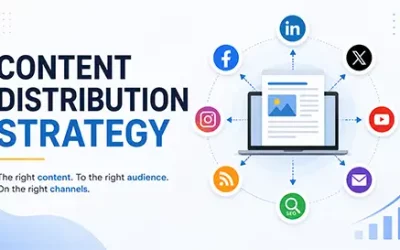
Even the most insightful content fails to deliver results if it doesn’t reach the right audience at the right time. Effective distribution ensures that every piece of healthcare content performs to its potential. This involves using data to determine where, when, and how your audience prefers to consume information. Leverage analytics to identify which platforms and formats drive the most engagement, be it social media posts, newsletters, educational blogs, or video explainers.
A data-led approach also supports smarter timing and frequency decisions. Constantly monitor performance metrics such as click-through rate, engagement duration, and content shares to understand what truly resonates. When done strategically, distribution becomes more than simple publishing – it transforms into an informed cycle of testing, measuring, and optimizing.
- Measure, Refine, and Repeat
A research-led medical content strategy is never static. Continuous content optimization ensures that each campaign grows stronger and more relevant over time. When measuring results, look beyond surface metrics like clicks and impressions – evaluate engagement quality, lead nurturing effectiveness, and patient satisfaction. Combine insights from analytics dashboards with direct human feedback to refine messaging and uncover new opportunities for connection.
These deeper insights show whether your content is truly resonating with your audience. Reviewing data regularly enables teams to make iterative distribution adjustments and experiment with new content formats based on real-world performance. This ongoing cycle of analysis and refinement keeps your content relevant, effective, and aligned with evolving audience needs.
Build Data-Led Content that Drives, Not Just Describes
In an industry defined by constant change and high standards, healthcare content marketing succeeds when complex information is transformed into clear, actionable communication. Data alone can’t guide decisions, as true advantage lies in creating a structured framework where insights drive action, performance guides refinement, and learning fuels innovation. When healthcare brands view data as a strategic asset rather than a supporting tool, every campaign becomes sharper, more intentional, and more sustainable. In the long run, this insight-led approach becomes the foundation of sustained business growth and competitive strength.