Businesses increasingly operate in environments where speed, scalability, and operational flexibility directly influence competitiveness. Traditional software deployment models, which depend heavily on local infrastructure and manual maintenance, struggle to meet the demands of rapidly changing digital ecosystems. Within this environment, subscription-based software platforms and cloud databases have emerged as critical components of modern business strategy. Organizations increasingly rely on these technologies to improve accessibility, streamline operations, reduce infrastructure burdens, and support long-term digital transformation. Partnering with a custom software development company is a strategic way to ensure your digital systems evolve in step with changing business goals.
Understanding SaaS and Why Adoption Continues to Grow
Software-as-a-Service, commonly known as SaaS, is a model of delivering applications over the internet, allowing users to access software through cloud-based platforms rather than installing and maintaining it locally on individual systems. Organizations access these systems through subscription models, eliminating the need for extensive hardware investments and manual upgrades.
The growing adoption of subscription-based platforms stems from several operational advantages:
- Reduced infrastructure costs
- Faster deployment timelines
- Improved accessibility across locations
- Simplified maintenance responsibilities
- Better scalability for growing businesses
Traditional software environments typically require substantial investments in servers, updates, and IT resources. By contrast, hosted software delivery models shift maintenance responsibilities to service providers, reducing internal operational burdens.
Gartner forecasts worldwide end-user spending on public cloud services will reach $723.4 billion in 2025, up 21% from $595.7 billion in 2024, as organizations prioritize scalable digital infrastructure to support modernization initiatives.
This trend reflects increasing business confidence in digitally managed environments that improve operational agility.
Cloud Databases: Why Modern Businesses Depend on Them
Modern organizations generate significant volumes of operational, financial, customer, and transactional information. Managing these growing datasets efficiently requires systems capable of supporting scalability, accessibility, and reliability. As a result, cloud databases increasingly serve as a foundational component of digital business infrastructure.
Unlike traditional on-premise storage environments, hosted data systems support centralized access and real-time synchronization across distributed teams and operational environments.
Key advantages include:
- Faster access to business information
- Reduced infrastructure maintenance
- Better scalability for changing workloads
- Improved backup and disaster recovery capabilities
- Stronger accessibility across geographic locations
Organizations operating in dynamic markets are increasingly depending on these centralized data ecosystems to improve visibility and operational responsiveness. Rather than maintaining isolated storage environments, they benefit from interconnected systems that improve continuity and collaboration.
Key Benefits of Subscription-Based Software Platforms
Organizations adopt SaaS models because they improve flexibility and operational efficiency.
Reduced Infrastructure Costs
Traditional deployment models require substantial hardware investment and ongoing maintenance.
Hosted platforms reduce expenses associated with:
- Physical servers
- Hardware upgrades
- Internal maintenance resources
- System downtime risks
This creates more predictable operational spending.
Greater Accessibility and Flexibility
Employees increasingly work across distributed environments.
Internet-based platforms support:
- Remote access
- Cross-location collaboration
- Consistent software availability
- Device-independent usage
This improves workforce continuity and business resilience.
Faster Implementation Timelines
Traditional deployment cycles may take months to configure and maintain.
Subscription-based platforms improve implementation speed through:
- Preconfigured environments
- Reduced setup complexity
- Faster onboarding processes
- Simplified updates
Organizations seeking agility increasingly prioritize deployment speed as a strategic advantage.
Improved Security Standards
Leading providers invest significantly in infrastructure protection.
Security measures may include:
- Encryption protocols
- Threat monitoring systems
- Identity access controls
- Automated security updates
This reduces risks associated with outdated infrastructure management.
Benefits of Hosted Data Systems for Modern Organizations
Businesses increasingly require information environments capable of adapting to changing operational demands.
Better Scalability
Traditional infrastructure requires physical expansion to support growth.
Hosted storage ecosystems support changing business needs without major hardware investments.
This improves:
- Operational flexibility
- Performance consistency
- Growth readiness
- Resource efficiency
Stronger Disaster Recovery Capabilities
Unexpected disruptions create operational risks.
Modern storage environments improve continuity through:
- Automated backups
- Geographic redundancy
- Faster recovery capabilities
- Reduced downtime exposure
Improved Collaboration Across Teams
Organizations increasingly depend on cross-functional collaboration.
Centralized information environments support:
- Shared visibility
- Real-time updates
- Improved coordination
- Better decision-making
Better Performance Monitoring
Modern environments provide stronger visibility into system health and operational performance.
Organizations gain improved insights into:
- Usage trends
- Resource allocation
- Performance bottlenecks
- Operational risks
Businesses working with a custom software development company increasingly prioritize scalable information systems capable of supporting long-term digital growth.
How AI Is Transforming SaaS and Digital Infrastructure
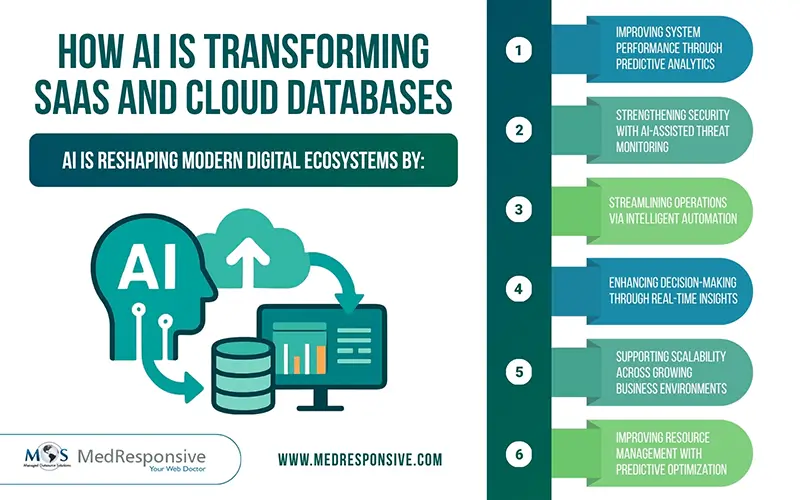
Artificial intelligence increasingly influences how organizations manage software delivery and digital ecosystems. Rather than functioning solely as productivity tools, AI-enabled systems improve performance, security, and operational intelligence.
AI-Driven Predictive Maintenance
Intelligent monitoring systems identify anomalies before disruptions occur.
Potential improvements include:
- Reduced downtime risks
- Faster incident response
- Better infrastructure reliability
- Smarter resource allocation
AI-Assisted Cybersecurity Monitoring
Threat environments continue evolving rapidly.
AI-assisted systems improve:
- Threat detection accuracy
- Behavioral anomaly identification
- Fraud prevention efforts
- Security response speed
AI-Enabled Business Intelligence
Organizations increasingly use AI-driven analytics to improve strategic planning.
These systems support:
- Predictive forecasting
- Customer behavior analysis
- Revenue optimization insights
- Operational planning improvements
IBM reports that organizations deploying AI at the operational level outperform peers by 44% in employee retention and revenue growth, driving increased integration into enterprise systems for operational efficiency, decision-making, and productivity across business environments.
This demonstrates how intelligent technologies increasingly shape modern digital ecosystems.
Challenges Businesses Should Evaluate
Despite significant benefits, organizations should evaluate implementation considerations carefully.
Vendor Dependency
Organizations may become dependent on a specific provider ecosystem.
Decision-makers should assess portability and long-term flexibility.
Data Governance Concerns
Businesses managing sensitive information must prioritize:
- Compliance readiness
- Data residency considerations
- Access governance
- Privacy controls
Cost Management
Subscription costs may increase as operational needs expand.
Organizations should evaluate total long-term spending rather than focusing only on short-term savings.
Integration Complexity
Businesses frequently operate across multiple digital systems.
Technology ecosystems should support compatibility with:
- CRM platforms
- ERP environments
- Analytics systems
- Internal operational tools
Representative Scenarios of SaaS and Hosted Data Adoption
Organizations increasingly explore digital ecosystems to improve scalability, collaboration, and operational continuity. The following examples illustrate how businesses may benefit from modern software delivery models and centralized information environments.
Growing Business Expansion Scenario
Consider a rapidly growing business operating across multiple locations. A subscription-based software platform may help standardize operations while centralized data systems improve visibility into customer interactions, financial reporting, and internal collaboration.
Potential operational improvements may include:
- Better coordination across locations
- Improved access to operational information
- Reduced infrastructure burdens
- Faster onboarding for distributed teams
Customer Service Optimization Scenario
Consider an organization managing large volumes of customer interactions across multiple channels. AI-enabled systems may help analyze engagement patterns while centralized information environments improve visibility into service history and customer preferences.
Potential improvements may include:
- Faster response coordination
- Better customer experience consistency
- Smarter operational decision-making
- Improved service personalization
Financial Reporting and Operational Visibility Scenario
Consider an organization managing operations across multiple departments and geographic locations. A subscription-based software environment integrated with centralized information systems may help leadership teams consolidate operational, financial, and performance data into a unified ecosystem.
Potential operational improvements may include:
- Better visibility into business performance
- Faster access to financial reporting insights
- Improved collaboration across departments
- Reduced delays caused by fragmented information systems
These representative scenarios demonstrate how organizations may strengthen operational performance through intelligent digital ecosystems.
Future Trends in Digital Business Infrastructure
Several developments continue shaping the future of software delivery and information management.
Businesses increasingly prioritize:
- Greater AI integration into operational systems
- More intelligent automation capabilities
- Improved interoperability between platforms
- Stronger cybersecurity frameworks
- Real-time analytics and predictive intelligence
Organizations investing strategically in adaptive technology ecosystems position themselves more effectively for changing operational requirements.
Strategic Outlook: Building Resilient Modern Digital Infrastructure
Organizations increasingly depend on scalable digital ecosystems capable of supporting efficiency, collaboration, and long-term growth. Subscription-based software platforms continue reshaping how businesses manage operations, while cloud databases remain essential for supporting centralized access, scalability, and operational continuity.
As AI-enabled technologies continue advancing, organizations must evaluate digital systems not only for functionality but also for adaptability, security, and long-term resilience. Businesses working with a custom software development company position themselves more effectively to implement intelligent digital infrastructure that strengthens operational performance, improves decision-making, and supports long-term competitiveness.
Improve operational efficiency with our advanced custom software and digital infrastructure solutions!
Frequently Asked Questions
- Why is SaaS beneficial for businesses?
- What are cloud databases?
- How does AI improve modern digital infrastructure?
- What challenges should organizations consider before adoption?
- Are hosted software platforms suitable for growing businesses?
Subscription-based software platforms improve flexibility, reduce infrastructure burdens, simplify maintenance, and support faster deployment across business environments.
Cloud databases are digitally managed information storage systems that support centralized access, scalability, and real-time synchronization across distributed environments.
AI-assisted systems improve predictive maintenance, cybersecurity monitoring, analytics, and operational efficiency through intelligent automation and real-time insights.
Businesses should evaluate vendor dependency, data governance, cost management, and integration requirements before implementation.
Yes. These environments support scalability, operational flexibility, and easier collaboration, making them highly valuable for expanding organizations.