
In the era of rapid digital transformation, digital marketing for healthcare has become crucial for healthcare providers to connect with patients, build trust, and grow their services online. However, even as healthcare organizations embrace digitalization, they face obstacles that make effective online engagement difficult. In fact, many of the challenges involved in healthcare digital marketing stem from a combination of regulatory complexities, fragmented data systems, and evolving patient expectations that require nuanced, compliant, and patient-focused approaches.
In this blog, we’ll explore the key healthcare digital marketing challenges that marketers and healthcare leaders must navigate and offer actionable insights into how to address them.
Healthcare Digital Marketing Challenges
Healthcare is unlike other industries because it involves deeply personal data, stringent regulations, and high stakes in terms of patient trust and well-being. Below listed are the top seven challenges that often hinder successful digital marketing programs in healthcare.
- Regulatory Compliance and Data Privacy
- Avoiding the use of identifiable patient information in campaign targeting.
- Ensuring that consent protocols are in place when information is used for outreach.
- Working closely with legal and compliance teams to vet content and data collection approaches.
- These constraints make it challenging to implement advanced personalization techniques that other industries take for granted.
- Inadequate Investment in Digital Marketing
- Poorly optimized websites with weak SEO performance.
- Ineffective paid advertising strategies.
- Limited ability to deploy modern tools such as automation, AI-powered analytics, or advanced CRM systems.
- Increasing budget allocation to digital channels is essential to remain competitive and visible in search results, social media platforms, and beyond.
- Shifting Patient Behavior and Expectations
- Complex Digital Ecosystem
- Website content
- SEO and search ads
- Social media
- Email marketing
- Paid campaigns
- Online appointment platforms
- Limited Access to Patients Due to Third-party Gatekeepers
- Directly engage prospects through digital channels.
- Influence decision-making without insurer or provider involvement.
- Personalize marketing without robust first-party data.
- Trust and Reputation Management
- Prompt responses to reviews (both positive and negative)
- Highlighting authentic patient testimonials
- Consistent delivery of accurate, empathetic content
- Resource Constraints and Skill Gaps
- Analyze campaign performance
- Respond quickly to trends
- Implement omnichannel strategies
- Use data insights to refine strategies
One of the most daunting barriers to effective digital marketing in the healthcare sector is navigating strict compliance standards—especially when patient data is involved. Laws like HIPAA in the United States and similar regulations globally limit how patient information can be used for marketing purposes. Using protected health information (PHI) without consent can lead to legal penalties and erode patient trust.
For healthcare marketers, this means:
Despite the growing importance of online presence, many healthcare organizations still underinvest in digital initiatives. Historically, healthcare marketers have allocated less budget to digital ads and online channels compared to other industries, limiting their reach and data insights.
This underinvestment can result in:
Today’s healthcare consumer is empowered and well-informed. Before scheduling an appointment, patients often research symptoms, treatments, facility reputations, and costs online. This shift makes it necessary to invest in engaging content that educates and resonates with audiences at different stages of their healthcare journey.
As consumers are now doing more research before they interact with providers, marketers must refine healthcare online marketing strategies to meet patients where they are—whether that’s Google search, social media, or informational blogs.
Hospitals, clinics, and other healthcare providers must maintain a presence across multiple digital touchpoints. This includes:
Coordinating messaging and branding across all these channels can be complex, especially when teams lack unified digital strategies that align goals and tools. Healthcare marketers often struggle to maintain consistency across platforms and measure performance effectively.
Healthcare is a complex ecosystem involving insurers, referral networks, and multiple decision makers. Unlike retail, where the consumer purchases directly, healthcare purchases may involve intermediaries that influence patient behavior.
This makes it difficult to:
As a result, healthcare providers must find creative ways to reach patients through broader audience targeting or through partnerships with insurers and digital health platforms.
Healthcare providers must build and maintain trust in an environment where patients are cautious about health information and wary of promotional messaging. Negative reviews, misinformation, or unclear communication can harm reputation and deter engagement.
Maintaining a positive online reputation requires:
Building trust directly impacts conversion rates for appointment bookings and patient loyalty.
Finally, many healthcare organizations face internal challenges stemming from limited resources and expertise. Smaller clinics may lack dedicated digital teams or access to skilled professionals in SEO, analytics, and campaign management. This hampers their ability to compete with larger hospitals and health brands that invest heavily in digital marketing for hospitals and clinics.
Without the right talent and tools, they struggle to:
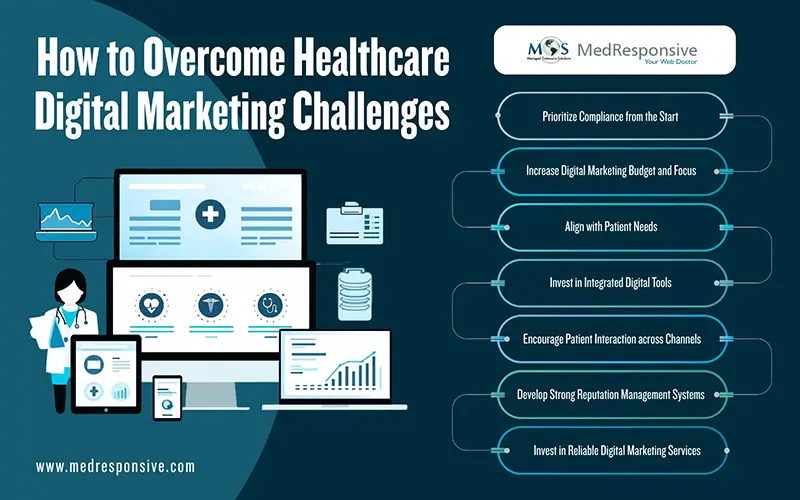
How to Overcome Healthcare Digital Marketing Challenges
Now that we have identified the most pressing obstacles, let’s find out practical solutions to overcome the challenges. By adopting a structured, compliant, and patient-focused approach, healthcare organizations can strengthen their digital presence and improve long-term engagement.
- Prioritize Compliance from the Start
Build compliance checks into your workflow rather than treat them as an afterthought. This means involving legal teams early in campaign planning and using technologies that help enforce PHI protections. A compliance-first mindset reduces risk, builds patient trust, and ensures marketing efforts remain sustainable as regulations evolve.
- Increase Digital Marketing Budget and Focus
Allocate adequate budget to digital channels based on projected ROI. Use analytics to track performance and optimize spending, focusing on top-performing channels first. Strategic investment allows healthcare organizations to scale successful campaigns, test new platforms, and maintain visibility in competitive digital spaces.
- Align with Patient Needs
Create content that educates and informs patients at every stage of their journey. Use patient feedback to refine content topics and address common concerns directly. When marketing efforts are aligned with real patient needs, engagement improves and trust is built organically over time.
- Invest in Integrated Digital Tools
Unify efforts across SEO, email, social media, and paid advertising with platforms that centralize workflows and performance metrics. This supports consistent messaging and simplifies analytics. Integrated tools also improve efficiency, reduce manual effort, and provide clearer insights into patient behavior across channels.
- Encourage Patient Interaction across Channels
Make it easy for patients to engage through online chat, appointment forms, email newsletters, and social media engagement. The easier it is to connect, the more likely patients are to convert. Multi-channel accessibility also ensures patients can interact in the way they find most comfortable and convenient.
- Develop Strong Reputation Management Systems
Proactively request and display positive patient reviews. Use review management software to track and respond to feedback promptly. Addressing concerns transparently and highlighting positive experiences helps strengthen credibility and influences patient decision-making.
- Invest in Reliable Digital Marketing Services
Partnering with trusted digital marketing service providers that specialize in healthcare ensures access to industry-specific expertise, compliance knowledge, and proven strategies. Reliable partners help execute data-driven campaigns more effectively, adopt emerging trends faster, and deliver consistent results without the burden of building extensive in-house capabilities.
Understanding the evolving trends of digital marketing for healthcare is important, and with the right strategies in place, healthcare organizations can effectively engage patients, build trust, and boost conversions. From adhering to legal standards to optimizing patient-centric digital marketing approaches, success requires balance, creativity, and ongoing refinement.
As healthcare continues to evolve, staying proactive and informed will ensure that your digital efforts resonate with patients and deliver measurable impact. Embrace transformation and make your digital presence a valuable asset in every patient’s care journey. Also remember, the future of healthcare communication lies in meaningful, compliant connections.
Struggling with healthcare digital marketing challenges?
Connect with experts and transform your strategy.
Contact Us