
Technical SEO has become essential for any business seeking stable search visibility. Search engines expect fast, secure, and well-structured websites before they evaluate content quality. Google’s recent core updates and stricter performance expectations show that technical issues can hold back rankings, even when content and links look strong.
This guide covers core technical SEO areas. It explains why they matter now and shows how businesses use them to grow traffic and trust.
What Technical SEO Means in 2026
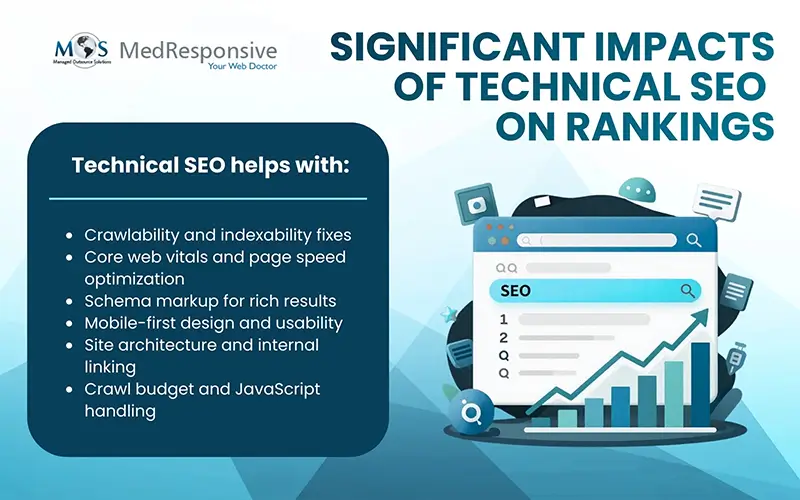
Technical SEO is about helping search engines crawl, understand, and index a website. The scope has grown over the last few years. It now covers:
- Crawlability and indexability
- Site architecture and internal linking
- Page speed and core web vitals
- Mobile-first design and usability
- JavaScript rendering and dynamic content
- Structured data and rich results
- Security, HTTPS, and basic accessibility
Google’s core updates show that rankings depend on user experience, not just keywords. That means clean technical elements have a direct impact on how content performs, how it appears in rich results, and whether it recovers quickly from algorithm changes.
Make the Site Easy to Crawl and Index
If search engines cannot crawl or index pages correctly, the site cannot rank. A strong technical setup starts with making it easy for Googlebot and other crawlers to move through the site.
Key steps include:
- Keeping robots.txt simple and only blocking areas that must stay hidden, such as admin or test sections
- Submitting clean XML sitemaps that list important indexable URLs and exclude error pages
- Ensuring every important page is reachable via internal links, not only through search forms
Many ranking problems start with crawl issues like accidental noindex tags, blocked files, or endless parameters. Regularly checking coverage reports in Google Search Console helps teams identify these issues early.
Fix Site Architecture and Internal Linking
A clear site structure helps both users and search engines understand how pages relate to each other. Most modern technical SEO frameworks recommend a ‘flat’ structure where important pages are only a few clicks from the homepage.
Best practices include:
- Grouping content into logical categories (for example, specialties, conditions, treatments, locations)
- Using descriptive folder and URL structures, such as /services/orthopedics/knee-replacement/
- Adding breadcrumb navigation so users and crawlers can see where they are in the hierarchy
- Building internal links between related articles, service pages, and FAQs
For a medical website, a clear structure features one hub page for ‘Heart care,’ with internal links to cardiology doctors, diagnostic tests, treatment options, and patient education articles. It helps patients find information and sends strong topical signals to search engines.
Site audits reveal orphan pages, low-traffic deep URLs, and overlapping content that confuses users and algorithms when sites expand unplanned.
Improve Speed and Core Web Vitals
Google continues to raise performance expectations. Recent updates set higher standards for core web vitals such as Largest Contentful Paint (LCP), Interaction to Next Paint (INP), and mobile layout stability. Sites that miss these targets have higher bounce rates than fast competitors.
Two areas matter most here: load speed and website performance optimization.
Foundational steps include:
- Using modern image formats such as WebP or AVIF
- Reducing server response times with good hosting
- Minifying CSS and JavaScript and removing unused code
- Using lazy loading for below-the-fold images and videos
Modern website performance optimization focuses on user journeys. For example, a clinic should measure how quickly an appointment booking page becomes usable on mobile devices, because it directly affects new patient acquisition.
Many businesses see strong gains when they treat performance as an ongoing process: setting performance budgets, monitoring core web vitals in Search Console, and reviewing reports with development teams.
Design for Mobile and Real Users
Google’s mobile-first indexing shows it primarily uses the mobile version of a site for ranking and indexing. If the mobile experience is weaker than desktop, search performance will decline, especially in local and “near me” searches.
Strong mobile-centric technical SEO includes:
- Responsive design that adapts to different screen sizes without horizontal scrolling
- Font sizes and line heights that are easy to read on phone screens
- Touch-friendly buttons and clear tap targets for forms and menus
- Matching content and internal links on mobile and desktop, so mobile users get the same value
For healthcare sites, readability and clarity matter even more. Content should be written in simple language, with clear headings, short paragraphs, and layout choices that support older users or people who may be anxious about their health. This approach aligns with Google’s own recommendations to “focus on users” and with its core updates that reward useful, trustworthy content supported by a strong technical base.
Use Structured Data to Increase Visibility
Structured data (schema markup) helps search engines understand what a page is about and can enable richer search features such as star ratings, FAQs, price ranges, events, and more. Technical SEO guides place structured data firmly in the “must have” category.
For most businesses, the key schema types include:
- Organization or LocalBusiness for basic business details
- Product or Service for offerings
- FAQPage and HowTo for support and educational content
- Article, NewsArticle, or BlogPosting for content
Healthcare sites can use markups such as MedicalOrganization, MedicalClinic, MedicalCondition, and MedicalProcedure to clarify the type of care they provide. This improves click-through rates and helps search engines match the site to detailed patient queries.
Structured data also supports AI search results and voice responses. Search engines and voice assistants find it easier to quote answers, show key information, and connect users with the right local providers when they can read clear, well-structured markup.
Handle JavaScript, Duplicates, and Crawl Budget
Modern websites rely on JavaScript frameworks for navigation, filters, and rich interactions. Google can render most JavaScript, but technical SEO best practices still recommend server-side rendering or hybrid approaches for critical content, especially on large sites.
Common JavaScript-related checks include:
- Making sure primary content and internal links are available in the HTML
- Testing important pages with Google’s URL Inspection tool to confirm how Googlebot sees them
- Avoiding infinite scroll that creates thousands of thin or duplicate URLs
Duplicate content and parameter-based URLs can waste crawl budget and dilute ranking signals. Canonical tags, parameter rules, and thoughtful use of noindex help keep indexes clean. For example, a hospital might allow Google to index core service pages but block endless combinations of filters for location, doctor gender, and appointment slot.
Log file analysis can be especially helpful. By studying crawl data, teams can adjust internal links, fix redirect chains, and guide bots toward the URLs that matter most. This process is known as crawl budget optimization.
Technical SEO checklists now place crawl budget optimization alongside other core tasks, because it helps ensure that fresh content and important updates are discovered and indexed quickly.
Technical SEO for Healthcare and Local Businesses
Healthcare, financial, and legal sites fall into the Your Money or Your Life (YMYL) category. This means Google holds them to higher standards of accuracy, safety, and trust.
For healthcare sites in particular, priorities include:
- Fast, mobile-friendly pages that do not confuse patients or hide key information
- Secure HTTPS on every page, especially for forms where users share health or contact details
- Clear author and organization information to support expertise and trust
- Clean XML sitemaps and internal links so patients can find doctors, locations, and services easily
A technical SEO audit checklist for healthcare websites can help teams cover these points systematically, including page speed, crawlability, structured data, and basic accessibility.
Case studies from medical SEO providers show results. Hospitals and clinics that improved technical performance, added structured data, and clarified content structure saw sharp growth in organic traffic and patient enquiries over 6–12 months.
Local businesses outside healthcare face similar technical needs. They must ensure their mobile pages load quickly, their local schema matches Google Business Profiles, and their sites do not confuse crawlers with broken links or duplicate pages.
When to Get Expert Help
Some technical fixes are simple. Site owners and content teams can handle basic tasks like checking robots.txt, submitting sitemaps, or updating title tags without outside help. However, more complex issues require specialist skills.
Examples include:
- Large site migrations or redesigns
- JavaScript framework rollouts
- Server-side rendering or complex caching setups
- Cleaning up years of legacy URLs and redirects
- Advanced schema strategies
At this stage, many organizations decide to work with professional SEO services that have experience with log analysis, performance tuning, and search-focused development.
Healthcare and large brands choose a trusted search engine optimization company to coordinate work between marketing, IT, compliance, and clinical teams. This helps ensure that technical changes do not break analytics tracking, online forms, or regulatory requirements. It also reduces the risk of losing rankings during redesigns or content migrations.
Reliable partners focus on practical fixes and clear reporting. They also highlight top-priority issues and provide clear roadmaps.
Practical Action Plan
Technical SEO can feel complex, but breaking it down into simple steps makes it manageable. A practical action plan could look like this:
- Once a month:
- Check Google Search Console for new crawl errors, noindex issues, or coverage changes
- Review performance reports for key templates and user journeys
- Once a quarter:
- Run a full crawl to find broken links, redirect chains, and duplicate pages
- Re-test mobile usability and compare mobile and desktop content
- Validate structured data and add new schema types where relevant
- Twice a year:
- Review hosting, caching, and front-end assets for speed improvements
- Revisit overall site architecture and internal linking patterns
- Update key content and author information to reflect current best practice
Guides that explain how to improve technical SEO for small business websites can be helpful starting points for smaller brands that manage SEO internally.
Strong technical SEO is less about chasing every new trick and more about maintaining a healthy, user-friendly site that search engines can crawl and understand easily. When the technical base is solid, content, branding, and outreach perform better. As Google continues to refine core updates, reward helpful content, and raise expectations for speed and stability, organizations that invest in their technical foundations will be better able to adapt and grow.
Streamline Your Technical SEO!
Get expert fixes for core web vitals, schema, and crawl budget to boost rankings and increase visibility.
Contact Us