Among all innovations, mobile app development in the healthcare industry stands out for its direct impact on patient care and accessibility. Today, mobile applications connect patients and doctors by allowing real-time communication, virtual consultations, and remote monitoring. With the help of these digital tools, healthcare providers offer accurate treatment, maintain patient engagement, and streamline administrative processes. Healthcare providers increasingly demand secure, user-friendly apps as medical technology advances.
Why Mobile App Development in the Healthcare Industry Matters
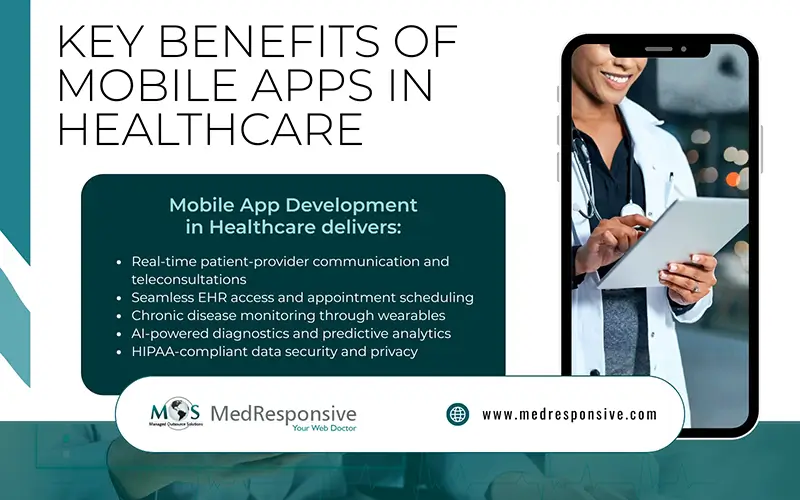
Mobile app development centers on seamless interaction among doctors, nurses, patients, and administrators. The app’s design matters as much as efficiency and convenience. They bring together various digital processes to create a well-connected and responsive ecosystem.
Some key advantages include:
- Faster communication between patients and providers through messaging or video consultations
- Simplified appointment scheduling and follow-up systems
- Secure access to electronic health records (EHRs)
- Real-time monitoring for chronic illnesses like diabetes and hypertension
- Integration with wearable devices for activity tracking and vitals management
These features together contribute to better treatment outcomes and preventative care. Successful mobile apps require a clear understanding of healthcare workflows, regulatory compliance, and intuitive user experiences.
Increasing Accessibility and Convenience
Before the arrival of mobile health platforms, patients faced long waits for diagnosis or struggled to get an appointment to see specialists. Now, medical advice is just a few clicks away. For instance, a patient in a remote rural area can use a teleconsultation app to connect with a cardiologist within minutes. This enhanced accessibility minimizes travel costs, saves time, and encourages patients to seek early medical intervention.
Mobile apps also simplify medication reminders and follow-up consultations. Patients receive automated alerts for prescriptions, vaccination schedules, or upcoming appointments. This improves medication compliance and health outcomes, especially for elderly patients. Mobile platforms make it possible by closing the gap between healthcare centers and communities that previously had limited medical support.
Improving Efficiency and Administration
Hospitals face operational challenges, from managing staff shifts to maintaining reports and billing processes. Mobile applications streamline these complex operations through integrated systems. For hospital administrators, mobile platforms provide easy ways to track inventory, monitor staff performance, and manage patient admission workflows.
Such platforms also speed up healthcare professionals’ decision-making through automated data analytics. Doctors can instantly review patient history or lab results on mobile dashboards, improving both efficiency and quality of care. Through digital health solutions, hospitals strengthen coordination and information sharing.
Enhancing Engagement and Empowerment
Active patient involvement delivers better healthcare outcomes. Engagement involves not just educating patients about their condition but also involving them in their care journey. Mobile health apps help patients monitor blood sugar, heart rate, physical activity, and even sleep patterns through built-in sensors or wearable devices.
Features such as progress graphs and daily reports give individuals immediate insight into their health status. This transparency encourages accountability and lifestyle adjustments.
Moreover, the role of mobile apps in patient engagement has expanded beyond self-tracking. Many platforms now include community forums, mental health chat options, and diet coaching services. These elements create an environment where patients feel supported, informed, and connected to their providers.
The Growing Influence of Telemedicine
Telemedicine has become one of the most powerful applications in digital health solutions. It delivers remote consultations, video-based follow-ups, and online prescriptions, altering how both patients and doctors approach healthcare. The COVID-19 pandemic accelerated this adoption, proving that remote consultations can be both safe and effective.
Startups such as Teladoc and Amwell have expanded access to qualified doctors globally. These platforms connect specialists with rural patients to ensure equal healthcare access. Additionally, telemedicine reduces the burden on urban hospitals by handling cases that do not require in-person visits.
When paired with mobile diagnostics and wearable devices, telemedicine ensures that patients remain under professional supervision even from their homes. This creates personalized and continuous healthcare from home.
Data Security and Privacy in Healthcare Apps
Technology brings convenience but it also introduces data privacy challenges. Healthcare data includes personal medical records, prescriptions, and sensitive identity information. Protecting patient data is paramount as apps collect and transmit large volumes of data.
Developers must adhere to data protection regulations such as HIPAA. Strong encryption, secure authentication, and limited access permissions help maintain trust. Patients are more likely to use digital systems when privacy is ensured.
In many institutions, security audits ensure apps comply with the required safety standards. Companies that specialize in healthcare application development employ advanced encryption algorithms and frequent software updates to reduce risks.
Artificial Intelligence and Big Data
AI and Big Data play pivotal roles in medical research, diagnostics, and treatment. Mobile apps using AI can analyze symptoms, predict potential health risks, and assist doctors with clinical decisions. Similarly, Big Data enables tracking of health trends across large populations, giving insight into outbreaks, chronic disease management, and healthcare costs.
Apps like Ada and Babylon Health already use AI-driven symptom checkers to guide patients toward appropriate care. Medical data collected from these interactions can help shape healthcare policies or resource distribution. The integration of AI with mobile platforms delivers faster diagnosis, personalized treatment, and more efficient healthcare processes.
Wearables and Remote Patient Monitoring
Devices such as smartwatches, glucose sensors, or ECG monitors continuously collect data, which is shared with healthcare professionals through mobile apps. This model supports preventive healthcare, reducing hospital admissions and allowing early detection of health deterioration.
For example, a patient with a heart condition can wear an ECG device that alerts their doctor when irregular patterns appear. The instant feedback prevents critical emergencies and enhances patient safety. This system shows how mobile apps are transforming healthcare delivery, where continuous monitoring replaces occasional hospital visits.
Wearables have also contributed to better chronic disease management. Diabetic patients can track glucose levels and receive diet or activity suggestions through companion apps. This data-driven feedback helps physicians personalize care, improve outcomes, and minimize readmissions.
Impact on Medical Education and Training
Healthcare apps also support the education and ongoing training of healthcare professionals. Mobile platforms host online courses, digital libraries, and clinical case simulations that help doctors and nurses stay updated. They can review complex procedures, analyze 3D anatomical models, or even participate in virtual conferences directly through smartphones or tablets.
For medical students, these apps act as an easily accessible study resource. They eliminate geographical barriers, making quality education available globally. Hospitals use custom training software for onboarding new staff or conducting safety compliance workshops. This enhances overall institutional capacity without interrupting daily operations.
Personalized Healthcare and Predictive Analytics
Personalized healthcare, powered by mobile apps, emphasizes understanding the unique needs of each patient. By analyzing lifestyle habits, genetic profiles, and daily activity data, mobile platforms generate tailored wellness or treatment plans.
Predictive analytics further enhances decision-making by identifying potential health risks before they aggravate. For instance, a mobile app may notify a patient of irregular blood pressure patterns, prompting a medical check-up before a medical emergency. This proactive approach reduces hospital visits and promotes long-term wellness. These systems also help insurance providers offer customized policies based on verified health data.
Integration with Existing Healthcare Systems
Implementing mobile platforms effectively requires close integration with hospital IT systems such as Electronic Health Records (EHR) and Laboratory Information Systems (LIS). Interoperability ensures that data moves efficiently between mobile devices and hospital databases without duplication or error.
Healthcare organizations are partnering with software companies that focus on mobile application development to create seamless frameworks. When integration works well, it benefits every stakeholder. Patients get faster responses, doctors receive real-time updates, and administrators get accurate financial and performance reports.
Challenges in Implementation
Although mobile healthcare applications have clear advantages, challenges remain in achieving widespread adoption. Key obstacles include:
- Slow connectivity or interruptions
- Data privacy concerns and compliance issues
- Cost of app development and maintenance for smaller healthcare providers
- Isolated healthcare systems that struggle with interoperability
To address these challenges, developers and healthcare professionals must collaborate with each other. Public education campaigns and telemedicine initiatives can drive awareness and trust among communities unfamiliar with mobile health platforms.
Future Outlook
Future mobile apps may include advanced diagnostic capabilities using AI-driven image recognition, blood analysis through smartphone cameras, or blockchain-based record systems that ensure transparency.
The upcoming years are likely to witness increasing integration between mobile apps, wearable sensors, and comprehensive health databases. Such systems can predict outbreaks, support community health campaigns, and deliver customized treatment protocols based on individual data trends.
Accessible Medical Care
The integration of mobile technology into healthcare has fundamentally changed how patients, professionals, and institutions interact. Mobile app development in the healthcare industry continues to shape a world where medical care is accessible, reliable, and responsive to individual and community needs.
As hospitals, startups, and policymakers adopt this evolution, they should balance innovation with inclusivity alongside convenience, security, and compassion. The result is a system where every person, regardless of geography or background, can experience efficient, informed, and continuous care.