Unlike conventional digital marketing, healthcare marketing operates in a high-stakes, highly regulated environment where outcomes affect real lives. Every campaign must ensure that the right message reaches the right people at the right time.
Patients now expect communication that reflects their needs, preferences, and care journeys. Broad, one-size-fits-all campaigns no longer support meaningful engagement. Patient segmentation in healthcare marketing addresses this gap by helping healthcare brands organize audiences into defined groups and deliver targeted messaging that aligns with patient intent.
With a clearer understanding of patient segments, practices can strengthen outreach, improve campaign performance, and support higher patient satisfaction. Partnering with a company experienced in providing healthcare digital marketing services helps identify high-value patient groups, craft tailored messaging and maximize the impact of every campaign.
Understanding the Importance of Patient Segmentation in Healthcare Marketing
Patient segmentation, also called market segmentation, refers to the process of dividing healthcare audiences into smaller groups based on shared characteristics. These groups are formed using factors such as age, gender, health conditions, behavior patterns, and geographic location. The primary goal is to identify and prioritize target audiences for more focused and meaningful engagement.
With a deeper understanding of care-related needs, digital marketers can develop more personalized strategies that align with individual preferences, behaviors, and challenges. This structured approach allows healthcare organizations to:
- Allocate more resources effectively
- Prioritize high-value patient groups for improved outreach
- Create condition-specific educational materials and awareness initiatives
- Customize channel strategies by segment
- Improve access to care through targeted campaigns designed around specific conditions, life stages, and service needs
For example, individuals managing chronic conditions respond to different messaging than those seeking preventive care. Communication preferences also vary across age groups, which influences channel selection and content tone. Recognizing these distinctions helps healthcare brands keep marketing efforts relevant, accurate, and performance-focused.
Key Benefits of Patient Segmentation in Healthcare Marketing
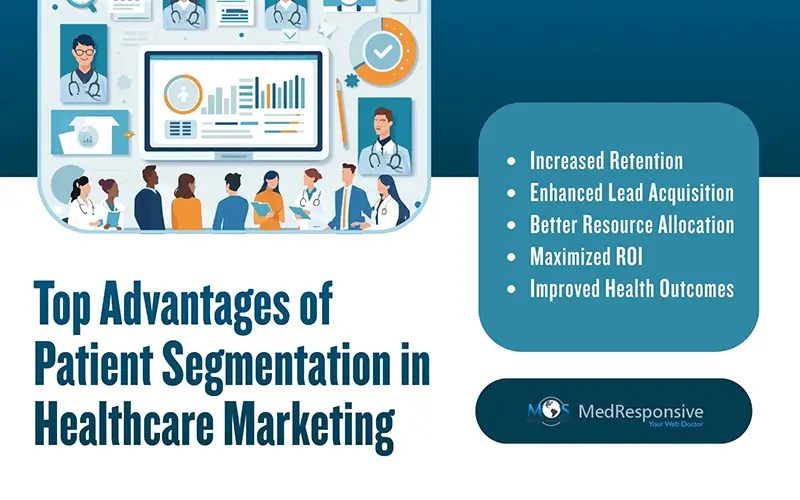
Market segmentation has significant advantages for healthcare businesses that aim to connect with diverse audiences and strengthen competitive positioning. Targeted campaigns support stronger engagement while addressing specific care needs across different audience groups. By working with smaller, more relevant segments, marketers can improve efficiency, optimize resource allocation, and increase overall return on investment.
- Increased Retention: Personalized engagement supports stronger provider relationships, which builds trust and long-term loyalty. Streamlined communication also helps reduce missed appointments and encourages repeat visits.
- Enhanced Lead Acquisition: Marketing efforts directed toward clearly defined segments show higher conversion potential. This creates a steadier pipeline of scheduled appointments and qualified inquiries.
- Better Resource Allocation: Segmentation allows practices to focus budgets and staff time on high-value audience groups. By prioritizing individuals more likely to engage, organizations can eliminate inefficiencies and strengthen campaign performance.
- Maximized ROI: Data-driven insights gained from audience segmentation help guide informed campaign decisions and improve conversion rates. Targeting the right groups with tailored strategies supports consistent and measurable growth.
- Improved Health Outcomes: Segmented campaigns also enable delivery of educational and condition-specific content. Targeted resources and prevention-focused materials encourage informed decision-making and support improved care results.
Implementing patient segmentation into healthcare marketing leads to more efficient strategies, better-targeted outreach, and ultimately, a more satisfied and loyal patient base.
Types of Patient Segmentation in Healthcare Marketing
Segmentation can be structured in several ways, depending on service type, communication models, and audience behavior. By organizing healthcare audiences into defined categories, brands can deliver more relevant messaging and align campaigns with real-world care needs.
- Demographic Segmentation: This method groups audiences based on age, gender, income level, and occupation. It influences how programs are presented and delivered for various life stages and audience priorities.
- Geographic Segmentation: Location-based grouping considers region, city, or proximity to facilities. This approach supports localized campaigns, promotes nearby services, and improves outreach for community-based programs.
- Behavioral Segmentation: Behavioral grouping focuses on appointment patterns, service usage, website activity, and digital engagement behavior. These insights help tailor follow-up communication, reminders, and promotional campaigns.
- Clinical or Condition-based Segmentation: Audiences are grouped according to medical conditions, treatment history, or preventive care needs. This enables delivery of condition-specific education, screening reminders, and targeted awareness initiatives.
- Digital Engagement–based Segmentation: This approach segments audiences by interaction across digital platforms such as websites, mobile apps, social media, and email campaigns. It helps identify preferred channels and optimal communication timing.
- AI-driven Segmentation: Advanced analytics, AI models, and marketing automation platforms help continuously update audience groups based on real-time patient behavior and interactions. This ensures that segmentation remains accurate, scalable, and aligned with evolving engagement patterns.
Together, these segmentation models provide a flexible foundation that enables scalable personalization and data-driven healthcare marketing initiatives.
Key Strategies for Effective Patient Segmentation
Building a reliable segmentation framework can be complex due to the varied needs across different audience groups. A structured, data-driven approach helps healthcare brands develop focused initiatives that address care-related needs, expand audience reach, and strengthen market credibility. As digital media trends evolve and user behavior shifts, tailored strategies support accurate targeting, higher efficiency, and stronger campaign performance.
- Define Objectives: Establish specific goals for each segment, such as awareness building, appointment generation, or service-line growth. Clear objectives guide campaign planning, support better decision-making, and simplify performance measurement.
- Gather and Analyze Data: Collect relevant information from multiple sources, including electronic health records, website interactions, surveys, and digital touchpoints. Analyze this data to identify patterns related to demographics, service usage, and engagement behavior.
- Create Actionable Segments: Group audiences based on shared characteristics such as life stage, health interests, service needs, or location. These defined segments allow marketers to align messaging, timing, and channels with intent.
- Personalize Content and Messaging: Develop tailored content that reflects the specific concerns, priorities, expectations and challenges of each group. Personalized communication improves relevance and supports higher engagement across digital channels.
- Select Channels Strategically: Match communication platforms to audience preferences. Some groups may respond better to email and search-based campaigns, while others engage more actively through social media or mobile-first channels.
- Implement Security Protocols: Segmentation strategies must follow HIPAA and data privacy standards to protect sensitive information. Clear consent management, secure data handling, and compliant communication workflows help maintain trust while supporting safe and ethical campaign execution.
- Leverage AI-driven Workflows: Leverage AI-driven patient engagement tools and automated communication systems to enable predictive and personalized outreach at scale. This improves response rates, shortens follow-up cycles, and keeps engagement consistent across channels.
- Monitor, Test, and Refine: Track performance metrics regularly to evaluate what strategies work and where adjustments are needed. Ongoing testing and refinement help maintain accuracy, improve response rates, and boost campaign efficiency.
When applied consistently, these strategies turn segmentation into a structured system that supports smarter outreach, sustained engagement, and long-term patient growth.
Patient Segmentation: Build Smarter Marketing Strategies
Effective audience segmentation goes beyond organizing demographics or behavior—it enables healthcare brands to anticipate needs, deliver timely messages, and create meaningful experiences at every stage of the patient journey. Executing effective segmentation internally can be complex due to diverse audience needs, expertise, and resources. Specialized healthcare marketing services can help implement these strategies effectively, turning audience insights into impactful campaigns and stronger brand growth. By leveraging insights, analytics, and AI-driven tools, these external experts optimize engagement, streamline marketing efforts, and achieve measurable results.