Digital marketers no longer have to rely on outdated data, broad segments, and reactive tactics that fail to anticipate trends. With predictive analytics, brands can forecast market behavior, identify sales patterns and optimize their resource allocation for greater ROI. By forecasting trends before they happen — this advanced, data-driven marketing technique transforms digital marketing into a proactive growth engine.
It uncovers hidden opportunities that were previously impossible to detect, helping brands stay ahead in an increasingly competitive landscape. AI-driven insights elevate digital marketing from a series of campaigns into a dynamic system that adapts to market shifts in real time. With the partnership of affordable digital marketing services, companies can unlock the potential of data intelligence solutions without the heavy investment, positioning themselves for sustainable success.
The Role of Predictive Analytics in Digital Marketing
Predictive analytics in digital marketing uses statistical algorithms, machine learning, and data modeling techniques to analyze data and uncover actionable insights. Unlike traditional analytics – which analyzes past data to evaluate previous campaigns —forecasting analytics focuses on predicting future trends, behaviors, and outcomes.
This enables marketers to segment audiences more effectively, personalize content and make data-driven decisions. By leveraging these insights, marketers can move beyond reactive strategies and implement forward-thinking, results-driven marketing campaigns.
These forward-looking analytics doesn’t stop at improving individual campaigns — it can reshape the entire customer journey. By understanding future behavior, brands can create highly personalized experiences that anticipate customer needs. What was once a series of isolated touchpoints becomes a cohesive, predictive strategy where each interaction is tailored to the customer’s next anticipated move. With predictive intelligence, businesses enhance engagement, increase conversions, and drive sustained growth across all channels.
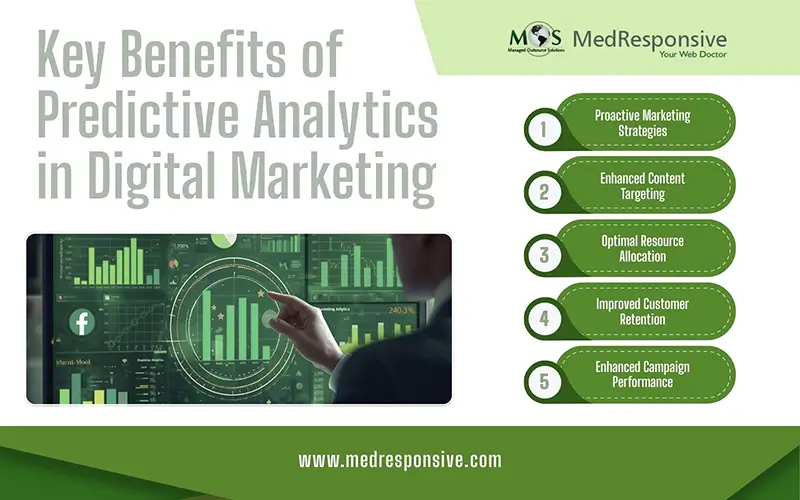
Key Benefits of Predictive Analytics in Digital Marketing
By using data patterns to forecast customer behavior, brands can align marketing strategies with real business goals instead of relying on assumptions. This approach supports smarter investments, more accurate targeting and faster response to market changes.
Businesses adopting data forecasting models in digital marketing gain the foresight needed to deliver greater value, make smarter decisions, and achieve stronger outcomes across their campaigns:
- Proactive Marketing Strategies: While reactive strategies are required to adapt to trends or events in a meaningful way, predictive analytics enables marketers to anticipate future needs and create targeted campaigns. This results in more timely and relevant marketing decisions, allowing brands to stay ahead of competitors and meet consumer expectations more effectively.
- Enhanced Content Targeting through Demand Forecasting: By analyzing past interactions and engagement metrics, predictive algorithms reveal specific audience interests, preferences, and needs. Marketers can then optimize content delivery with tailored messages for different segments. Companies such as Netflix and Amazon successfully use this approach to improve customer experience and engagement by recommending personalized content and products. Data forecasting models analyze historical sales data, seasonal patterns, and customer behavior to estimate future demand more accurately. This allows marketing teams to plan campaigns and inventory strategies that match expected market needs, reducing missed revenue opportunities.
- Optimal Resource Allocation: With analytics-driven precision, brands can accurately predict demand, market fluctuations, and emerging trends. AI models evaluate factors such as past performance, competitor activity and market sentiment to guide resource allocation. This approach helps ensure that marketing budgets and efforts are focused on the highest-priority areas, driving better results and higher efficiency.
- Improved Customer Retention: By leveraging forecasting analytics, brands can identify potential churn signals and proactively address customer concerns. These insights allow for the creation of personalized retention strategies, such as targeted offers or loyalty programs, to keep customers engaged. This leads to stronger customer loyalty, improved lifetime value, and a more stable revenue stream.
- Enhanced Campaign Performance: By forecasting which strategies will deliver the best results, future-oriented insights allow marketers to refine messaging, targeting, and timing. This results in higher conversion rates, reduced cost-per-acquisition, and better ROI across marketing efforts.
- Lead Scoring: AI-powered forecasting tools identify which prospects are most likely to convert by evaluating engagement patterns and past buying behavior. This helps marketing and sales teams focus on high-value leads, improving conversion rates and shortening the sales cycle.
- Pricing and Promotional Strategies: By analyzing customer response trends and competitive data, predictive tools help brands determine which pricing and promotional offers are most likely to succeed. This ensures that discounts, bundles, and campaigns are optimized for profitability instead of guesswork.
- Marketing Efficiency: Performance prediction systems identify underperforming channels and campaigns that are unlikely to deliver results. This enables teams to reallocate budgets toward high-impact efforts, improving return on investment and overall marketing efficiency.
Forecasting analytics turns data into a strategic growth asset, helping brands scale with clarity, confidence, and measurable impact.
Best Practices for Using Predictive Analytics Effectively in Digital Marketing
Forecasting models are only as good as the data they rely on and the strategies they help shape. To use this method successfully, it’s essential to follow best practices that ensure data accuracy and alignment with your overall business goals.
- Build from Clean, Structured Data: Good data is the foundation of accurate predictions. Regularly clean, update, and validate data from different sources to make sure the insights you get are reliable and useful.
- Align Predictive Goals with Business KPIs: Make sure your advanced analytics efforts focus on key business goals like boosting revenue, improving customer retention, or cutting costs. Clearly defined KPIs help to keep your models on track and aligned with real, measurable outcomes.
- Use Real-time and Historical Data Together: Combining real-time data with historical trends improves the accuracy of predictive models. Real-time data helps capture current market behaviors, while historical data provides context for future forecasting.
- Test, Validate, and Refine Models Continuously: AI models should be regularly tested and adjusted based on real-world performance. This helps them adjust to shifts in customer behavior and market changes, keeping them accurate and useful over time.
- Integrate Insights Across Marketing Platforms: Use predictive analytics across all your marketing channels, from emails to social media ads and website personalization. This integration ensures a consistent customer experience and more efficient use of resources.
By following these best practices, businesses can unlock the full potential of predictive analytics—leading to smarter decisions, stronger results, and long-term growth.
Unlock Smarter Marketing Growth with Predictive Analytics
To truly harness the power of predictive analytics, businesses need more than just data insights—they need the right expertise to interpret and apply these insights effectively. While predictive models can forecast trends and behaviors, partnering with marketing experts in data analytics ensures that campaigns are tailored to your brand’s unique needs. Partnering with companies outsourcing digital marketing services can help unlock the full potential of predictive analytics through strategies that align with future market shifts. With specialized knowledge and advanced tools, these experts can enhance a business’s ability to make informed, proactive decisions that lead to sustained growth.