
Strong direct-to-patient digital marketing helps healthcare providers reach prospective patients through targeted online channels, improving engagement, appointment bookings, and overall patient acquisition. Most patients compare doctors and read reviewsbefore calling a clinic. Digital health markets grow over 20% yearly worldwide, driven by telehealth, remote monitoring, and patient apps. Hospitals and health systems now prioritize compliant, personalized online services and digital marketing is essential to connect with patients.
Why Direct-to-Patient Digital Marketing Matters
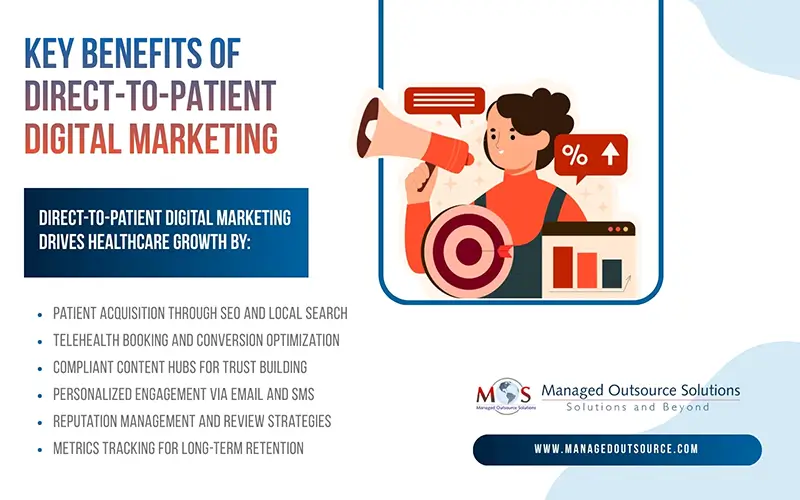
The shift to patient-centered digital care is no longer temporary. Global digital health is forecasted to reach 946 billion USD by 2030, with growth rates over 20% annually. A large share of that growth comes from patient-facing tools such as telehealth platforms, mHealth apps, and remote monitoring solutions that depend on strong online engagement to succeed.
Telehealth now serves as a core channel. In the United States, 95% of HRSA-funded health centers offered telehealth for primary care in 2024. Telehealth services were valued at about 57.6 billion USD in 2024 and are projected to exceed 500 billion USD by 2034, underlining how digital contact points with patients will keep expanding.
Adapting DTC for Patient Care
Direct-to-consumer (DTC) models across industries are growing quickly, with the global DTC market projected to more than quadruple to over 2,750 billion USD by 2033. What sets healthcare apart is the combination of strict regulation, clinical risk, and patient trust concerns. Patients want the convenience and clarity they get from retail brands, but they also demand privacy, accuracy, and responsible use of data. Modern digital health marketing for healthcare providers and digital health companies must balance growth goals with ethical communication, clear risk disclosures, and respect for clinical workflows. When implemented properly, digital health marketing can widen access, shorten time to diagnosis, and guide patients toward appropriate care earlier in their journey.
Key Channels Shaping the Patient Journey
Patients rarely follow a straight path from search to appointment. They move through a mix of search, content, social proof, and online interactions. In 2026, the most effective direct-to-patient programs typically combine:
- Search and local SEO: Optimized websites, doctor profiles, and location pages so patients can find relevant services when they search “orthopedic surgeon near me” or “online dermatologist consultation”
- Content hubs and blogs: Condition pages, FAQs, symptom explainers, and treatment comparisons that answer common questions in plain language and build trust over time
- Social media and communities: Educational posts, short videos, Q&A sessions, and live events on platforms like Instagram, YouTube, and LinkedIn to reach targeted patient groups
- Telehealth and patient portals: Integrated scheduling, secure messaging, and online records that link marketing to actual care delivery
- Reviews and reputation sites: Systematic, compliant review generation and monitoring to influence how patients compare providers
- Email, SMS, and WhatsApp: Consent-based reminders, treatment plans, and follow-up messages that keep patients informed between visits
Each channel should support a single view of the patient journey, from awareness to long-term follow-up, rather than acting as an isolated unit
Data, Personalization, and Patient Engagement
Digital health and marketing platforms combine data from EHRs, wearables, telehealth sessions, and website behavior to customize outreach. In 2026, healthcare marketing trends highlight AI-driven personalization. They also point to mobile-first experiences that adapt content and offers to a patient’s condition, language, and preferred channel. When implemented thoughtfully, this leads to more relevant messages, better appointment follow-through, and stronger patient engagement.
Content strategy has also evolved. Guides to healthcare content marketing describe how blogs, videos, patient stories, and interactive tools can guide people from early research to booking and ongoing self-care. Practices that connect topics to each part of the process, and test which formats drive patient engagement, tend to see stronger retention and higher appointment conversion.
The Growing Role of Chatbots, Automation, and Telehealth
AI-powered chatbots and virtual assistants now answer routine questions, check symptoms, and help patients book appointments directly from provider websites. They offer 24/7 responses to FAQs, free call center staff for complex issues, and simplify first contact with a clinic. When chatbots are linked to telehealth platforms, they can route eligible patients straight into virtual visits for conditions that do not require a physical exam.
Telehealth utilization continues to exceed pre-pandemic levels even where volumes have stabilized. National surveys show widespread adult adoption of telemedicine. Data shows telehealth rising, with mental health as the top diagnosis category. For direct-to-patient programs, telehealth serves as a critical conversion point, not just a service.
Compliance, Privacy and Trust
Health organizations need clear policies on consent, data use, and message content, especially when working across regions that fall under HIPAA or GDPR regulatory frameworks. Privacy concerns are growing alongside adoption of remote monitoring and AI tools, and regulators are paying more attention to how health data is used in targeting and remarketing.
Best practice is to build compliance into the marketing design from the start. That includes:
- Explaining what data is collected and how it will be used, in simple language
- Separating educational content from explicit product promotion
- Using approved clinical sources for medical claims
- Ensuring opt-in, opt-out, and secure storage for all patient data
Organizations that address these topics tend to build higher trust, which supports long-term digital relationships.
Real-world Examples of Direct-to-Patient Programs
Many healthcare organizations are using direct-to-patient approaches in practical ways:
- A regional hospital group builds a content hub around joint replacement, combining surgeon videos, recovery timelines, and rehab checklists. Paid search and local SEO drive traffic, while remarketing gently reminds readers to book a consultation within a specific time frame. The program increases qualified orthopedic leads without adding pressure on referring physicians.
- A behavioral health provider invests in telehealth and targeted social campaigns for anxiety and depression services. Since mental health remains the top telehealth diagnosis category in national datasets, the provider focuses on easy online scheduling and discreet follow-up messaging.
- A therapeutic company for diabetes uses patient-facing ads to promote an app, then onboards users into remote monitoring and coaching. This supports early adoption, improves adherence, and feeds real-world data back into clinical and product teams.
These examples share a few traits: clear patient segments, educational content matched to each stage, and a strong link between commitments and service delivery.
Crafting Direct-to-Patient Digital Marketing Strategies for Hospitals
Hospitals that want to scale DTP programs should start with a realistic view of their current digital presence. Effective direct-to-patient digital marketing strategies for hospitals combine a strong website foundation, service-specific content, and coordinated campaigns around priority specialties. Local search and mobile usability matter as much as brand campaigns.
A practical approach is to test one or two high-impact service lines, such as cardiology or oncology, then expand. Each test can define its own audience (for example, caregivers vs. patients), success metrics (calls, forms, telehealth bookings), and content plan (articles, webinars, tools). This focused strategy makes it easier to learn and adjust without risking budget across multiple specialties at once.
Content and Community as Long-term Assets
Strong content and community programs build visibility and trust that compound over time. Guides to healthcare marketing highlight several themes: education-first content, short-form video, and interactive tools that answer real patient questions rather than pushing offers. Physicians who share practical tips, explain procedures, and respond thoughtfully to comments become trusted voices for their specialty.
A community can grow on many platforms: a Facebook group for chronic disease support, a WhatsApp broadcast list for prenatal tips, or a series of live Q&A sessions hosted on YouTube. These efforts are most effective when they feed directly into appointment options, digital check-in, or remote monitoring, rather than generic awareness campaigns.
Metrics and Measurement Across the Patient Lifecycle
Data from digital health and telehealth platforms give marketers a clearer view of program performance. Digital tools help organizations move toward value-based care through prevention, early detection, and self-management. To use this in marketing, teams should track the full process rather than focusing only on clicks or impressions.
Useful metrics include:
- Search visibility and click-through for high-intent queries
- Cost per lead and cost per booked appointment by channel
- No-show rates for telehealth vs. in-person visits
- Portal sign-ups, activation rates, and repeat logins
- Retention and visit frequency for chronic care programs
Over time, linking these marketing metrics with clinical and financial outcomes can guide where to invest and which channels truly support long-term relationships.
Healthcare Digital Marketing; Benefits of Working with Specialized Teams
Many providers lack the in-house capacity to manage campaigns, content, analytics, and compliance at the same time. In those cases, outsourcing digital marketing services to firms that understand healthcare regulations and patient expectations can shorten the learning curve. External teams can support tasks such as audience research, creative production, analytics dashboards, and marketing technology setup while internal clinical leaders keep control of medical accuracy and brand voice.
Some organizations prefer to work with agencies that specialize in healthcare digital marketing services, especially when running multi-channel campaigns across regions and service lines. Specialists are better placed to interpret shifts in telehealth regulations, ad platform rules for medical content, and changing patient search behavior in health. Clear contracts, shared KPIs, and established content review processes help keep these partnerships aligned with clinical and ethical standards.
Turning Strategy into Action
Marketing teams that ask how to attract new patients through online marketing can follow a simple roadmap:
- Audit the current patient journey
- Review how patients find the organization today: search queries, referral patterns, and top content pages
- Map the connection between marketing, call centers, telehealth, and in-clinic experience
- Choose two or three priority segments
- For example, new parents, chronic disease patients, or people seeking second opinions
- Define the questions, challenges, and preferred channels for each segment
- Build or refine core assets
- Create or update service pages, FAQs, and appointment flows for those segments
- Ensure mobile usability, fast loading, and clear calls to action for telehealth and in-person visits
- Layer campaigns on top of a solid foundation
- Use search and social advertising with clear, compliant messaging to drive traffic to these assets
- Add email, SMS, or portal campaigns to maintain contact after the first visit
- Measure and iterate
- Track lead quality, show rates, and patient satisfaction
- Adjust content, targeting, and channels based on performance and feedback
By treating DTP efforts as a continuous cycle rather than a one-time project, healthcare organizations can grow patient volumes and loyalty in a controlled and ethical way.
Future of Direct-to-Patient Marketing
Direct-to-patient digital marketing in 2026 reflects fast growth in digital health, steady telehealth adoption, and rising expectations for personalized, privacy-aware communication. Organizations that invest in clear strategy, compliant execution, and patient-centered content are best positioned to benefit from these trends while supporting better care experiences.
Optimize Patient Acquisition with Digital Marketing! Build trust through SEO, social media, and personalized telehealth campaigns.
Take your healthcare growth to the next level.
Contact Us