Social media marketing for healthcare businesses is now a must for medical practices, hospitals, and pharmaceutical companies. They need it to reach patients. Online marketing is changing fast, and traditional techniques alone won’t work anymore. Patients search for health information and follow doctors on social media. People make choices based on what they find. If your healthcare business isn’t using social media well, you’re losing patients. This blog shows you how to use social media better and get results.
Why Social Media Marketing for Healthcare Businesses Matters
Social media changed how patients find healthcare providers. As per recent data, about 84% of patients use social media to find health information and connect with healthcare organizations. That’s most of your potential patients. Also, 71% of patients say online reviews matter when choosing a healthcare provider.
Here are the facts: 89% of hospitals use Facebook to engage with their audience. Healthcare businesses using social media get 45% more website visits and patient inquiries. Healthcare social media ads are projected to hit $3.14 billion by 2025. This shows how serious the industry is taking this channel.
Your patients are already on social media. The question is whether you’re there with them providing valuable content and genuine engagement. Online marketing costs less than traditional advertising. You can reach exactly who you want. You see results right away. You can build a loyal community of patients around your brand. A reliable medical SEO services provider can tie your social media to your whole online presence.
Understanding Your Audience First
Before you post, know who you’re talking to. This is the foundation for any successful healthcare digital marketing plan. Different patients have different needs. They want different ways to get information.
Ask what patients want through surveys and feedback forms. Check your analytics. Do they want tips about health issues? Do they want to book appointments online? Do they want support from other patients? Not everyone wants the same thing. Some like short videos. Others like long articles. Some prefer pictures. Others want interactive posts such as infographics.
Once you know what patients want, pick the right social media platforms for healthcare. Each site works differently. People act differently on each one. Where your patients spend time matters. What kind of content they like matters too.
Selecting the Right Platforms
Not all social media sites work the same for healthcare. You don’t need to be on every site. You need to be on the right ones.
Facebook is the top site for healthcare marketing. About 1.5 billion people use the platform for health-related discussions. It’s great for sharing health tips, patient stories, and updates. Facebook ads let you reach certain demographics and geographic areas.
Instagram works best with visual content. Medical device companies like Medtronic make insulin pumps for diabetes patients. They use Instagram to reach these patients. They have over 16,000 followers because people with diabetes are active on the platform.
LinkedIn is for sharing professional ideas and research. Use it to showcase your company culture and recruitment. LinkedIn is less about patients and more about being seen as an expert.
Twitter is good for real-time health discussions and sharing research. Over 1 million health posts go up on Twitter every day.
The aim is to match your goal to the right site. Want closer patient ties? Try Facebook and Instagram. Want to show you are an expert? Use LinkedIn. Pick based on your goals, your patients, and what you can post regularly.
Creating Content That Actually Engages Patients
Content keeps people coming back. Healthcare needs balance. You must be helpful and interesting. You must be compliant and trustworthy too.
About 78% of people like short videos and interactive content about health. This is crucial information. If you only post text, you’re going in the wrong direction. Videos, pictures, and polls beat plain text every time.
Here’s what works:
Answer real questions: Share tips on staying healthy. Explain health issues in simple words. Debunk false health beliefs. Help people out because they remember it. Over 60% of doctors believe online platforms help patient care with timely medical information.
Show your team: Post photos of your staff. Talk about how you work. Let patients see the real people behind your business. This builds trust in ways that formal marketing can’t. People like doing business with people they know.
Share success stories and testimonials: Real patients telling their stories is powerful. Over 50% of patients share good experiences online. About 35% share bad ones. Ask satisfied patients to share. Just make sure you follow patient privacy rules.
Interactive content: Polls, quizzes, Q&A, and challenges drive engagement. Twitter favors quizzes and polls to get people more interested. They’re more likely to convert into actual patients or send referrals.
Post about health topics: Share seasonal tips and wellness advice. Post about staying healthy. Show you care about health, not just profit.
Optimization Tactics That Work
You have your content plan. Now make it visible and get people talking.
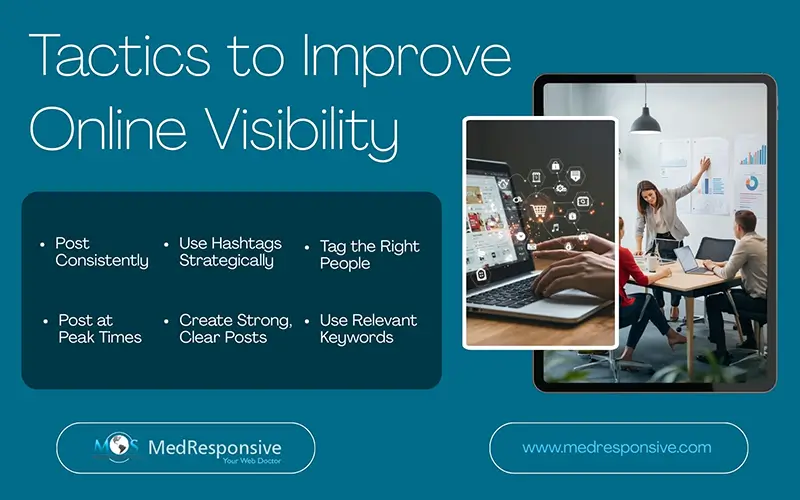
Post on a schedule: Skip posting and people forget about you. People stop trusting unpredictable brands. Pick a schedule you can keep. Post three times a week or every day. Stick with it. Research shows that 2-3% growth in followers is a strong and positive signal for online engagement.
Use hashtags the right way: Hashtags help people find you. Find the ones your patients use. Don’t use generic hashtags which everyone ignores.
Tag other people and groups: Tag other doctors, health groups, or industry leaders when it makes sense. This spreads your reach and opens conversation with bigger groups. Work with smaller influencers like nurses and therapists. They have loyal followers in certain patient groups.
Post when people are online: Each site has different peak times. Test posting at different times. Check your analytics to find what times work best for your patients.
Write strong posts: Make posts clear and interesting. Include a clear call-to-action. Tell them what you want them to do. Do you want them to click a link? Comment? Book an appointment? Say it clearly.
Use good keywords: Research what patients search for. Put those terms in your posts. It helps more people find you. It also helps search engines find you. A good search engine optimization company knows which words matter for your work.
Making Your Content Visible
Good content doesn’t help if people don’t see it. You need free and paid strategies to get views.
Free ways to get views include using relevant hashtags, tagging other groups, linking to your profiles from your website, and posting helpful content that people want to share.
Paid ways mean running ads on Facebook and Instagram. Generic ads don’t work. You need fresh ads with real patient stories. Personalized ads can get 75% more clicks. Ads that tell stories work best.
The bottom line: consistent posting across all platforms gets 23% more online engagement. Your strategy should align with your website, email marketing, and offline reputation.
Measuring What Matters
You need numbers to know if your strategy works. Track what’s going well and what’s not.
Key metrics to track:
- Engagement rate (4-6% is excellent for healthcare organizations)
- Follower growth rate
- Click-through rates on links
- Conversion rates (2.5% is typical for social campaigns)
- Dialogue rate (replies divided by posts)
Dialogue rate matters most for healthcare because meaningful conversation builds trust. If no one engages in dialogue, change your posts or your approach.
The big question is real results. Do you get more calls for appointments? More website visits? Better reviews? These numbers matter most.
Real-world Examples That Show It Works
Philips and the COPD Foundation ran the #BreatheBoldly campaign. They wanted to raise awareness about Chronic Obstructive Pulmonary Disease. They got celebrities like Whoopi Goldberg and Melissa Gorga to post videos showing the challenges of people with the condition. Millions of people saw it. It helped people understand this health problem better.
Novartis posts on Instagram. They share company history, events, and health tips. This shows pharmaceutical companies can build a brand presence online.
Medtronic uses Instagram for diabetes marketing since diabetes patients are very active on the platform. By being where patients are, they got 16,000 followers and built a real community.
These companies get it. Online presence is not just about selling. It’s about building trust and community.
Why Professional Help Matters
Managing social media takes time, skill and consistency. If you are busy with patients, you might not have time to do this yourself. A professional medical SEO services provider can handle your online presence while you focus on patient care. You can also work with a search engine optimization company to tie everything together seamlessly.
They will research your audience, plan your posts, make your content better, post on time, respond to patient comments and measure results. Also, they tie your strategy to your website, SEO, and online reputation management.
The investment pays off. Healthcare businesses that hire professional healthcare digital marketing services get more patients, better engagement and greater reputation.
The Path to Online Success
Online presence is not optional for healthcare businesses anymore. Your patients are there sharing experiences and making decisions based on what they see. Learn your patients’ needs. Pick the right platforms. Create useful content. Get people to see it. Track your numbers. Do this right and strong online engagement brings real patients through your door. The best healthcare businesses on social media plan smart, stay consistent, and truly care. That’s how social media marketing for healthcare businesses becomes more rewarding.
Ready to get more from social media marketing for healthcare businesses?