
In today’s digital-first healthcare environment, a hospital’s website is not just an informational platform—it is a critical touchpoint that influences patient trust, engagement, and decision-making. Patients increasingly rely on online searches to find hospitals, doctors, treatments, and healthcare advice. This shift makes hospital website optimization an essential strategy for improving visibility, credibility, and patient acquisition.
Healthcare marketers emphasize that a well-optimized website supports long-term growth by strengthening a hospital’s digital footprint and improving the overall patient experience. Right from search engine visibility to usability and performance, optimizing hospital websites plays a vital role in shaping a strong hospital online presence.
Why SEO Is Essential for Hospital Website Optimization
Understanding the importance of optimizing a hospital website for SEO begins with recognizing how patients search for healthcare services. Most patient journeys start with a search engine query, and hospitals that rank higher in search results gain a competitive advantage. If your website does not appear on the first page of search results, potential patients may never discover your services. SEO helps hospitals:
- Increase organic website traffic
- Improve online credibility and authority
- Reach patients at the right stage of their healthcare journey
- Drive appointment bookings and inquiries
- Support broader digital marketing for healthcare initiatives
Search engines prioritize websites that are informative, user-friendly, secure, and optimized for both desktop and mobile users. By aligning their website with these standards, hospitals can improve search visibility while delivering meaningful value to patients.
Key Website Optimization Tips for Healthcare Marketers
A hospital’s website often serves as the first point of contact for patients. An optimized website helps improve search visibility, enhance patient experience, and build trust. For healthcare marketers, focusing on SEO, usability, and performance ensures the website attracts the right audience and drives meaningful engagement. By supporting a stronger online presence, hospital website optimization can drive patient conversions in a competitive digital landscape.
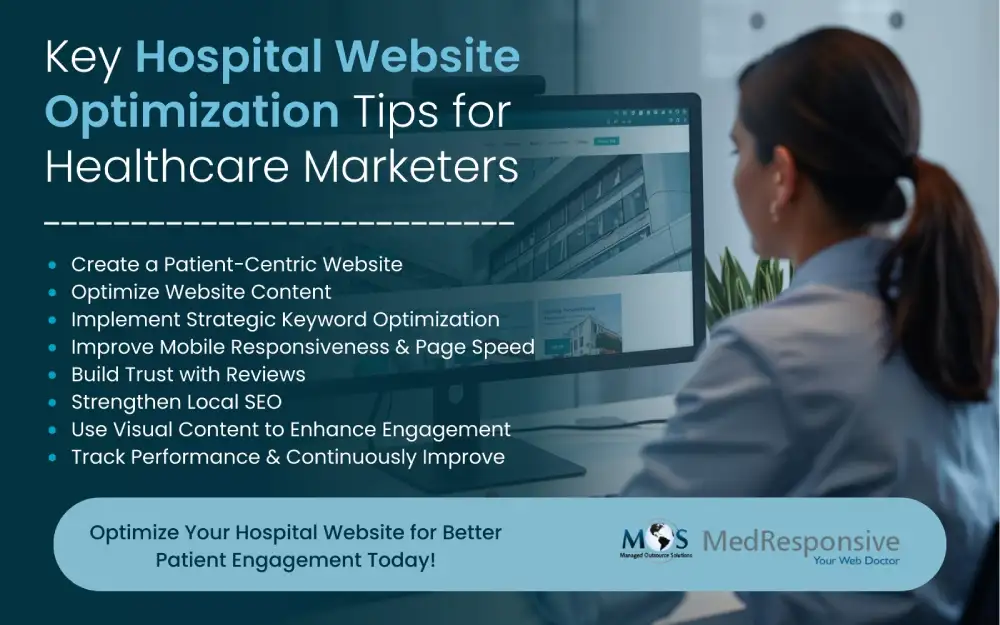
Listed below are key hospital website optimization tips for healthcare marketers:
Create a Patient-Centric Website Experience: One of the foundational principles of optimizing a hospital’s site is patient-centric design. Simplicity, clarity, and accessibility are essential considerations when building or refining hospital websites. Key patient-focused elements include:
- Clear navigation menus for departments, services, and specialties
- Dedicated pages for doctors, treatments, and locations
- Prominent appointment booking and contact information
- Easy access to emergency services and patient resources
A well-structured website reduces confusion, reinforces a positive hospital online presence, improves engagement, and encourages visitors to take action.
Optimize Content for Search and Patients: Content is at the core of digital marketing for healthcare. High-quality, informative web content not only improves SEO but also educates patients and positions your hospital as a trusted authority. Healthcare marketers recommend publishing:
- Blogs addressing common medical questions
- Service pages explaining treatments and procedures
- Educational articles focused on prevention and wellness
- FAQs that address patient concerns
Moreover, content should be written in clear, patient-friendly language while naturally incorporating relevant keywords. Regularly updating your website with fresh content signals to search engines that your site is active and authoritative—an essential factor in optimizing hospital websites.
Strategic Keyword Optimization
One critical component is keyword optimization. This involves identifying keywords patients commonly use when searching for hospital services. Best practices include:
- Using primary keywords in page titles and headings
- Incorporating secondary and long-tail keywords naturally in content
- Avoiding keyword stuffing and prioritizing readability
- Optimizing URLs and image alt text with relevant terms
By aligning website content with patient search intent, hospitals can improve rankings while delivering meaningful information that resonates with users.
Improve Mobile Responsiveness and Page Speed
Mobile optimization is no longer optional. A large percentage of patients access hospital websites through smartphones, especially when searching for directions, emergency information, or appointment details. That’s why it’s important to create a responsive website design that adapts to all screen sizes. The pages of the website should be fast-loading with optimized images.
The website should be simple to navigate on mobile devices with clickable buttons and minimal pop-ups that disrupt user experience. Page speed also plays a major role in SEO. Slow-loading websites increase bounce rates and negatively impact search rankings. Improving performance enhances both patient satisfaction and search engine visibility.
Build Trust with Reviews and Reputation Management
Patient trust is a key factor in healthcare decision-making. Online reviews influence both SEO performance and patient perception. Hospitals should:
- Encourage satisfied patients to leave reviews
- Respond professionally to feedback
- Maintain consistent information across online directories
- Highlight testimonials on the website
Positive reviews improve local SEO rankings and reinforce credibility, supporting long-term Hospital Website Optimization efforts.
Strengthen Local SEO
Local SEO is essential for hospitals serving specific geographic regions. Most patients search using location-based terms such as “hospital near me” or “best hospital in [city].” Healthcare marketers recommend:
- Optimizing local listings with accurate contact details
- Using location-specific keywords in website content
- Creating separate pages for different hospital locations
- Encouraging patient reviews to build trust
Local SEO efforts directly contribute to a stronger hospital online presence by ensuring your facility appears in relevant local search results and map listings.
Use Visual Content to Enhance Engagement
Using visual content is an effective way to enhance patient engagement on hospital websites and improve overall user experience. Elements such as images, infographics, and videos help simplify complex medical information, making it easier for patients to understand services, treatments, and procedures.
Visual content also increases the time visitors spend on the website, which positively impacts SEO performance. When optimized with descriptive alt text and fast-loading formats, visuals support accessibility, strengthen hospital website optimization efforts, and create a more engaging, patient-friendly digital experience.
Performance Monitoring and Improvement
Tracking performance and continuously improving the website is essential for long-term digital success. By regularly monitoring metrics such as organic traffic, keyword rankings, bounce rates, and patient conversion actions, healthcare marketers can understand how users interact with the site. These insights help identify what is working and where improvements are needed, whether its content updates, navigation enhancements, or technical fixes. Ongoing analysis and optimization ensure the website remains aligned with patient expectations, search engine updates, and overall optimization goals.
Continuous Performance Tracking for Better Website Results
Tracking performance and continuously improving your hospital website is essential for long-term digital success. By regularly monitoring metrics such as organic traffic, keyword rankings, bounce rates, and patient conversion actions, healthcare marketers can understand how users interact with the site.
These insights help identify what is working and where improvements are needed, whether its content updates, navigation enhancements, or technical fixes. Ongoing analysis and optimization ensure the website remains aligned with patient expectations, search engine updates, and overall hospital website optimization goals.