In today’s competitive digital market, generating high-quality leads is important for building any successful business campaign. Lead generation is a multifaceted process that requires consistent strategizing, evaluation and refining in order to be effective. Companies spend significant time, effort, and budget on marketing campaigns designed to attract and convert potential customers. However, despite the availability of advanced tools and analytics, many marketers still struggle with poor lead conversion rates. The root cause often lies in common lead generation mistakes that undermine even the best marketing efforts. Understanding these mistakes and learning how to avoid them is essential to build a steady pipeline of qualified leads. Whether you rely on expert SEO blog writing services or handle content creation internally, recognizing common lead generation errors is essential to maximize marketing ROI and boost conversion rates. In this post, we break down some top lead generation mistakes and discuss some key strategies to resolve them.
What Is Lead Generation?
Lead generation involves creating interest in your business, products, and services. Leads may all be at different points in their customer journey and show their interest in many ways, including –
- Following a social media profile
- Downloading a free guide
- Completing a contact form
- Calling your company
Common Lead Generation Mistakes and How to Avoid Them
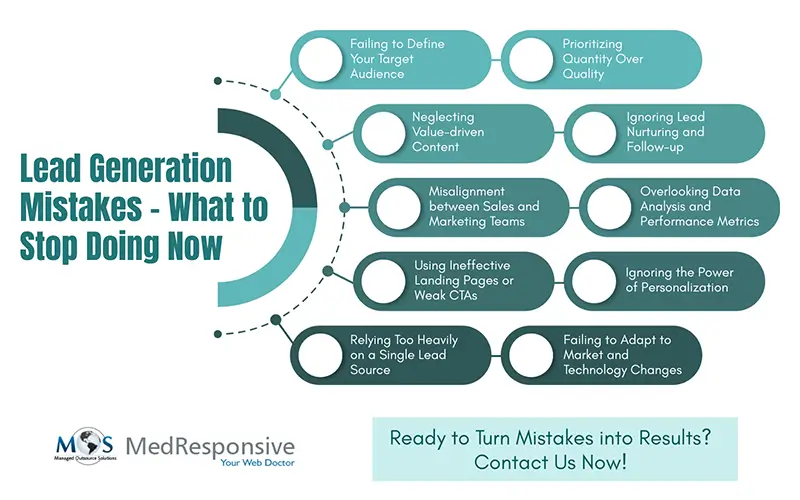
- Failing to Define Your Target Audience – One of the top mistakes marketers make in lead generation is not having a clear understanding of their target audience. When businesses attempt to appeal to everyone, they often end up reaching no one effectively. Without audience segmentation, campaigns become generic and fail to engage potential buyers. To avoid this mistake, start by developing detailed buyer personas based on real data – age, demographics, online behavior, pain points, and buying motivations. Tools like Google Analytics, CRM insights, and social listening can help refine audience targeting. Tailor your messaging to each segment and create value-driven content that addresses their specific needs. A well-defined audience strategy ensures your lead generation campaigns attract qualified leads, not just random traffic.
- Prioritizing Quantity Over Quality – Many marketers measure success solely by the number of leads generated. However, a large number of unqualified leads can overwhelm sales teams and waste valuable resources. This is one of the most overlooked lead generation pitfalls that affects campaign efficiency. Try to shift your focus from lead quantity to lead quality. Implement lead scoring systems that categorize prospects based on their likelihood to convert. Integrate CRM and marketing automation tools to track engagement metrics, behavior patterns, and readiness to buy.
- Neglecting the Importance of Value-driven Content – Failing to create valuable, educational content that attracts and nurtures potential leads is another common mistake. Simply promoting products or services without addressing customer problems often drives audiences away. Therefore, it is important to develop a content strategy that focuses on solving your audience’s challenges. Blog posts, eBooks, webinars, whitepapers, and case studies can demonstrate expertise and build trust. Optimize your content for SEO to ensure visibility and use strong CTAs (Calls-to-Action) to guide readers through the funnel.
- Ignoring Lead Nurturing and Follow-up – Many businesses make the mistake of focusing solely on lead acquisition and ignoring follow-up processes. Failing to nurture leads after initial contact is one of the top mistakes to avoid. Lack of timely engagement often results in missed opportunities. Make sure to establish a structured lead nurturing workflow using personalized email campaigns, remarketing ads, and social engagement. Segment leads based on where they are in the buyer’s journey – awareness, consideration, or decision and provide relevant content at each stage. Consistent communication helps build relationships and move leads closer to conversion.
- Not Aligning Sales and Marketing Teams – Misalignment between marketing and sales departments is a frequent error. When these teams don’t collaborate effectively, valuable leads can slip through the cracks, and messaging may become inconsistent. Create a unified strategy where both teams share common goals and KPIs. Implement regular meetings to review lead quality, feedback, and conversion data. Use shared CRM platforms to ensure transparency and accountability. Alignment between marketing and sales leads to a smoother process and higher conversion success.
- Overlooking Data Analysis and Performance Metrics – Without data-driven insights, marketers may continue investing in strategies that yield no return.
- Therefore, set measurable goals and monitor key performance indicators (KPIs) such as conversion rate, cost per lead, lead source performance, and customer acquisition cost. Use analytics tools like Google Analytics, HubSpot, or Salesforce to track data in real time. Regularly assess what works and what doesn’t, and make adjustments based on evidence.
- Ineffective Landing Pages and Weak CTAs – Many marketers overlook the importance of clear design, compelling copy, and strong calls-to-action. Poorly designed pages or confusing CTAs can significantly reduce conversions, making this one of the top mistakes marketers make. Try to design landing pages that are visually appealing, mobile-friendly, and focused on one clear offer. Use concise headlines, benefit-driven copy, and persuasive CTAs. Test different variations (A/B testing) to see which elements resonate best with visitors.
- Ignoring the Power of Personalization – Generic, one-size-fits-all messaging is another major error to avoid. Nowadays, customers expect personalized experiences that reflect their unique needs and preferences. Personalization not only improves engagement rates but also strengthens trust and brand loyalty. Leverage marketing automation tools to personalize emails, landing pages, and website content. Use data collected from previous interactions to tailor offers and recommendations.
- Depending Too Much on One Lead Source – Relying solely on one marketing channel -such as paid ads or email campaigns – can be challenging. Algorithm changes or budget shifts can drastically impact performance, leaving your pipeline empty. This is one of the more strategic lead generation pitfalls to address early. Diversify your lead generation efforts. Combine inbound marketing (SEO, content, social media) with outbound tactics (email outreach, PPC, networking). Each channel should support the other to ensure a steady flow of qualified leads even if one underperforms temporarily.
- Failing to Adapt to Market and Technology Changes – The marketing world evolves rapidly, and outdated strategies can hinder success. Ignoring industry trends, automation tools, or AI-powered solutions can lead to inefficiency and lost opportunities. Stay informed about emerging trends in digital marketing, such as AI-driven analytics, chatbots, and predictive lead scoring. Regularly review and update your strategies to align with new technologies and audience behaviors.
Avoiding common lead generation mistakes requires strategic planning, audience understanding, and data-driven execution. By identifying lead generation errors to avoid – such as neglecting content quality, poor follow-up, and lack of personalization – marketers can improve overall ROI.
Avoid common marketing mistakes in lead generation, refine your strategies, attract better leads, and convert them into long-term customers.
Stop Losing Leads to Avoidable Mistakes!
Let our digital marketing experts assist you with the best solutions.