Healthcare organizations increasingly turn to mobile health applications to provide better patient experiences while spending less money. Mobile health app trends change how patients receive care and look after their health. From monitoring health data in real-time to using AI for health checks, these applications demonstrate healthcare organizations’ commitment to improving care accessibility and delivering personalized treatment. The global mHealth apps market is expected to grow from $43.13 billion in 2025 to $154.12 billion by 2034.
Mobile Health App Trends
Digital tools are radically transforming the healthcare sector. Patients want to book appointments, look at their medical records, and talk to doctors using their smartphones. Healthcare providers are investing in developing apps that patients want while improving their work efficiency. Knowing the latest mobile health app trends helps healthcare rganizations lead the industry and serve patients better.
AI and Machine Learning
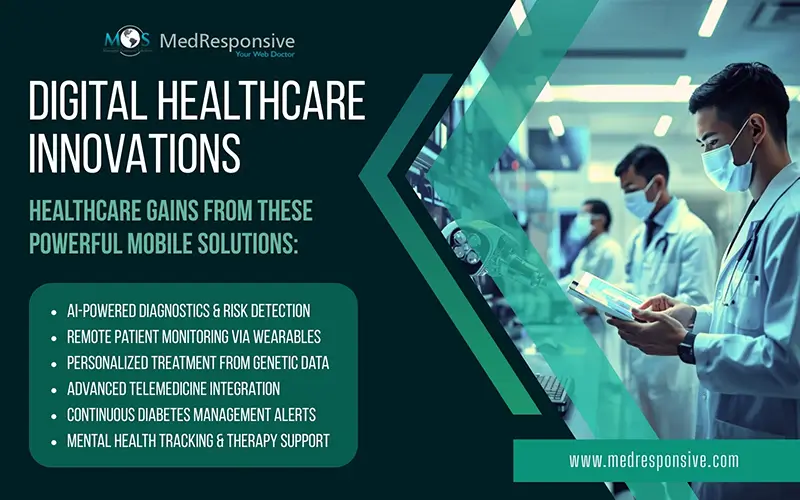
AI has moved beyond just an experiment in healthcare apps. Modern health apps use machine learning to examine patient information, identify potential issues, and suggest individual treatment plans. These systems learn from millions of patient experiences to provide increasingly accurate answers.
Wellframe demonstrates how AI-powered mobile apps deliver personalized care. The platform creates interactive care plans based on medical science and allows doctors to review AI suggestions on a complete dashboard. Lightbeam provides a more comprehensive risk assessment by analyzing over 4,500 factors including medical facts, social situations, and environmental conditions to identify hidden health risks and recommend ways to help.
AI chatbots are also changing how patients communicate with healthcare providers. Babylon Health’s AI chatbot analyzes what a patient reports about their symptoms and determines if they need in-person medical attention. In medical imaging, SkinVision’s app allows patients to photograph suspicious skin spots and receive quick risk assessments for conditions like melanoma.
Remote Patient Monitoring and Wearable Device
Medical app development is progressing toward connecting wearable devices to mobile apps and electronic health records. This connection creates a continuous flow of patient information that enables doctors to provide preventive care. Wearable devices collect important health measurements throughout the day, including continuous glucose monitoring for people with diabetes, smartwatches that track heart rate and blood pressure, and wearable ECG devices that detect irregular heartbeats.
GluCare.Health shows how remote patient monitoring functions in clinical settings. Patients connect devices like Fitbit and glucose monitors to the app. Care team members review collected information and provide individualized feedback about glucose levels, sleep, and exercise. Clinical research demonstrates that patients utilizing integrated wearable monitoring and telehealth interventions achieve 34% improvement in key health metrics compared to traditional in-person care.
Real-time information transmission enables doctors to assist patients more quickly. When a patient’s blood glucose increases rapidly or their heart rate becomes irregular, the app immediately alerts both the patient and their healthcare provider. This prevents complications and reduces emergency department costs.
Advanced Telemedicine and Integrated Virtual Care
Telemedicine now does more than just video calls. Modern telehealth platforms combine patient records, monitoring tools, AI analysis, treatment history, and alerts in one location. Providers review complete patient health data before virtual consultations begin.
These integrated systems improve remote patient monitoring in clinical settings. Instead of relying solely on patient descriptions, providers access objective data from connected devices. A patient with diabetes can consult with their provider while the app displays glucose trends and physical activity patterns. Patients in remote areas or those with mobility limitations can access specialist consultations. Mobile apps automatically schedule and manage follow-up visits after hospital discharge.
Mental Health and Wellness Applications
Mental health conditions directly impact treatment outcomes and healthcare costs for both patients and organizations. Mobile apps deliver full mental health care from meditation to professional therapy. Headspace and Calm offer meditation guides and sleep stories. Moodfit connects mood tracking with fitness wearables. Wysa provides AI emotional help through conversation for anxiety and depression.
Personalized Medicine and Genetic Data
Medical application development now uses genetic tests and health history to create treatment plans for each patient. Doctors combine genetic data with lifestyle details, medical records, and ongoing monitoring to create custom care. Advanced medical application development keeps these systems safe while providing personal health advice to patients and doctors.
AI systems analyze genetic information alongside behavioral patterns and environmental factors. A patient with a family history of heart disease receives different recommendations than someone without that genetic predisposition. In cancer care, treatment recommendations depend increasingly on the genetic characteristics of each person’s cancer. AI also assists with medication selection by analyzing how each person’s genes affect drug metabolism.
Cloud-Based Healthcare and Data Management
Cloud storage offers safe data access for healthcare providers from any place. Providers review patient records remotely, and patients control data permissions. Medical app development services build cloud platforms that balance convenience with security.
Cloud-based storage reduces operating costs while improving data security. Automated backups prevent loss of critical medical information. Integrating electronic health records on cloud systems makes information immediately available to authorized providers. This eliminates duplicate testing and enables care teams to coordinate more effectively.
Data Protection and Healthcare Regulations
As mobile health apps handle increasingly sensitive information, security is essential. HIPAA regulations require encryption of protected health information and strict controls over data access. GDPR regulations mandate that users maintain control over their personal data and can request deletion at any time.
Modern health apps verify user identity before granting access. Encryption safeguards data during sending and storage. AI detects unusual access attempts that might be unauthorized. Healthcare providers work with security teams during development rather than adding safeguards afterward.
Wellness through Fitness and Lifestyle
Fitness apps are now central to disease prevention strategies. Virtual fitness classes deliver professional instruction to patients’ homes. Fitness and lifestyle wellness apps direct users through strength workouts, yoga, dance, and exercises. AI nutrition apps study eating habits to build custom meal plans.
Gamification boosts app use by awarding badges for finished workouts or goals. Comprehensive wellness apps support physical, mental, and emotional health together. These apps include water reminders, sleep tracking, and stress management tools. Interactive tools and personal tips boost app use and keep users engaged longer across all ages.
Wearable Devices for Diabetes Management
Wearable glucose monitors deliver continuous glucose readings every few minutes instead of requiring finger-stick testing. These systems immediately alert patients and providers when glucose levels become dangerous. Mobile apps collect data from multiple devices and send it to doctors for pattern analysis.
Mental Health App Features for Chronic Disease
Patients with long-term health conditions face unique mental health challenges. Living with chronic conditions creates stress, anxiety, and sometimes depression. Mental health app features for chronic disease address the psychological aspects of long-term illnesses.
Evidence-based chronic disease apps deliver three core functions: disease education, peer support communities, and mood tracking that reveals patterns between emotional states and physical symptoms. These apps give targeted support for chronic conditions using cognitive behavioral therapy and commitment therapy modules.
AI Support in Decision Making
AI supports doctors in making good decisions. Rather than replacing physicians, these tools provide second opinions and highlight overlooked diagnostic or risk factors. Apple Watch shows practical AI use with its ECG feature that detects irregular heartbeats. Biofourmis AI monitors patients with long-term conditions and warns about health problems before they become serious.
The Growth of Telemedicine Systems
Telemedicine continues to evolve with integration capabilities that connect multiple information sources. Providers now access complete patient information during consultations. Telemedicine applications do more than provide video consultations and manage prescriptions, appointment scheduling, billing, and patient education. Wearable devices share real-time health readings during virtual visits alongside patient history. Telehealth apps help rural healthcare most by connecting remote patients with specialists.
Mobile Health App Use Expands
In 2024, hospitals expanded mobile health access. Specifically, 95% enabled patients to view medical records, and 92% provided secure messaging with healthcare providers. Health tracking apps dominate the market, driven by elderly patients who require continuous management of chronic conditions. Google Play Store commands the biggest share since smartphones are common in both developed and developing areas.
The Future of Mobile Healthcare
Mobile health apps continue to advance rapidly. New technology called edge AI lets phones analyze data right away instead of sending it to remote servers. Hands-free health app control via brain-computer tech could soon help mobility-challenged users. Federated learning helps AI get better across hospitals while keeping each patient’s information private. Healthcare organizations ahead on these trends achieve higher quality care at reduced expense. Experts predict the global mobile health market will exceed $300 billion by 2026, driven by increasing demand for specialized medical care and seamless data exchange.
Why Healthcare Must Adopt Mobile Apps Now
By 2026, widespread mobile health app adoption will demonstrate healthcare’s strategic shift toward patient-centered care delivery and data-driven clinical decision-making. Healthcare organizations using new mobile health apps see satisfied patients, better health results, and reduced costs. Mobile healthcare marks a major shift in patient care that will last years. Organizations that are slow to adopt risk losing patients and business advantage. Prioritizing comprehensive mobile health adoption strategies is crucial for healthcare organizations to remain competitive and deliver measurable patient outcomes.
Ready to Lead the Mobile Health Revolution?
Let us guide you in implementing mobile solutions that improve patient outcomes and reduce costs.
Contact us today