
In today’s digital landscape, creating content that ranks well on search engines is no longer just about keywords and backlinks. Search engines have evolved to prioritize user experience. Balancing readability and SEO is one of the most critical aspects of effective content creation. While SEO helps your content rank higher in search engine results, over-optimizing can result in awkward phrasing and disrupt the flow of your writing. However, prioritizing readability alone may lead to content that isn’t discoverable by search engines, limiting its potential reach. Content that is optimized purely for algorithms often feels robotic, while overly conversational content may struggle to rank. The real challenge lies in understanding the art of balancing SEO and readability to satisfy both users and search engines. This guide explores how to balance readability and SEO in content writing, outlines best practices, and explains why this balance is essential for sustainable online visibility.
Why Readability Matters for SEO
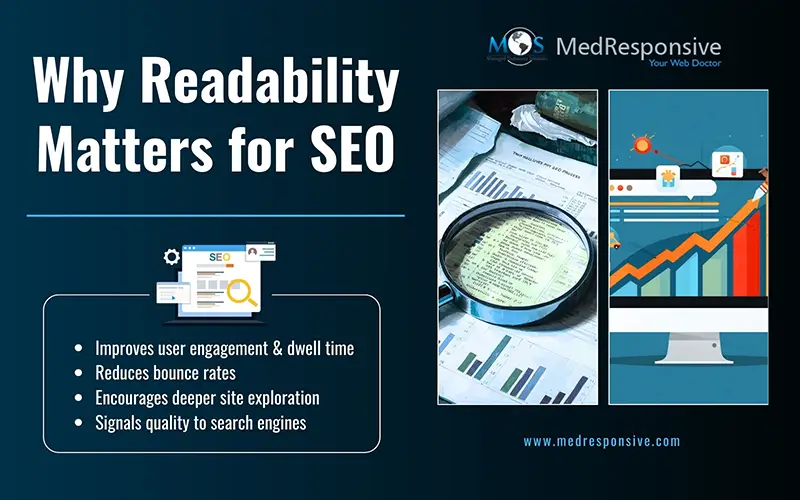
Readability refers to how easily users can read, understand, and engage with your content. Search engines analyze user behavior signals such as bounce rate, time on page, and engagement to determine content quality. If visitors struggle to read your content, they leave and rankings suffer.
Readable website content –
- Improves user engagement and dwell time
- Encourages visitors to explore more pages
- Reduces bounce rates
- Signals quality and relevance to search engines
Search engines favor content that delivers real value to readers, not just keyword-stuffed pages. As highlighted by readability experts, content that flows naturally and is easy to scan performs better in organic search because it aligns with user intent.
Understanding SEO and Readability
Understanding the art of balancing SEO and readability will help develop content that feels natural while still following SEO best practices. This balance ensures that content performs well in search results without sacrificing clarity or user satisfaction.
Optimization involves strategies like incorporating relevant keywords, using Meta tags, optimizing images and adding inbound and outbound links to your content. Readability refers to how easily the average reader can understand a piece of content. Language clarity, sentence structure and content formatting all contribute to better readability. The goal of improving readability is to engage and retain your readers by making your content enjoyable and easy to digest. While SEO drives people to your site, readability keeps them there. It is a delicate balancing act between the two – and when you do it right, you can significantly impact your content marketing success.
How to Balance Readability and SEO in Content Writing
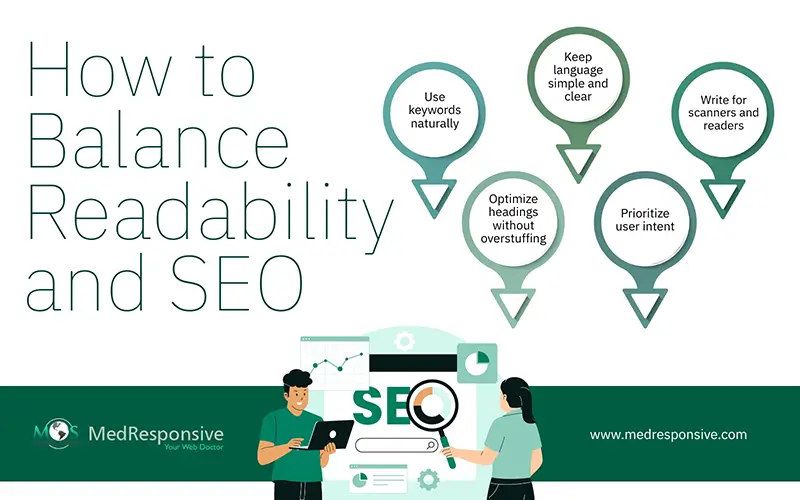
- Use Keywords Naturally – Incorporate primary and secondary keywords in a way that feels organic. Keywords such as “balancing readability and SEO” and “SEO-friendly content writing” should appear naturally in headings, introductions, and body text without disrupting flow. Avoid forcing keywords into every sentence. Instead, focus on semantic relevance and topic coverage.
- Write for Scanners, Not Just Readers – Most users scan content before deciding to read it fully. Structuring your content properly improves both readability and SEO.
- Short paragraphs (2–4 lines)
- Clear subheadings (H2, H3)
- Bullet points and numbered lists
- Adequate white space
Best practices include –
Search engines favor well-structured content because it is easier to crawl and understand, while users appreciate the improved reading experience.
- Focus on Clarity and Simplicity – Readable website content avoids unnecessary jargon and complex sentence structures. Simple, clear language makes content accessible to a wider audience and improves comprehension. From an SEO perspective, clarity helps search engines better interpret context and intent. Content that answers questions directly is more likely to appear in featured snippets and voice search results.
- Optimize Headings without Overloading Keywords – Headings play a crucial role in SEO, but they should remain reader-friendly. Use keywords in headings only where they make sense. For example –
- “Best Practices for SEO-friendly and Readable Content”
- “How to Balance Readability and SEO in Content Writing”
These headings clearly communicate value to both users and search engines without sounding artificial.
- Prioritize User Intent – Understanding what users are searching for is essential to balance SEO and readability. Content should answer real questions, solve problems, or provide actionable insights. Search engines increasingly evaluate how well content satisfies user intent. Pages that align with search intent tend to perform better, even if they are not aggressively optimized with keywords.
Best Practices for SEO-friendly and Readable Content
- Write for Users First – Focus on delivering value, clarity, and relevance to readers. When content satisfies user intent, search engines naturally reward it with better rankings.
- Use Keywords Naturally – Include target keywords where they fit contextually, such as headings and body text. Avoid keyword stuffing, as it harms both readability and SEO performance.
- Structure Content Clearly – Use headings, subheadings, bullet points, and short paragraphs. A clear structure improves scannability for users and helps search engines understand content hierarchy.
- Keep Language Simple and Clear – Avoid complex jargon and long sentences. Simple language improves comprehension, engagement, and accessibility across a wider audience.
- Optimize Headings and Subheadings – Use descriptive, keyword-relevant headings without forcing them. Well-optimized headings guide readers and improve search engine indexing.
- Focus on Search Intent – Understand what users are searching for and answer their queries directly. Content aligned with intent performs better in rankings and user satisfaction.
- Use Internal and External Links – Link to relevant internal pages and authoritative external sources. This improves navigation, credibility, and SEO value.
- Improve Readability with Formatting – Break up text using lists, bold text, and white space. Proper formatting makes content easier to scan and more engaging.
- Review and Update Content Regularly – Refresh content to keep it accurate and relevant. Updated content signals quality and reliability to search engines.
Common Mistakes in Prioritizing Readability over SEO
When trying to balance SEO and readability, many content creators tend to create mistakes –
- No Keyword Strategy – A keyword strategy is essential for any SEO-driven post. Without a clear strategy you will likely miss the search intent and not get the desired ranking results. A keyword strategy also makes sure that your post can be found by searchers. If you don’t hit the relevant keywords, then the algorithm won’t understand what your post is about and won’t show it to your desired audience.
- Vague Headings – If you want Google’s algorithm to like your content, each heading must be relevant and informative. Vague headings that don’t clearly relate to the content may work against you.
- Writing for Algorithms instead of Users – Focusing only on keywords and rankings often results in robotic, unnatural content. Search engines prioritize user engagement, so content that ignores readers usually performs poorly.
- Overly Long, Dense Paragraphs – Large blocks of text make content difficult to scan and read. This increases bounce rates and reduces engagement, negatively impacting both readability and SEO.
- Ignoring Readability Metrics – Overlooking factors like sentence length, structure, and reading level can hurt user experience. Poor readability leads to lower engagement signals, which affects search rankings.
- Sacrificing Clarity for Optimization – Forcing keywords or complex phrasing can confuse readers. Clear, natural content not only improves understanding but also aligns better with modern search engine algorithms.
The Role of Professional SEO Blog Writing Services
Many businesses turn to SEO blog writing services to achieve the right balance between readability and optimization. Experienced SEO writers –
- Integrate keywords seamlessly
- Maintain a consistent tone and structure
- Align content with search intent
- Improve engagement and conversions
Professional blog writing services combine editorial expertise with SEO strategy, ensuring that the content not only ranks but also resonates with readers.
Bringing Readability and SEO Together
Balancing readability and SEO is no longer optional – it is essential for content success. Search engines reward content that delivers value, clarity, and relevance, while users demand engaging and easy-to-read information. By understanding the art of balancing SEO and readability, applying proven techniques, and following best practices, you can create content that satisfies both audiences. In short, the prime focus should always remain on creating meaningful, readable, and search-optimized content that stands the test of time.
Looking to improve content performance?
Let our experts help you balance readability and SEO effectively.