

With technology shaping nearly every aspect of healthcare, a well-established online presence for healthcare practices is now a vital requirement. It plays a key role in helping healthcare businesses meet modern service expectations and stand out in the competitive health industry. From appointment scheduling to information sharing, a reliable digital foundation supports smoother communication, faster operations, and more efficient patient interactions.
Digital engagement continues to grow, with recent KFF poll findings showing that over 55% of users turn to online platforms, including social media, to find health information. This shift has made investing in digital marketing for healthcare critical for providers to expand their reach, connect with more patients, and grow their practice. Since implementing digital strategies can divert time and resources, many providers partner with agencies specializing in healthcare digital marketing, allowing them to focus on patient care while experts manage their online campaigns.
Building a Strong Online Presence for Healthcare Practices: Key Strategies
Here are the key steps that healthcare practitioners can follow to improve visibility, strengthen patient trust, and support steady appointment growth across online channels.
Optimize Your Website for Healthcare SEO
Healthcare website optimization for search engines is essential to help patients easily find and locate your practice. Effective SEO boosts your website’s visibility, allowing potential patients to discover your services while they search for healthcare information online. An optimized website will attract more patient traffic, improve user experience, and ultimately drive higher conversions—whether that’s appointments, consultations, or inquiries. To optimize your site:
- Conduct Thorough Keyword Research: Identify the specific keywords your target patients are searching for, such as medical conditions, services, or treatments. This allows you to tailor your website content to meet their needs and improve search rankings.
- Optimize On-Page Content: Ensure that your website’s pages include relevant keywords in titles, headers, and meta descriptions. This helps search engines understand page relevance, and improves your visibility in search results.
- Improve Website Speed and Mobile Usability: Nearly 82% of patients book online appointments through mobile devices, with the ideal page load time being 2 seconds. This figure highlights the importance of a mobile-responsive, fast-loading site. A slow-loading site can lead to frustrated users and a higher bounce rate, which impacts SEO performance.
- Implement Local SEO Strategies: Since healthcare services are location-based, optimize your website for local search results by including location-specific keywords. Maintain an accurate Google Business Profile with updated NAP information to improve exposure among nearby search users.
- Focus on High-Quality Content Creation: Develop informative and relevant web material for your target audience, such as blog posts, patient guides, or FAQs. Strong content keeps visitors engaged and improves traffic quality, which supports SEO performance.
- Leverage AI for Content Optimization: AI-powered tools can support topic research, visual asset creation, and content quality refinement. These tools also analyze user behavior and search trends to guide data-driven content decisions.
Following these steps can strengthen website visibility, improve SEO performance, and support consistent ranking growth across search engines.
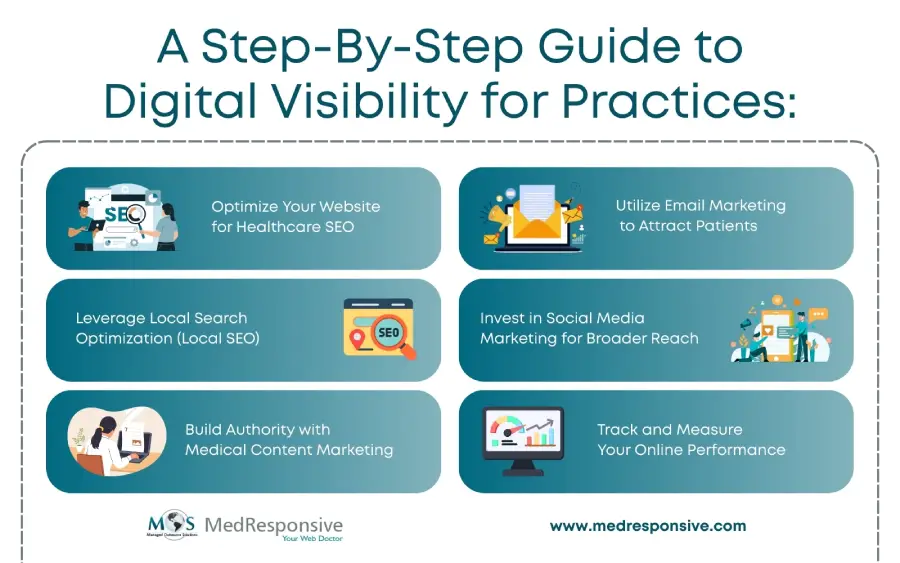
Leverage Local Search Optimization (Local SEO)
Local search visibility determines whether your practice appears when patients look for nearby healthcare providers. Most appointment decisions start with location-based searches, which makes local optimization essential for consistent patient flow. A well-maintained local presence also supports accurate public information and better reputation management for healthcare providers. When your listings remain complete and current, search platforms treat your practice as reliable and relevant.
- Claim and Verify Local Listings: Claim your Google Business Profile and other trusted healthcare directories to control your public information. Verified listings improve credibility and help search engines confirm your practice location.
- Maintain Consistent NAP Information: Keep your name, address, and phone number identical across all platforms. Consistency prevents ranking conflicts and reduces patient confusion.
- Optimize Location-Based Keywords: Add city- and service-specific terms to your website pages and listings. These keywords connect your practice with high-intent local search users.
- Request Patient Reviews: Request reviews from satisfied patients to strengthen online credibility. Reviews influence local rankings and patient decision-making, as 84% of people trust online reviews as much as personal recommendations when choosing a provider.
- Add Practice Details: Upload office images, service descriptions, and operating hours to your listings. Complete profiles improve engagement and search visibility.
- Use AI to Monitor Listing Accuracy: AI tools can track listing changes, duplicate profiles, and data inconsistencies across platforms. These tools help maintain accuracy without replacing manual oversight.
Strong local optimization keeps your practice visible at the moment patients search for nearby care and supports steady healthcare appointment growth.
Build Authority with Medical Content Marketing
Medical content marketing allows practices to provide audiences with useful health information while improving visibility across search platforms. Educational content supports patient awareness and builds long-term trust with your audience. Well-structured web material also improves keyword coverage and increases user engagement. Consistent publishing positions your practice as a reliable information source within your specialty, improving both discoverability and credibility.
- Publish Patient-Focused Blog Content: Create blogs that address topics such as symptoms, treatments, preventive care, and service explanations. These topics match common patient search behavior and support organic traffic growth.
- Develop Resource Pages and Guides: Provide downloadable guides, FAQs, and care instructions to showcase expertise and improve patient understanding. These resources also improve time-on-site rate and engagement quality.
- Update Existing Content Regularly: Update and refresh older pages with new information to maintain accuracy and search relevance. Updated medical content supports ranking stability as Google’s algorithms prefers fresh content.
- Use Visual and Interactive Content: Add media elements such as images, infographics, and short videos to improve clarity and retention. Visual content increases page engagement and shareability.
- Distribute Content Across Channels: Share content through email and social platforms to extend reach. Distribution improves content performance beyond website traffic.
- Leverage AI for Smarter Strategy: AI tools can identify trending health queries, and monitor content engagement in real-time. These data-driven insights support smarter planning
A focused content strategy strengthens patient education, boosts engagement, and supports long-term healthcare practice visibility.
Utilize Email Marketing to Attract Patients
Email remains one of the most reliable channels for direct patient communication. Consistent email communication helps maintain patient relationships beyond in-office visits. Practices can deliver timely messages on appointment reminders, follow-up treatments, and service updates to minimize no-shows. A structured email strategy improves retention and repeat appointment rates, enhancing patient experience and practice visibility.
- Build a Verified Patient Email List: Collect email addresses through appointment forms, portals, and consent-based sign-ups. A verified list ensures your messages reach real patients who have agreed to receive communication, which protects deliverability and compliance standards.
- Send Appointment and Follow-Up Reminders: Use email to reduce missed visits and improve continuity of care. Reminder campaigns help patients stay on schedule while reducing administrative follow-up workload.
- Share Educational Updates: Provide newsletters, seasonal health tips, and service announcements to keep patients informed. Educational messaging reinforces your role as a reliable care provider and supports long-term trust.
- Segment Email Campaigns: Group patients by service type, visit history, or care needs to personalize communication. Segmented campaigns improve relevance, which increases open rates and patient engagement.
- Maintain Privacy and Compliance Standards: Implement secure systems such as encryption, access control and consent protocols to protect patient data. Proper safeguards prevent compliance risks and preserve patient confidence in your communication practices.
- Use AI for Campaign Optimization: AI tools can analyze open rates, click behavior, and timing patterns to refine delivery strategies. These insights help improve campaign performance while keeping core privacy and consent practices intact.
A well-planned email strategy strengthens patient retention and supports consistent communication.
Invest in Social Media Marketing for Broader Reach
Social media has become a primary channel where patients research providers, read health updates, and evaluate credibility before choosing a practice. A consistent social presence improves brand recognition and keeps your services visible across daily digital activity. Active platforms also create opportunities to share educational content that builds trust with both new and existing patients. A structured social media marketing strategy helps maintain relevance, consistency, and professionalism across public-facing channels.
- Choose the Right Platforms: Focus on platforms that match your patient demographics, including Facebook for local visibility and LinkedIn for professional authority. Platform selection allows your content to reach the right audience without spreading efforts too thin.
- Maintain Consistent Posting Schedules: Regular posting keeps your practice visible within patient feeds and improves content reach. Consistency also signals credibility and reliability to both users and platform algorithms.
- Share Service-Focused Content: Post health tips, preventive care guidance, and practice-related announcements to support patient awareness. Educational content builds trust while reinforcing your expertise.
- Engage With Patient Interactions: Respond to comments, questions, and messages in a timely and professional manner. Active engagement improves brand perception and strengthens patient relationships.
- Use Visual Content for Better Reach: Images, short videos, and infographics improve content performance across platforms. Visual formats make health information easier to understand and more likely to be shared.
- Apply AI for Informed Strategy: AI tools can analyze engagement patterns and recommend posting schedules, content formats, and trending topics. These insights support smarter content planning without replacing core communication practices.
A structured social media strategy strengthens patient trust, improves online visibility, and supports consistent digital engagement across your brand channels.
Track and Measure Your Online Performance
Monitoring digital performance helps healthcare practices understand what drives patient engagement and appointment activity. Regular performance review highlights gaps, growth areas, and optimization opportunities. Consistent measurement keeps your digital efforts aligned with patient behavior and search trends across website, content, and social media communication strategies.
- Track Website Traffic and User Behavior: Use analytics tools to monitor visits, page views, and navigation paths. This data shows how patients move through your site, which pages keep their attention, and where users drop off before taking action.
- Measure Search Rankings: Monitor keyword performance and search impressions to evaluate SEO impact. Ranking movement reveals whether your content aligns with patient search behavior and supports consistent discovery.
- Analyze Conversion Activity: Track appointment requests, form submissions, and calls to assess campaign performance. Conversion tracking connects digital activity directly to patient acquisition.
- Review Engagement Metrics: Measure open rates, clicks, shares, and interactions to evaluate communication reach. Engagement metrics reveal which messages generate interest and which channels need adjustment.
- Audit Local Listing Performance: Monitor local performance metrics such as views, direction requests, and calls from local profiles. These actions show how frequently nearby search users consider your practice for care.
- Use AI for Predictive Insights: AI tools can forecast traffic trends and highlight performance anomalies. These insights help identify growth opportunities and potential issues before they affect visibility.
Consistent measurement ensures your online advertising strategies align with patient demands and growth objectives.
Leverage Expertise to Establish a Robust Online Presence
A strong online presence plays a key role in how patients discover, evaluate, and choose healthcare providers. Digital channels now influence appointment decisions long before the first call or visit happens. Practices can leverage professional healthcare digital marketing services to maintain accurate, visible, and consistent online profiles. Experts can optimize content, track performance, and ensure that your practice stays ahead of the competition. By combining proven strategies with advanced automation, they can optimize your marketing workflows and maximize patient reach and conversion, while you can on patient care. Investing in expertise to enhance your online presence ensures your practice remains relevant, accessible, and trusted in the modern healthcare landscape.
Boost your search rankings with a digital marketing strategy built around your practice goals!